Department of Anatomy, College of Medicine, Yeungnam University, Nam-gu, Daegu, Korea.
Department of Biochemistry, College of Korean Medicine, Dong-Eui University, Busan, Korea.
Sci Rep. 2020 Nov 12;10(1):19644. doi: 10.1038/s41598-020-76883-9.
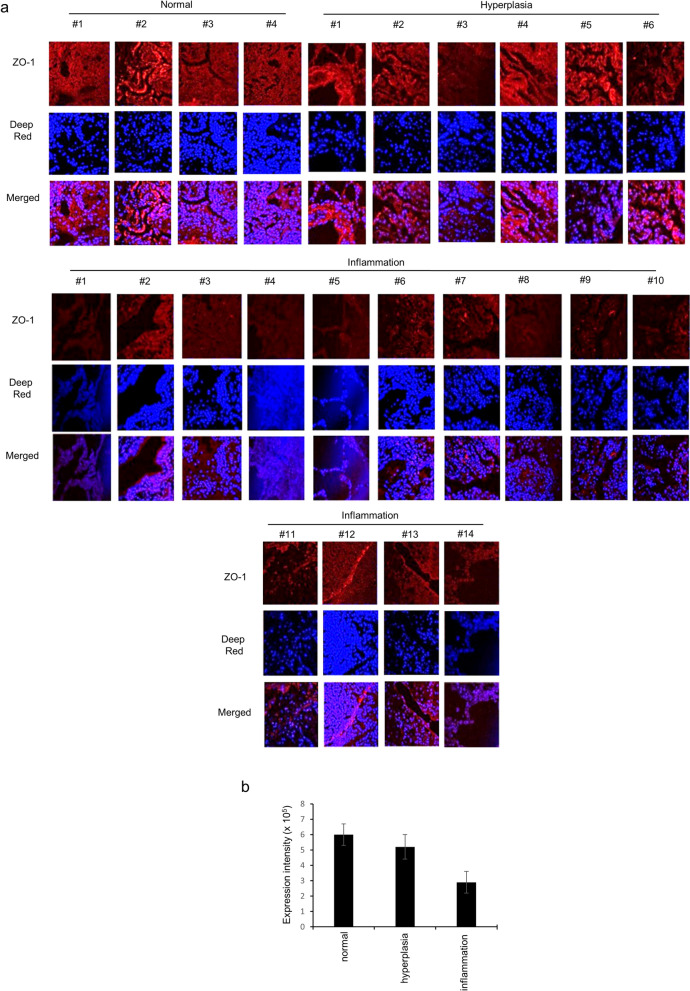
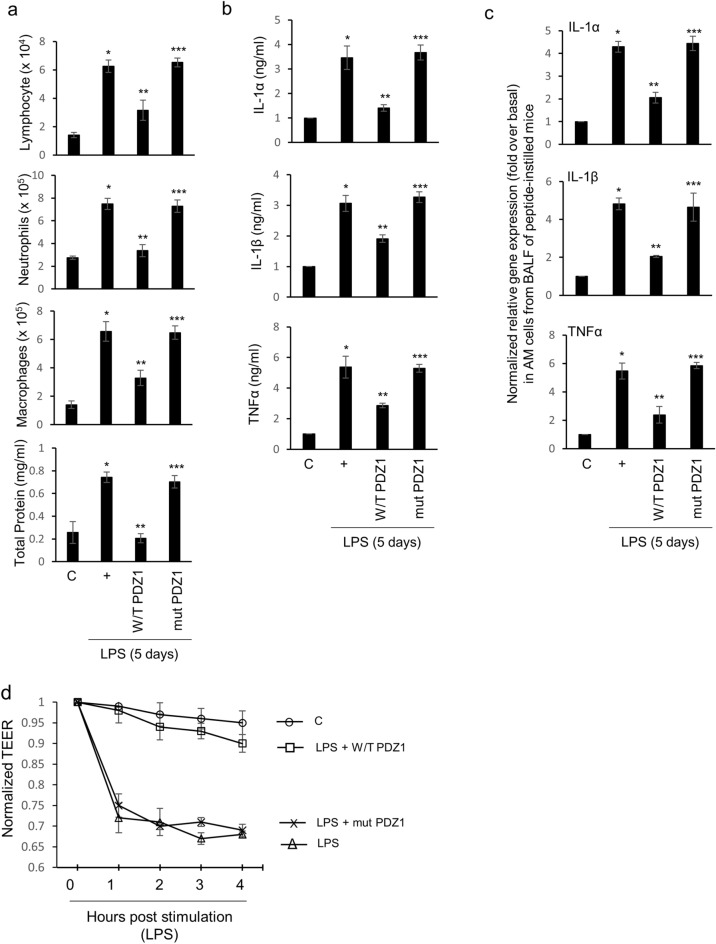
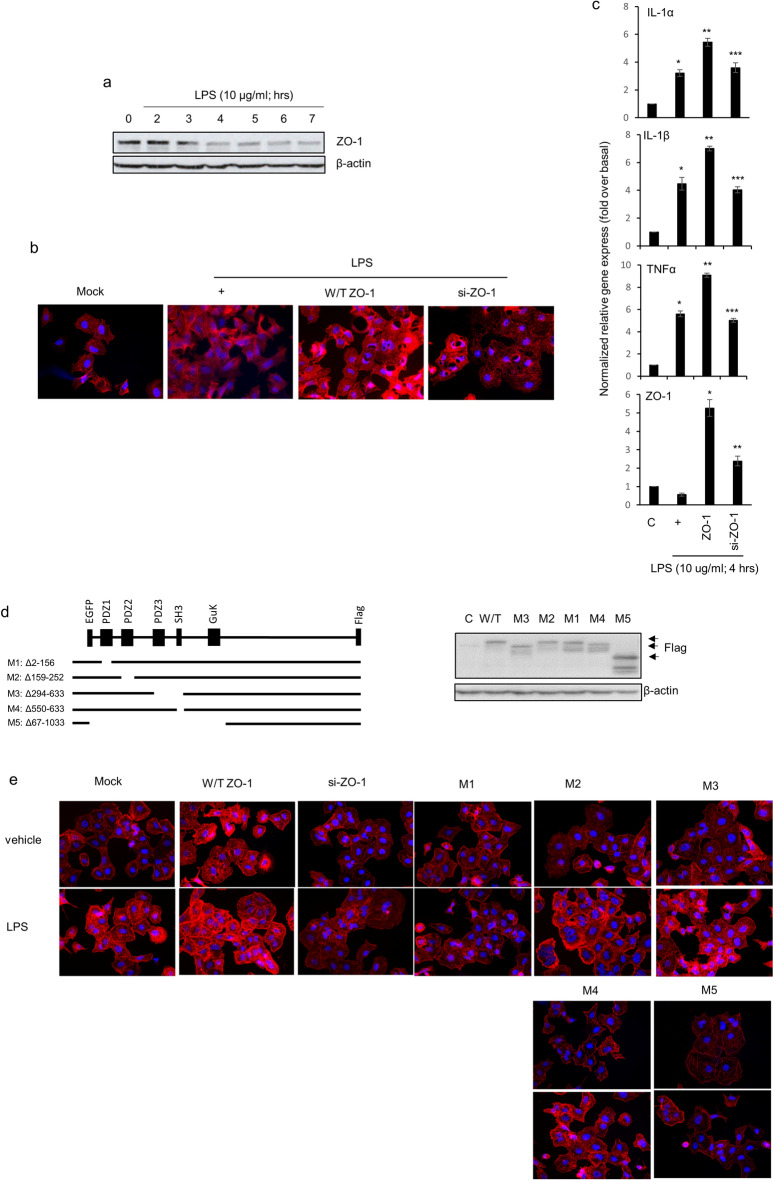
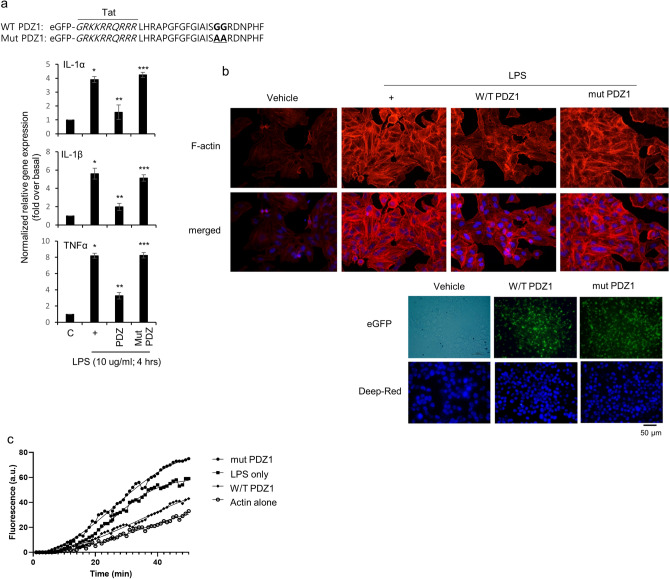
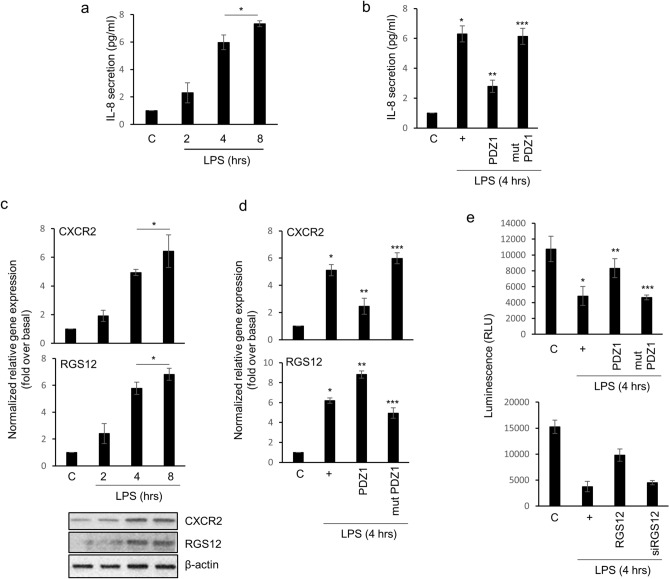
Pseudomonas aeruginosa is known to play a role in many human diseases. Therefore, examining the negative control mechanisms of tight junction protein ZO-1 on the exotoxin LPS of P. aeruginosa-induced diseases could be critical in the development of novel therapeutics. We found that ZO-1 expression dramatically decreased in inflammatory human lung tissues. Interestingly, PDZ1 deletion of the PDZ domain in the ZO-1 protein dramatically decreased LPS-induced F-actin formation and increased the expression of genes for pro-inflammatory cytokines, but not PDZ2 and PDZ3 of the ZO-1 protein. We also found that the consensus PDZ peptide (based on PDZ1) of ZO-1 down-regulates the expression of pro-inflammatory cytokine genes and F-actin formation; in contrast, the GG24,25AA mutant PDZ peptide cannot control these genes. LPS activates IL-8 secretion extracellularly in a time-dependent manner, while the secretion is inhibited by PDZ peptide. Whereas increased IL-8 secretion by LPS activates the CXCR2 receptor, overexpressed RGS12 negatively regulates LPS-induced CXCR2/IL-8 signaling. The PDZ peptide also decreases LPS-induced inflammatory cell populations, pro-inflammatory cytokine gene expression, and TEER in bronchoalveolar lavage fluid and cultured alveolar macrophages. Collectively, we suggest that the PDZ peptide may be a potential therapeutic for bacteria-induced respiratory diseases.
铜绿假单胞菌已知在许多人类疾病中起作用。因此,研究紧密连接蛋白 ZO-1 对铜绿假单胞菌外毒素 LPS 诱导的疾病的负调控机制,对于新型治疗药物的开发可能至关重要。我们发现,ZO-1 的表达在炎症性人肺组织中显著降低。有趣的是,PDZ 域的 PDZ1 缺失的 ZO-1 蛋白显著降低了 LPS 诱导的 F-肌动蛋白形成,并增加了促炎细胞因子的基因表达,但不是 ZO-1 蛋白的 PDZ2 和 PDZ3。我们还发现,ZO-1 的 PDZ 肽(基于 PDZ1)下调促炎细胞因子基因和 F-肌动蛋白形成的表达;相比之下,GG24,25AA 突变 PDZ 肽不能控制这些基因。LPS 以时间依赖性方式激活细胞外 IL-8 分泌,而 PDZ 肽抑制分泌。LPS 增加的 IL-8 分泌激活了 CXCR2 受体,而过表达的 RGS12 负调节 LPS 诱导的 CXCR2/IL-8 信号。PDZ 肽还降低了 LPS 诱导的炎症细胞群、促炎细胞因子基因表达和支气管肺泡灌洗液和培养的肺泡巨噬细胞中的 TEER。总之,我们认为 PDZ 肽可能是治疗细菌诱导的呼吸道疾病的潜在药物。