Department of Biochemistry and Genetics, La Trobe Institute for Molecular Science, La Trobe University, Melbourne, VIC, 3086, Australia.
Cell Death Dis. 2018 Sep 25;9(10):1002. doi: 10.1038/s41419-018-1035-6.
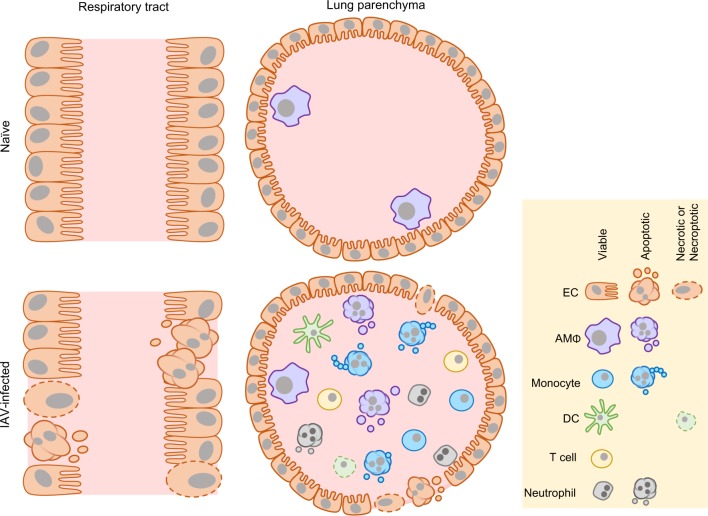
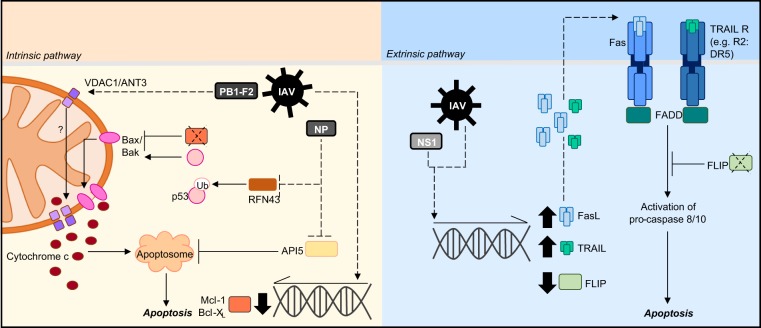
Infection with Influenza A virus (IAV) causes significant cell death within the upper and lower respiratory tract and lung parenchyma. In severe infections, high levels of cell death can exacerbate inflammation and comprise the integrity of the epithelial cell barrier leading to respiratory failure. IAV infection of airway and alveolar epithelial cells promotes immune cell infiltration into the lung and therefore, immune cell types such as macrophages, monocytes and neutrophils are readily exposed to IAV and infection-induced death. Although the induction of cell death through apoptosis and necrosis following IAV infection is a well-known phenomenon, the molecular determinants responsible for inducing cell death is not fully understood. Here, we review the current understanding of IAV-induced cell death and critically evaluate the consequences of cell death in aiding either the restoration of lung homoeostasis or the progression of IAV-induced lung pathologies.
甲型流感病毒(IAV)感染会导致上呼吸道和下呼吸道以及肺实质中的大量细胞死亡。在严重感染中,高水平的细胞死亡会加剧炎症并破坏上皮细胞屏障的完整性,导致呼吸衰竭。IAV 感染气道和肺泡上皮细胞会促进免疫细胞浸润肺部,因此,巨噬细胞、单核细胞和中性粒细胞等免疫细胞类型很容易接触到 IAV 和感染诱导的死亡。尽管 IAV 感染后通过细胞凋亡和坏死诱导细胞死亡是一个众所周知的现象,但导致细胞死亡的分子决定因素尚不完全清楚。在这里,我们回顾了 IAV 诱导细胞死亡的现有认识,并批判性地评估了细胞死亡在帮助恢复肺内稳态或促进 IAV 诱导的肺病理进展方面的后果。