Centro de Investigación Biomédica en Red, Bioingeniería, Biomateriales y Nanomedicina (CIBER-BBN), Cerdanyola del Vallès, Spain.
Intelligent Data Science and Artificial Intelligence (IDEAI-UPC) Research Center, Barcelona, Spain.
Sci Rep. 2020 Nov 12;10(1):19699. doi: 10.1038/s41598-020-76686-y.
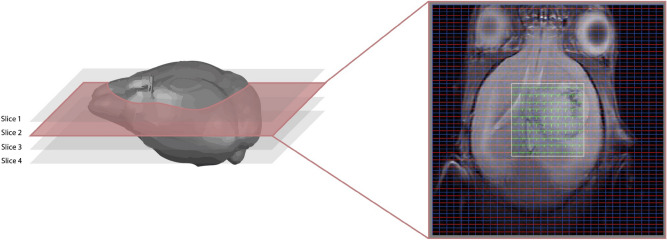
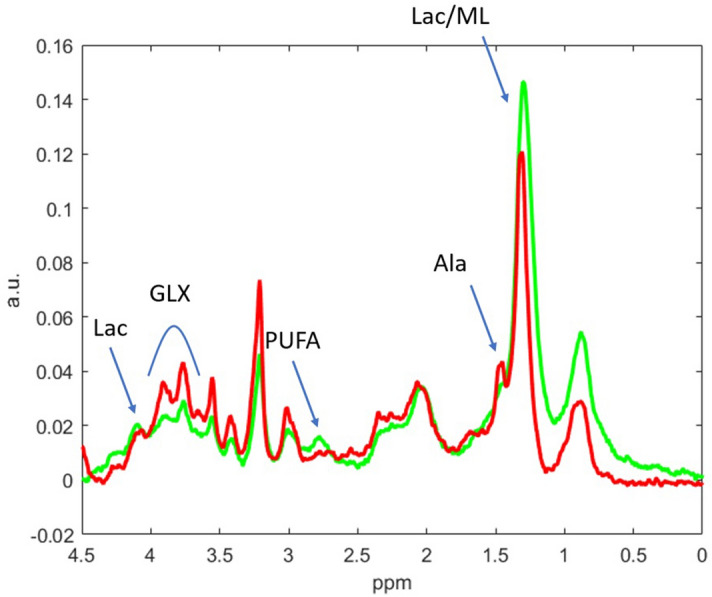
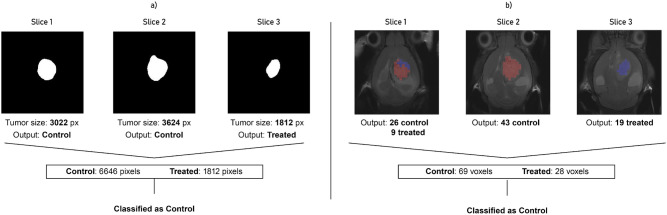
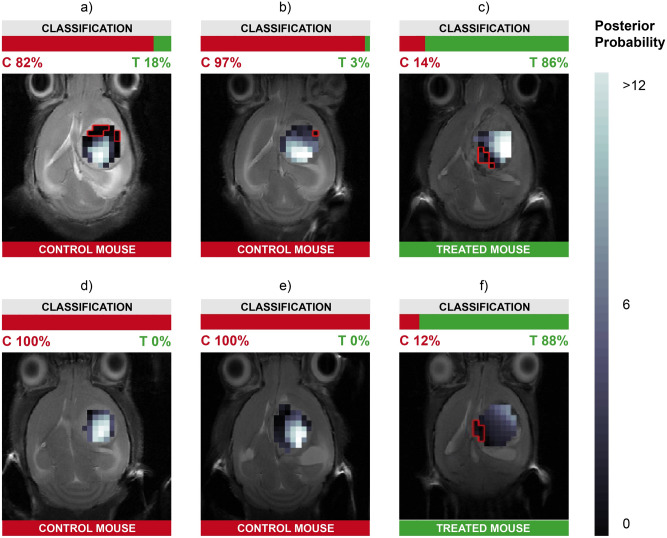
Glioblastoma is the most frequent aggressive primary brain tumor amongst human adults. Its standard treatment involves chemotherapy, for which the drug temozolomide is a common choice. These are heterogeneous and variable tumors which might benefit from personalized, data-based therapy strategies, and for which there is room for improvement in therapy response follow-up, investigated with preclinical models. This study addresses a preclinical question that involves distinguishing between treated and control (untreated) mice bearing glioblastoma, using machine learning techniques, from magnetic resonance-based data in two modalities: MRI and MRSI. It aims to go beyond the comparison of methods for such discrimination to provide an analytical pipeline that could be used in subsequent human studies. This analytical pipeline is meant to be a usable and interpretable tool for the radiology expert in the hope that such interpretation helps revealing new insights about the problem itself. For that, we propose coupling source extraction-based and radiomics-based data transformations with feature selection. Special attention is paid to the generation of radiologist-friendly visual nosological representations of the analyzed tumors.
胶质母细胞瘤是成年人中最常见的侵袭性原发性脑肿瘤。其标准治疗包括化疗,替莫唑胺是常用的选择。这些肿瘤异质性强、变异性大,可能受益于基于个性化数据的治疗策略,而在治疗反应随访方面也有改进的空间,可以用临床前模型进行研究。本研究旨在利用机器学习技术,从基于磁共振的两种模态(MRI 和 MRSI)的数据中,区分患有胶质母细胞瘤的治疗组和对照组(未治疗)小鼠,这是一个临床前问题。其目的不仅是比较此类区分方法,还要提供一个可用于后续人类研究的分析流程。该分析流程旨在为放射科专家提供一个可用且可解释的工具,希望这种解释有助于揭示关于该问题本身的新见解。为此,我们提出了基于源提取和放射组学的数据转换与特征选择相结合的方法。特别关注分析肿瘤的放射科医生友好的视觉分类表示的生成。