Bianchi Enrica, Wright Gavin J
Cell Surface Signalling Laboratory, Wellcome Sanger Institute, Cambridge, United Kingdom.
Department of Biology, Hull York Medical School, York Biomedical Research Institute, University of York, Wentworth Way, York, United Kingdom.
PLoS Biol. 2020 Nov 13;18(11):e3000953. doi: 10.1371/journal.pbio.3000953. eCollection 2020 Nov.
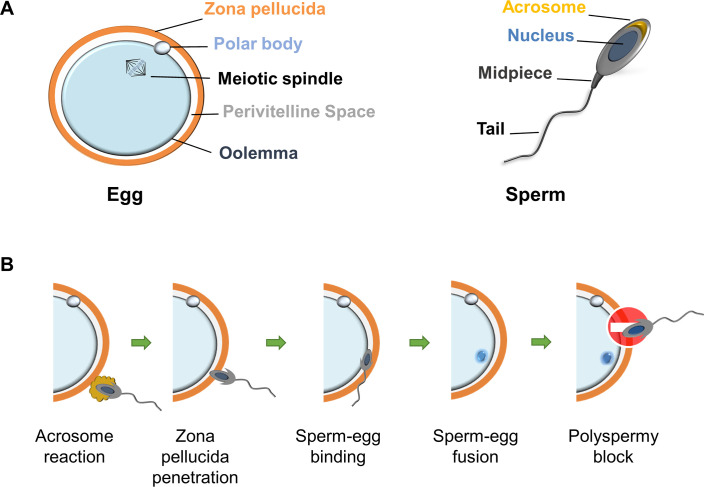
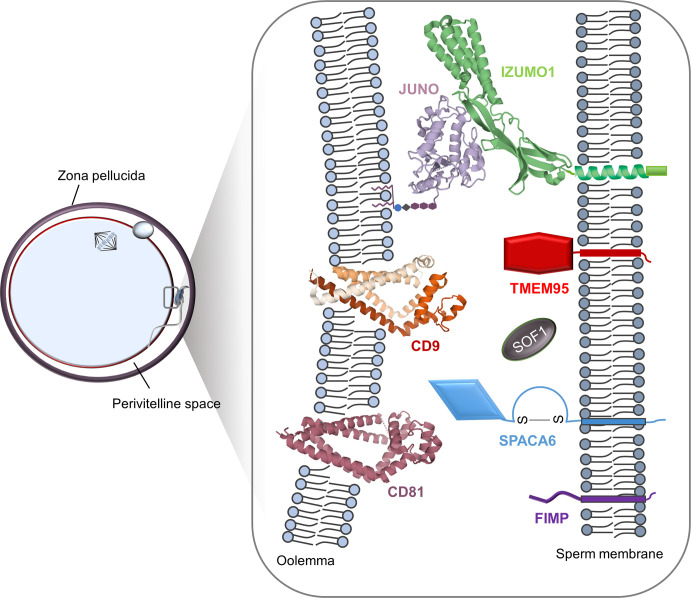
Sexual reproduction is such a successful way of creating progeny with subtle genetic variations that the vast majority of eukaryotic species use it. In mammals, it involves the formation of highly specialised cells: the sperm in males and the egg in females, each carrying the genetic inheritance of an individual. The interaction of sperm and egg culminates with the fusion of their cell membranes, triggering the molecular events that result in the formation of a new genetically distinct organism. Although we have a good cellular description of fertilisation in mammals, many of the molecules involved remain unknown, and especially the identity and role of cell surface proteins that are responsible for sperm-egg recognition, binding, and fusion. Here, we will highlight and discuss these gaps in our knowledge and how the role of some recently discovered sperm cell surface and secreted proteins contribute to our understanding of this fundamental process.
有性生殖是创造具有细微基因变异后代的一种非常成功的方式,以至于绝大多数真核生物物种都采用它。在哺乳动物中,它涉及高度特化细胞的形成:雄性的精子和雌性的卵子,每个都携带个体的遗传物质。精子与卵子的相互作用最终导致它们细胞膜的融合,触发分子事件,从而形成一个新的基因独特的生物体。尽管我们对哺乳动物受精过程有很好的细胞层面描述,但许多涉及的分子仍然未知,尤其是负责精卵识别、结合和融合的细胞表面蛋白的身份和作用。在这里,我们将强调并讨论这些知识空白,以及一些最近发现的精子细胞表面和分泌蛋白的作用如何有助于我们理解这一基本过程。