Stepanov Konstantin V, Zhirnov Andrey A, Chernutsky Anton O, Koshelev Kirill I, Pnev Alexey B, Lopunov Alexey I, Butov Oleg V
Bauman Moscow State Technical University, 2-nd Baumanskaya 5-1, 105005 Moscow, Russia.
Kotelnikov Institute of Radioengineering and Electronics of RAS, Mokhovaya 11-7, 125009 Moscow, Russia.
Sensors (Basel). 2020 Nov 11;20(22):6431. doi: 10.3390/s20226431.
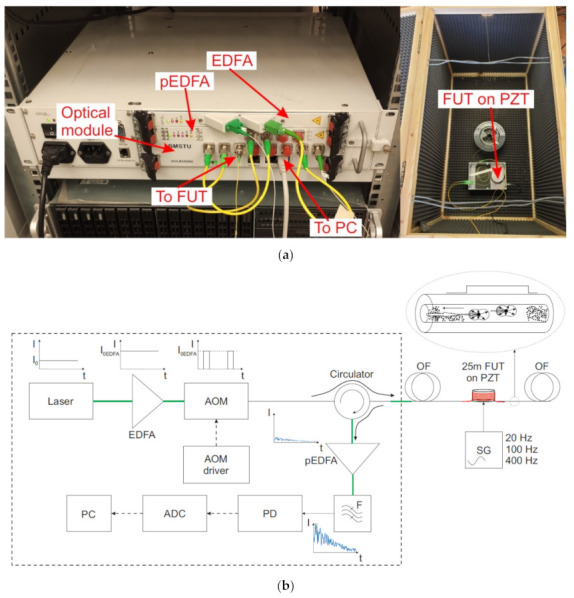
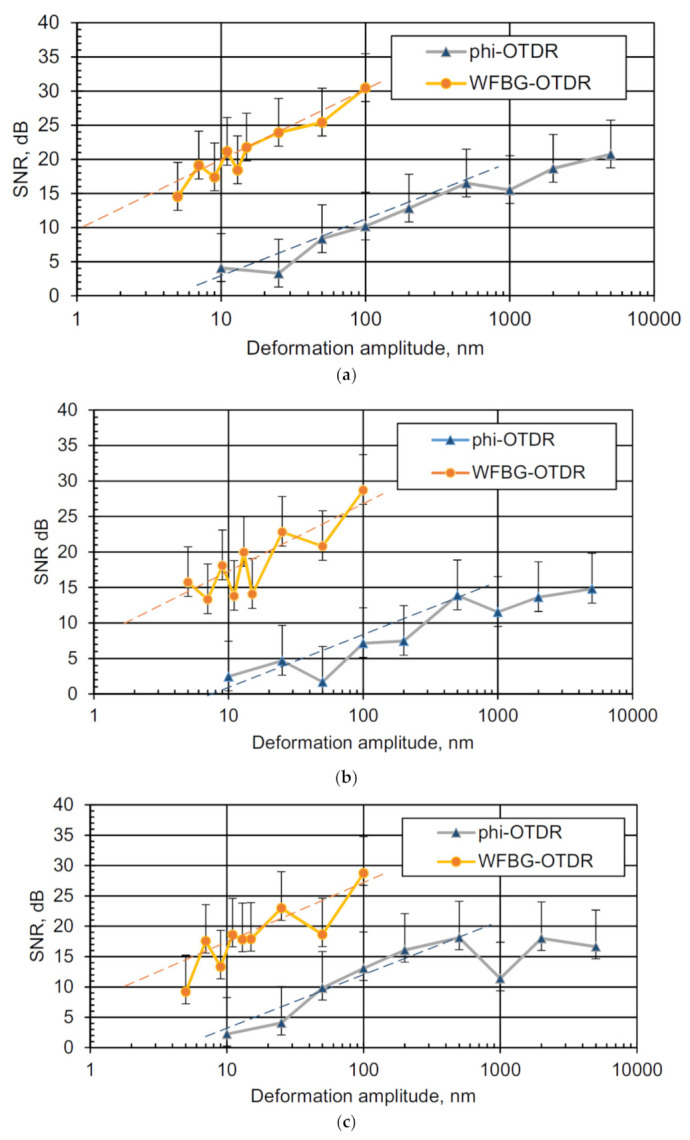
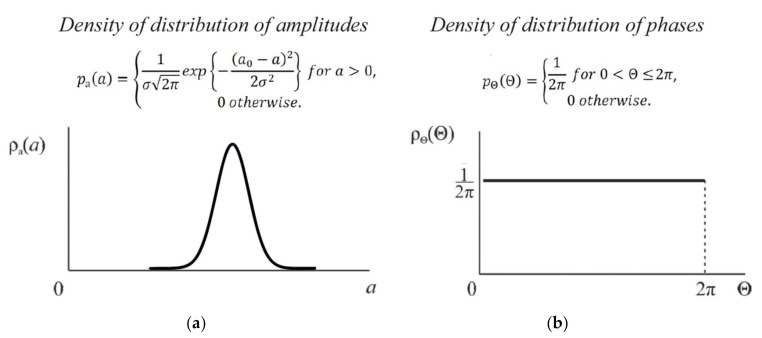
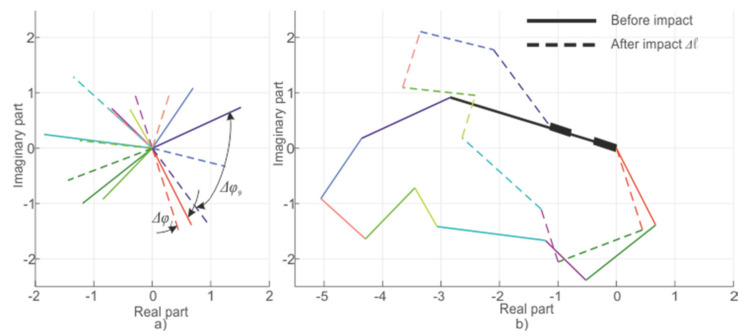
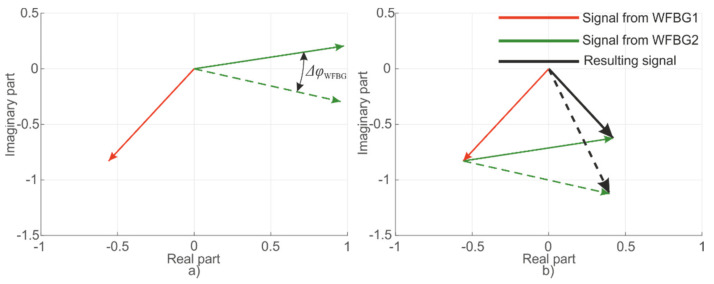
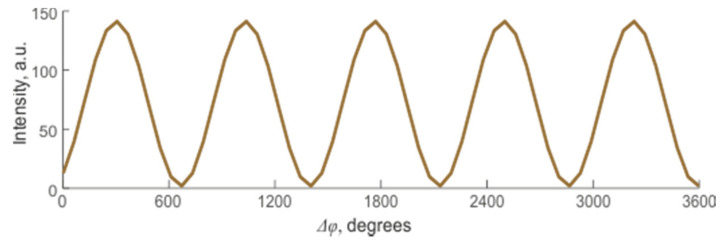
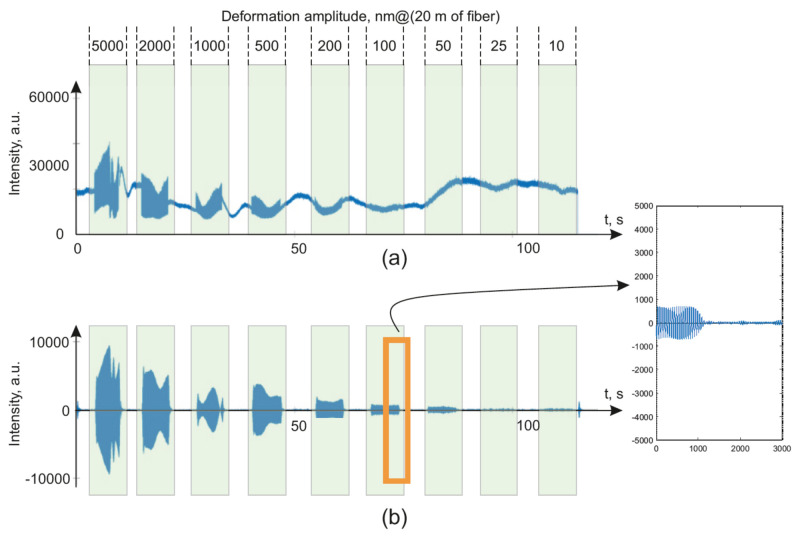
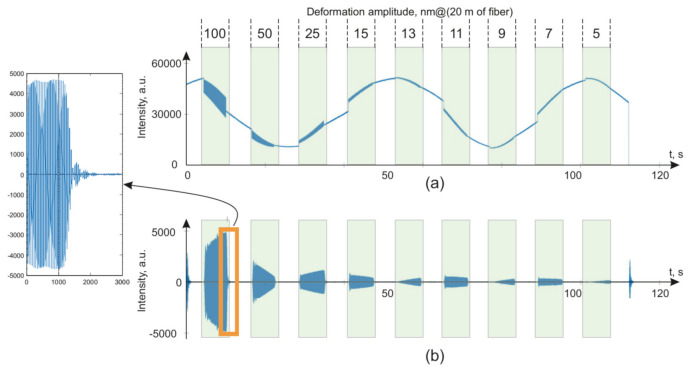
Weak fiber Bragg gratings (WFBGs) in a phase-sensitive optical time-domain reflectometer (phi-OTDR) sensor offer opportunities to significantly improve the signal-to-noise ratio (SNR) and sensitivity of the device. Here, we demonstrate the process of the signal and noise components' formation in the device reflectograms for a Rayleigh scattering phi-OTDR and a WFBG-based OTDR. We theoretically calculated the increase in SNR when using the same optical and electrical components under the same external impacts for both setups. The obtained values are confirmed on experimental installations, demonstrating an improvement in the SNR by about 19 dB at frequencies of 20, 100, and 400 Hz. In this way, the minimum recorded impact (at the threshold SNR = 10) can be reduced from 100 nm per 20 m of fiber to less than 5 nm per 20 m of fiber sensor.
相敏光时域反射仪(phi-OTDR)传感器中的弱光纤布拉格光栅(WFBG)为显著提高设备的信噪比(SNR)和灵敏度提供了机会。在此,我们展示了瑞利散射phi-OTDR和基于WFBG的OTDR在设备反射图中信号和噪声分量的形成过程。我们从理论上计算了在相同外部影响下,两种设置使用相同光学和电气组件时SNR的增加情况。所得值在实验装置上得到了证实,表明在20、100和400 Hz频率下,SNR提高了约19 dB。通过这种方式,最小记录影响(在阈值SNR = 10时)可以从每20米光纤100纳米降低到每20米光纤传感器小于5纳米。