Department of Zoology and Entomology, University of the Free State, Biology Building B19, 205 Nelson Mandela Dr, Park West, Bloemfontein, South Africa.
Department of Virology, University of the Free State and National Health Laboratory Service (NHLS), Bloemfontein, South Africa.
BMC Evol Biol. 2020 Nov 13;20(1):153. doi: 10.1186/s12862-020-01717-1.
Climatic and topographic changes function as key drivers in shaping genetic structure and cladogenic radiation in many organisms. Southern Africa has an exceptionally diverse tortoise fauna, harbouring one-third of the world's tortoise genera. The distribution of Psammobates tentorius (Kuhl, 1820) covers two of the 25 biodiversity hotspots in the world, the Succulent Karoo and Cape Floristic Region. The highly diverged P. tentorius represents an excellent model species for exploring biogeographic and radiation patterns of reptiles in Southern Africa.
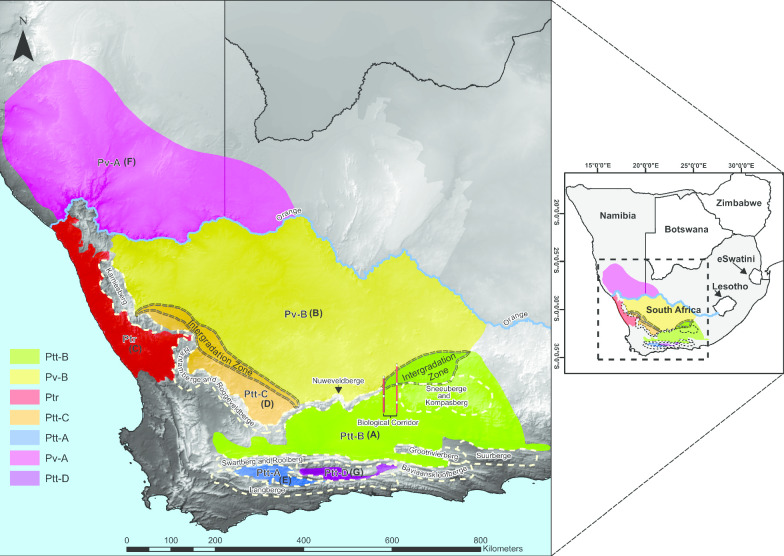
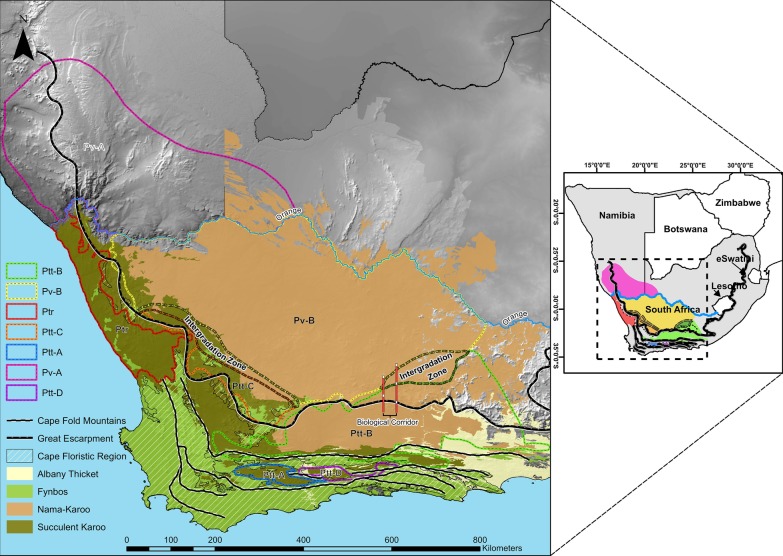
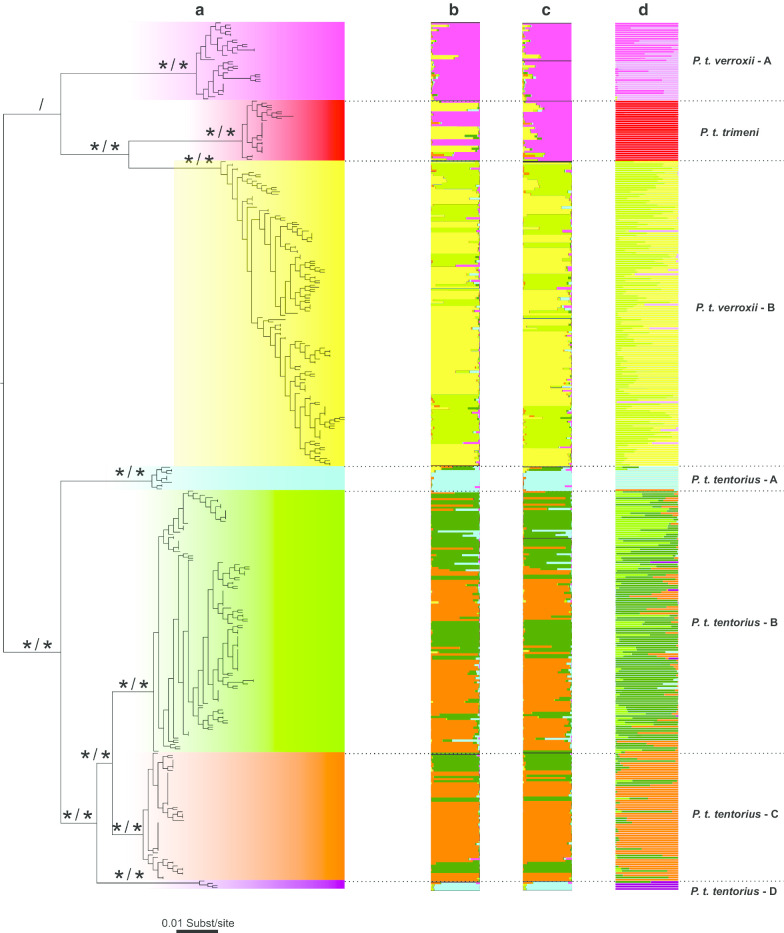
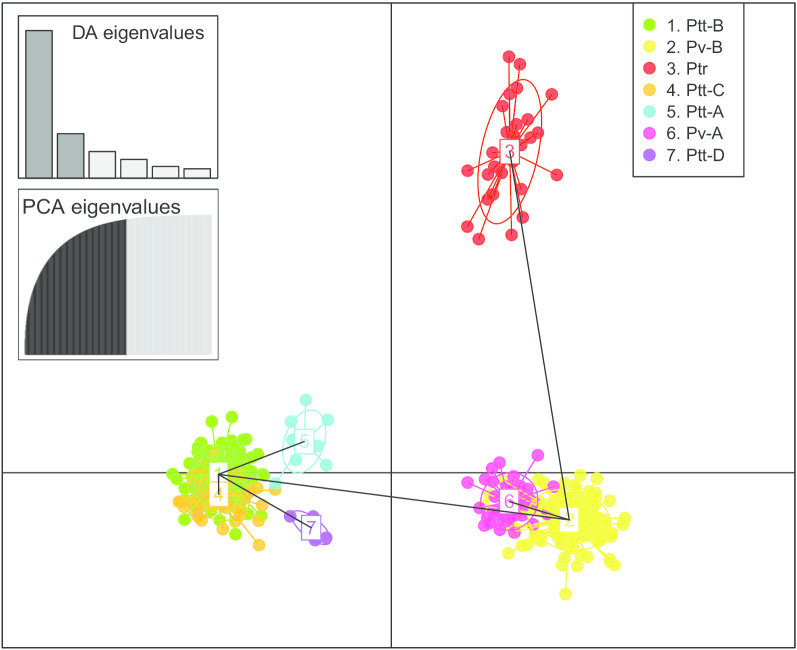
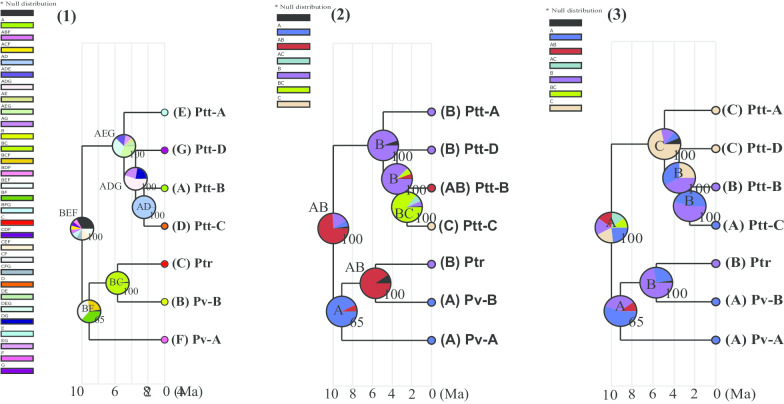
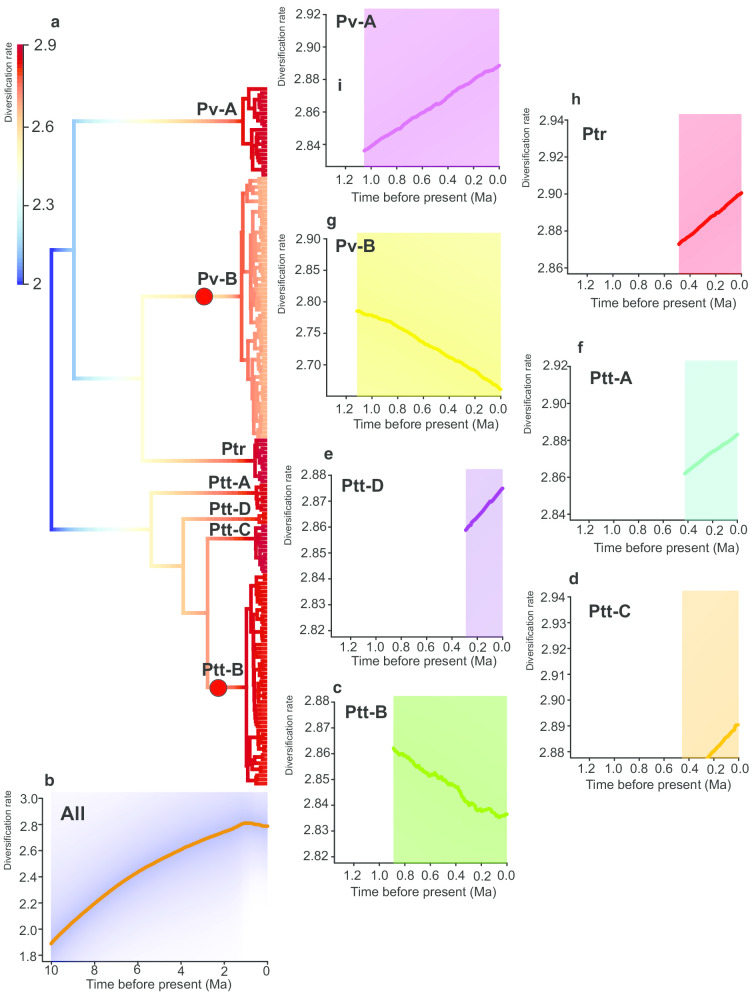
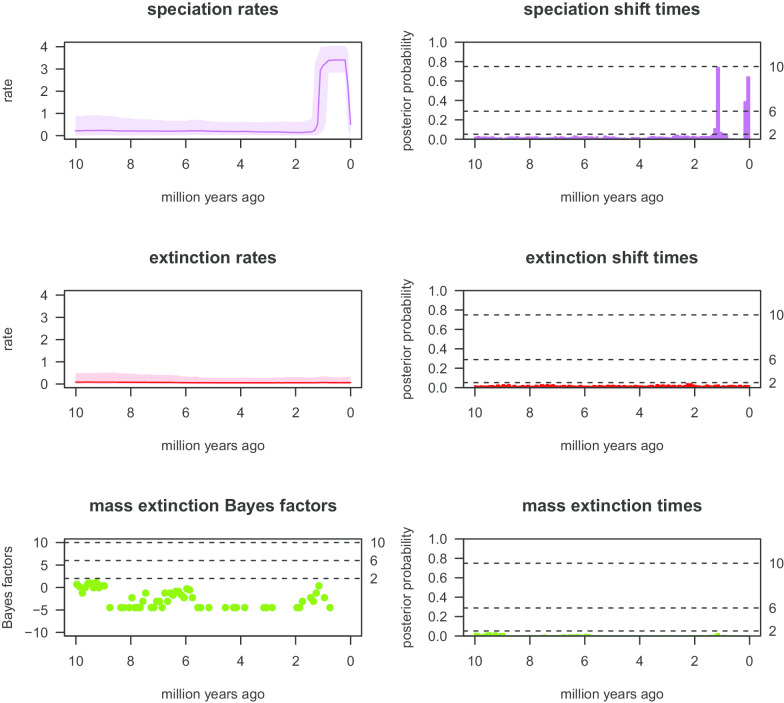
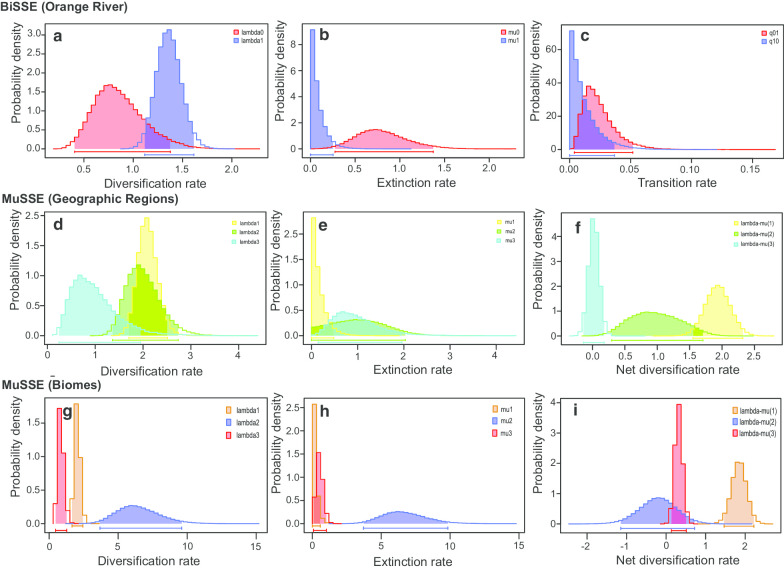
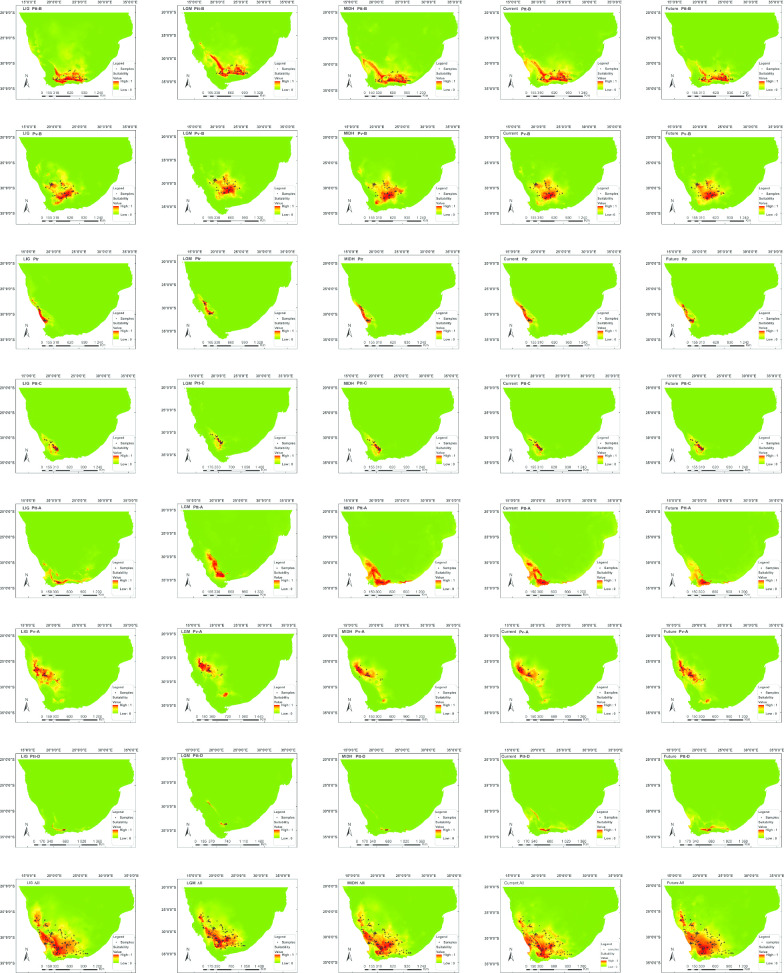
We investigated genetic structure and radiation patterns against temporal and spatial dimensions since the Miocene in the Psammobates tentorius species complex, using multiple types of DNA markers and niche modelling analyses. Cladogenesis in P. tentorius started in the late Miocene (11.63-5.33 Ma) when populations dispersed from north to south to form two geographically isolated groups. The northern group diverged into a clade north of the Orange River (OR), followed by the splitting of the group south of the OR into a western and an interior clade. The latter divergence corresponded to the intensification of the cold Benguela current, which caused western aridification and rainfall seasonality. In the south, tectonic uplift and subsequent exhumation, together with climatic fluctuations seemed responsible for radiations among the four southern clades since the late Miocene. We found that each clade occurred in a habitat shaped by different climatic parameters, and that the niches differed substantially among the clades of the northern group but were similar among clades of the southern group.
Climatic shifts, and biome and geographic changes were possibly the three major driving forces shaping cladogenesis and genetic structure in Southern African tortoise species. Our results revealed that the cladogenesis of the P. tentorius species complex was probably shaped by environmental cooling, biome shifts and topographic uplift in Southern Africa since the late Miocene. The Last Glacial Maximum (LGM) may have impacted the distribution of P. tentorius substantially. We found the taxonomic diversify of the P. tentorius species complex to be highest in the Greater Cape Floristic Region. All seven clades discovered warrant conservation attention, particularly Ptt-B-Ptr, Ptt-A and Pv-A.
气候和地形变化是许多生物形成遗传结构和分支辐射的关键驱动因素。南非拥有异常多样化的龟鳖类动物群,拥有世界上三分之一的龟鳖属。Psammobates tentorius(Kuhl,1820)的分布范围覆盖了世界 25 个生物多样性热点中的两个,即肉质喀拉哈里和开普植物区系地区。高度分化的 P. tentorius 是探索南非爬行动物生物地理和辐射模式的理想模式物种。
我们使用多种类型的 DNA 标记和生态位建模分析,从中新世至今,在 Psammobates tentorius 种复合体中研究了遗传结构和辐射模式,涉及时间和空间维度。中新世晚期(11.63-5.33 Ma),种群从北向南扩散,形成两个地理上隔离的群体,P. tentorius 的分支发生在这一时期。北部群体在奥伦治河(OR)以北分化出一个分支,随后 OR 以南的群体分裂为西部和内部分支。后者的分化与寒冷本格拉洋流的加强相对应,这导致了西部干旱化和降雨季节性。在南部,构造抬升和随后的暴露,以及气候波动似乎是自中新世以来南部四个分支辐射的原因。我们发现,每个分支都出现在由不同气候参数塑造的栖息地中,并且北部群体的分支之间的生态位差异很大,但南部群体的分支之间的生态位相似。
气候变化、生物群落和地理变化可能是塑造南非龟鳖类物种分支发生和遗传结构的三大驱动力。我们的研究结果表明,自中新世以来,南非龟鳖类物种复合体的分支发生可能是由环境冷却、生物群落变化和地形抬升塑造的。末次冰期可能对 P. tentorius 的分布产生了重大影响。我们发现,P. tentorius 种复合体的分类多样性在大开普植物区系地区最高。我们发现的七个分支都值得关注,特别是 Ptt-B-Ptr、Ptt-A 和 Pv-A。