Musarandega Reuben, Robinson Joanna, Sen Priti Dave, Hakobyan Anna, Mushavi Angela, Mahomva Agnes, Woelk Godfrey
Elizabeth Glaser Paediatric AIDS Foundation (EGPAF), Block 5, Arundel Office Park, Mt Pleasant, Harare, Zimbabwe.
Children's Investment Fund Foundation (CIFF), London, UK.
BMC Health Serv Res. 2020 Nov 13;20(1):1042. doi: 10.1186/s12913-020-05900-4.
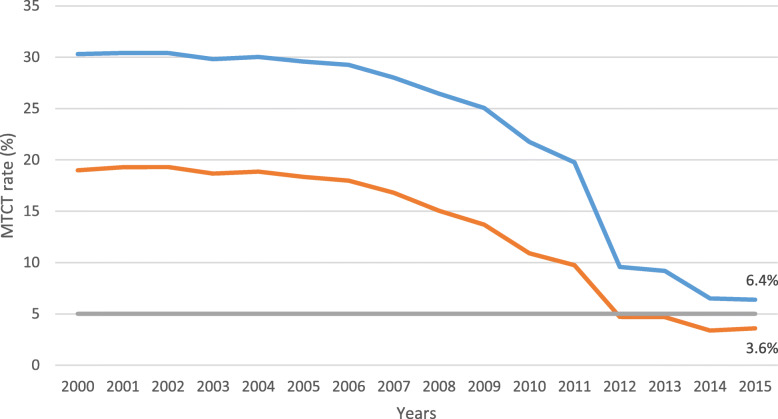
Achievement of the elimination target for mother-to-child transmission (MTCT) of HIV in selected countries has increased hope to end the HIV epidemic in children across the world. However, MTCT rates remain well above the 5% elimination target in most sub-Saharan Africa countries. These countries require innovative strategies to scale-up their interventions to end paediatric HIV. We describe how the Elizabeth Glaser Paediatric AIDS Foundation (EGPAF) consortium and the Children's Investment Fund Foundation (CIFF) used the critical path method to facilitate rapid expansion and optimization of 2010 and 2013 WHO PMTCT guidelines to reduce Zimbabwe's MTCT rate from 22% in 2010 to 6.4% in 2015.
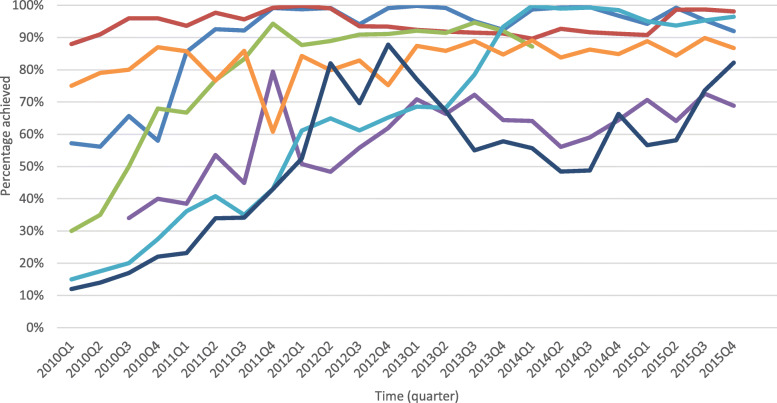
We analysed activities implemented and PMTCT programme data for the period before and during the EGPAF-CIFF project. The critical path method involved a cycle of collecting and analysing quarterly PMTCT indicator data and planning and implementing targeted activities to improve the PMTCT indicators. We performed a graphical trend analysis of data that measured availability of PMTCT services. Using Pearson's Chi2 test, we compared results of PMTCT uptake indicators at the start and end of the EGPAF-CIFF project and used regression discontinuity analysis to assess effectiveness of activities implemented to improve the PMTCT service uptake indicators.
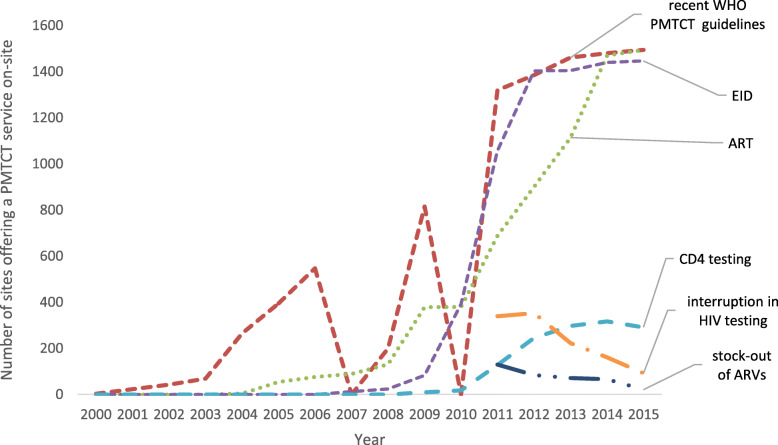
Zimbabwe rolled out WHO 2010 and 2013 PMTCT guidelines in less than 1 year during the EGPAF-CIFF project, yet it took more than 4 years to roll-out previous guidelines. All PMTCT indicators increased significantly (p < 0.001) comparing the five-year periods before and during the EGPAF-CIFF project. Critical path activities implemented increased five of the seven PMTCT uptake indicators.
Zimbabwe rapidly rolled-out and optimised new WHO PMTCT guidelines and drastically reduced its MTCT rate using the critical path method. We recommend wider use of the critical path method in public health programmes.
在部分国家实现人类免疫缺陷病毒(HIV)母婴传播(MTCT)消除目标,增强了在全球范围内终结儿童HIV流行的希望。然而,在撒哈拉以南非洲的大多数国家,MTCT率仍远高于5%的消除目标。这些国家需要创新策略来扩大干预措施,以终结儿童HIV感染。我们描述了伊丽莎白·格拉泽儿科艾滋病基金会(EGPAF)联盟和儿童投资基金基金会(CIFF)如何运用关键路径法,推动2010年和2013年世界卫生组织(WHO)预防母婴传播指南的快速推广与优化,从而将津巴布韦的MTCT率从2010年的22%降至2015年的6.4%。
我们分析了EGPAF-CIFF项目实施前及实施期间开展的活动以及预防母婴传播项目数据。关键路径法包括收集和分析季度预防母婴传播指标数据,以及规划和实施针对性活动以改善预防母婴传播指标这一循环过程。我们对衡量预防母婴传播服务可及性的数据进行了图形趋势分析。使用Pearson卡方检验,我们比较了EGPAF-CIFF项目开始和结束时预防母婴传播接受指标的结果,并使用回归断点分析来评估为改善预防母婴传播服务接受指标而实施的活动的有效性。
在EGPAF-CIFF项目期间,津巴布韦在不到1年的时间里推广了WHO 2010年和2013年预防母婴传播指南,而此前的指南推广耗时超过4年。比较EGPAF-CIFF项目实施前和实施期间的五年,所有预防母婴传播指标均显著提高(p < 0.001)。实施的关键路径活动使七个预防母婴传播接受指标中的五个得到了改善。
津巴布韦迅速推广并优化了WHO新的预防母婴传播指南,并运用关键路径法大幅降低了其MTCT率。我们建议在公共卫生项目中更广泛地使用关键路径法。