Department of Rehabilitation Medicine, Peking University Third Hospital, Beijing 100191, China.
Aging (Albany NY). 2020 Nov 7;12(21):22313-22334. doi: 10.18632/aging.103675.
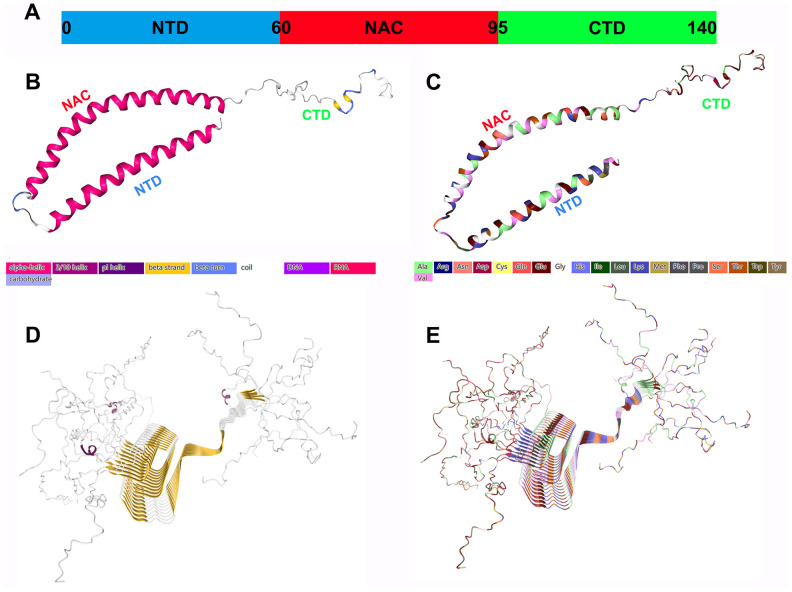
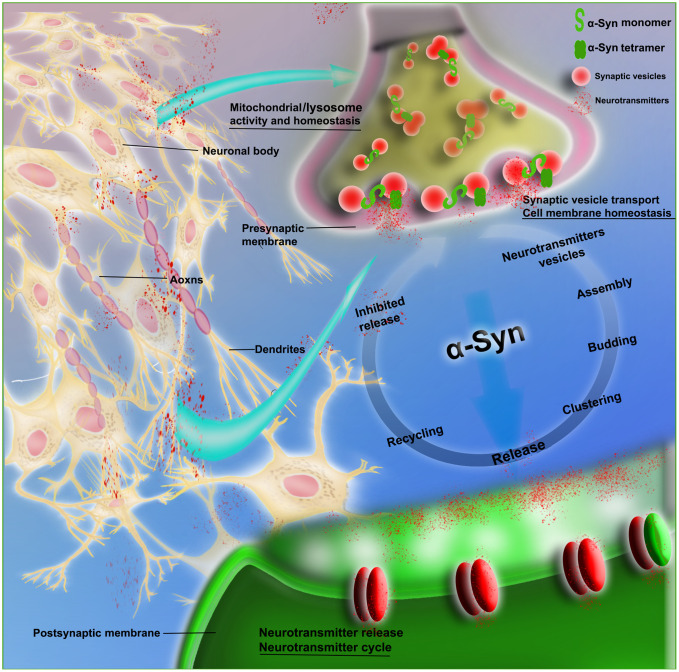
α-Synuclein (α-Syn) is a small, soluble, disordered protein that is widely expressed in the nervous system. Although its physiological functions are not yet fully understood, it is mainly involved in synaptic vesicle transport, neurotransmitter synthesis and release, cell membrane homeostasis, lipid synthesis, mitochondrial and lysosomal activities, and heavy metal removal. The complex and inconsistent pathological manifestations of α-Syn are attributed to its structural instability, mutational complexity, misfolding, and diverse posttranslational modifications. These effects trigger mitochondrial dysfunction, oxidative stress, and neuroinflammatory responses, resulting in neuronal death and neurodegeneration. Several recent studies have discovered the pathogenic roles of α-Syn in traumatic and vascular central nervous system diseases, such as traumatic spinal cord injury, brain injury, and stroke, and in aggravating the processes of neurodegeneration. This review aims to highlight the structural and pathophysiological changes in α-Syn and its mechanism of action in traumatic and vascular diseases of the central nervous system.
α-突触核蛋白(α-Syn)是一种小而可溶性的无序蛋白,广泛表达于神经系统中。尽管其生理功能尚未完全阐明,但它主要参与突触囊泡运输、神经递质合成和释放、细胞膜稳态、脂质合成、线粒体和溶酶体活性以及重金属清除。α-Syn 的复杂和不一致的病理表现归因于其结构不稳定、突变复杂性、错误折叠和多种翻译后修饰。这些影响触发线粒体功能障碍、氧化应激和神经炎症反应,导致神经元死亡和神经退行性变。最近的几项研究发现了 α-Syn 在创伤性和血管性中枢神经系统疾病(如创伤性脊髓损伤、脑损伤和中风)中的致病作用,并加重了神经退行性变的过程。本综述旨在强调 α-Syn 的结构和病理生理学变化及其在创伤性和血管性中枢神经系统疾病中的作用机制。