Department of Pediatrics, Rush University Children's Hospital, Chicago, IL, USA.
Departments of Health Systems Management, Rush University, Chicago, IL, USA.
Pediatr Res. 2021 Jan;89(2):344-352. doi: 10.1038/s41390-020-01263-y. Epub 2020 Nov 13.
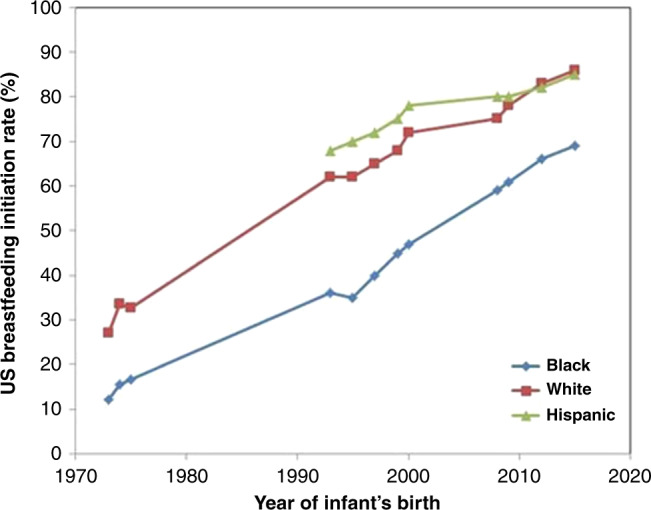
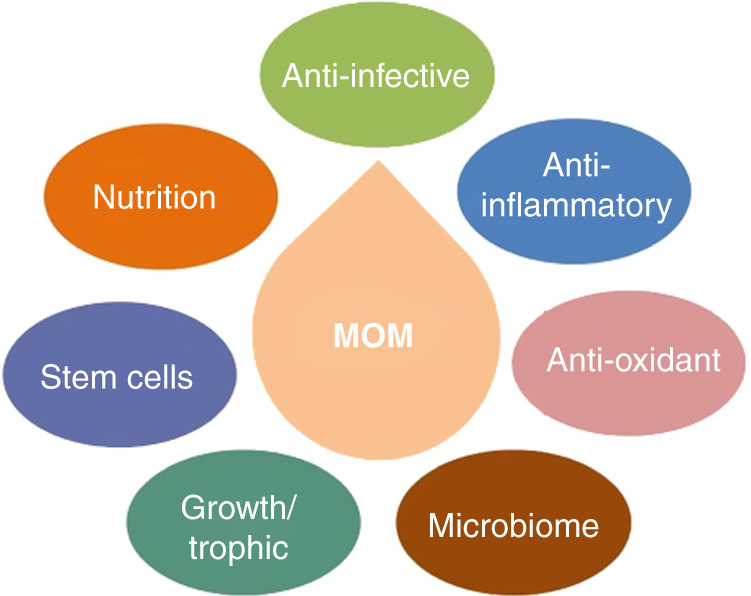
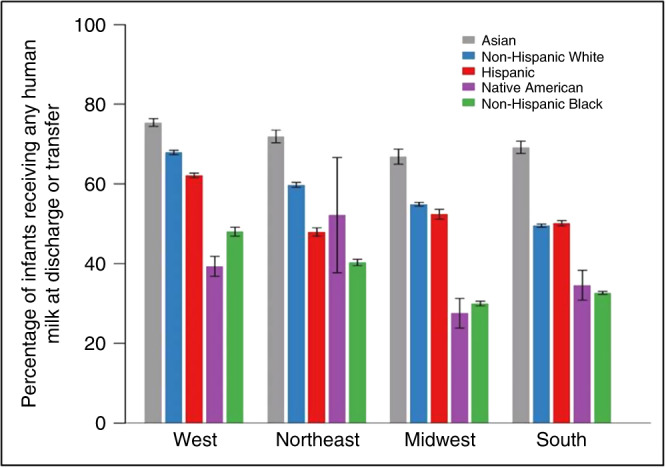
Very low birth weight (VLBW; <1500 g birth weight) infants are substantially more likely to be born to black than to non-black mothers, predisposing them to potentially preventable morbidities that increase the risk for costly lifelong health problems. Mothers' own milk (MOM) may be considered the ultimate "personalized medicine" since milk composition and bioactive components vary among mothers and multiple milk constituents provide specific protection based on shared exposures between mother and infant. MOM feedings reduce the risks and associated costs of prematurity-associated morbidities, with the greatest reduction afforded by MOM through to NICU discharge. Although black and non-black mothers have similar lactation goals and initiation rates, black VLBW infants are half as likely to receive MOM at NICU discharge in the United States. Black mothers are significantly more likely to be low-income, single heads of household and have more children in the home, increasing the burden of MOM provision. Although rarely considered, the out-of-pocket and opportunity costs associated with providing MOM for VLBW infants are especially onerous for black mothers. When MOM is not available, the NICU assumes the costs of inferior substitutes for MOM, contributing further to disparate outcomes. Novel strategies to mitigate these disparities are urgently needed. IMPACT: Mother's own milk exemplifies personalized medicine through its unique biologic activity. Hospital factors and social determinants of health are associated with mother's own milk feedings for very low-birth-weight infants in the neonatal intensive care unit. Notably, out-of-pocket and opportunity costs associated with providing mother's own milk are borne by mothers. Conceptualizing mother's own milk feedings as an integral part of NICU care requires consideration of who bears the costs of MOM provision-the mother or the NICU?
极低出生体重(VLBW;出生体重<1500 克)婴儿更有可能出生于黑人母亲,这使他们易患潜在可预防的疾病,增加了终生昂贵健康问题的风险。母亲自己的奶(MOM)可以被认为是终极的“个性化药物”,因为母乳的成分和生物活性成分在母亲之间存在差异,并且多种乳汁成分根据母婴之间的共同暴露提供特定的保护。MOM 喂养可降低与早产相关的疾病的风险和相关成本,通过 MOM 喂养至新生儿重症监护病房(NICU)出院可获得最大程度的降低。尽管黑人和非黑人母亲有相似的哺乳目标和启动率,但在美国,黑人 VLBW 婴儿在 NICU 出院时接受 MOM 的可能性仅为一半。黑人母亲更有可能是低收入、单身家庭主妇,并且家中有更多的孩子,这增加了提供 MOM 的负担。尽管很少被考虑,但为 VLBW 婴儿提供 MOM 的自付费用和机会成本对于黑人母亲来说尤其繁重。当 MOM 不可用时,NICU 将承担 MOM 替代品的成本,这进一步导致了结果的差异。迫切需要新的策略来减轻这些差异。影响:通过其独特的生物活性,母亲自己的奶体现了个性化药物。医院因素和健康的社会决定因素与新生儿重症监护病房极低出生体重婴儿的母亲自己的奶喂养有关。值得注意的是,提供母亲自己的奶的自付费用和机会成本由母亲承担。将母亲自己的奶喂养视为 NICU 护理的一个组成部分,需要考虑谁承担 MOM 提供的成本-母亲还是 NICU?