Department of Psychiatry and Psychotherapy, University Medical Center Hamburg-Eppendorf, Germany.
Department of Psychiatry and Psychotherapy, University Medical Center Hamburg-Eppendorf, Germany.
J Anxiety Disord. 2021 Jan;77:102329. doi: 10.1016/j.janxdis.2020.102329. Epub 2020 Nov 5.
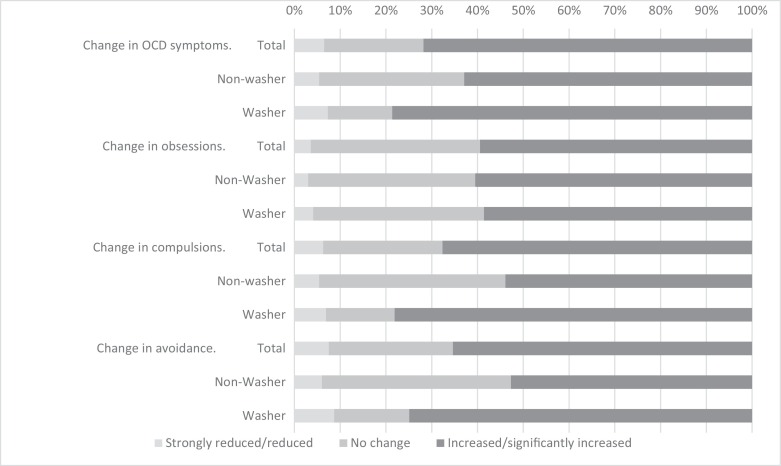
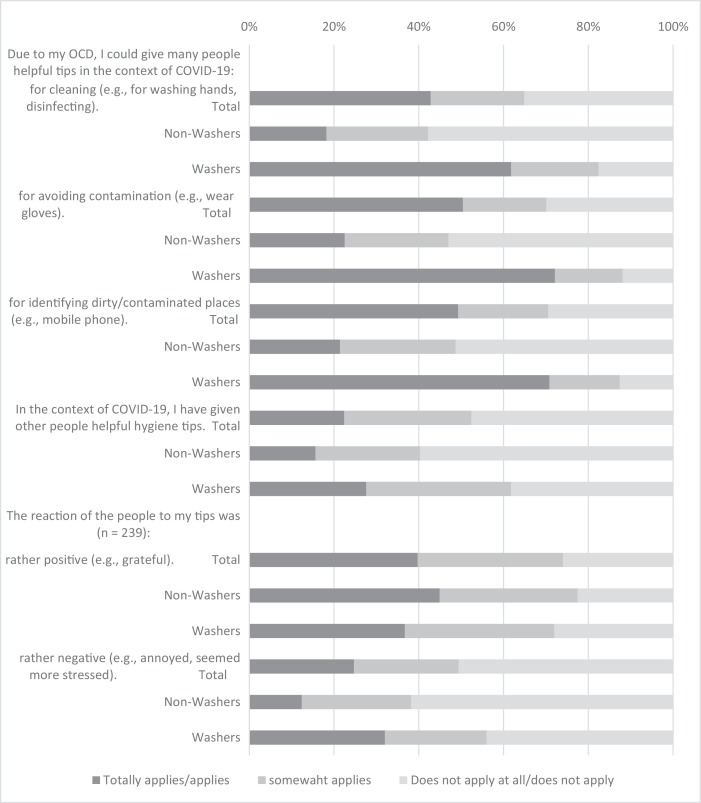
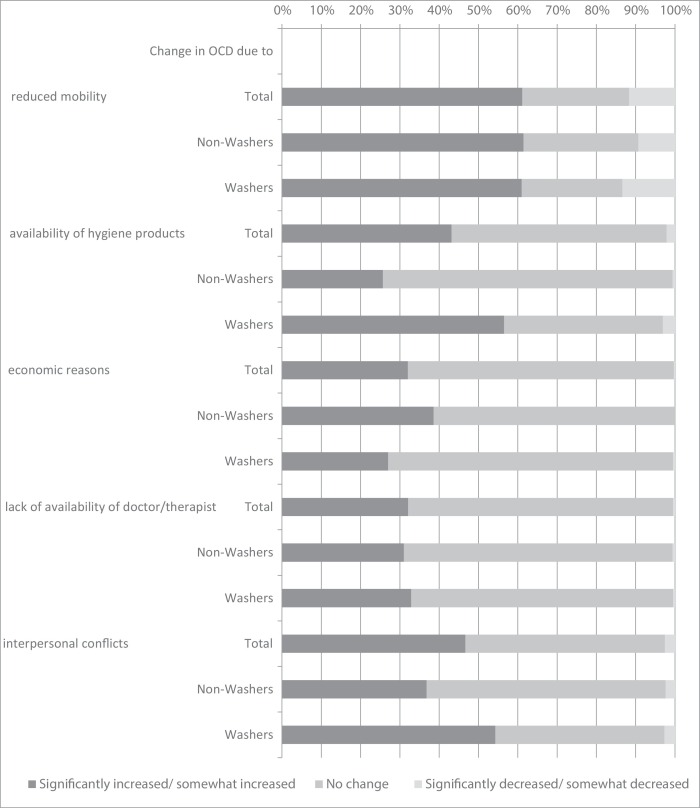
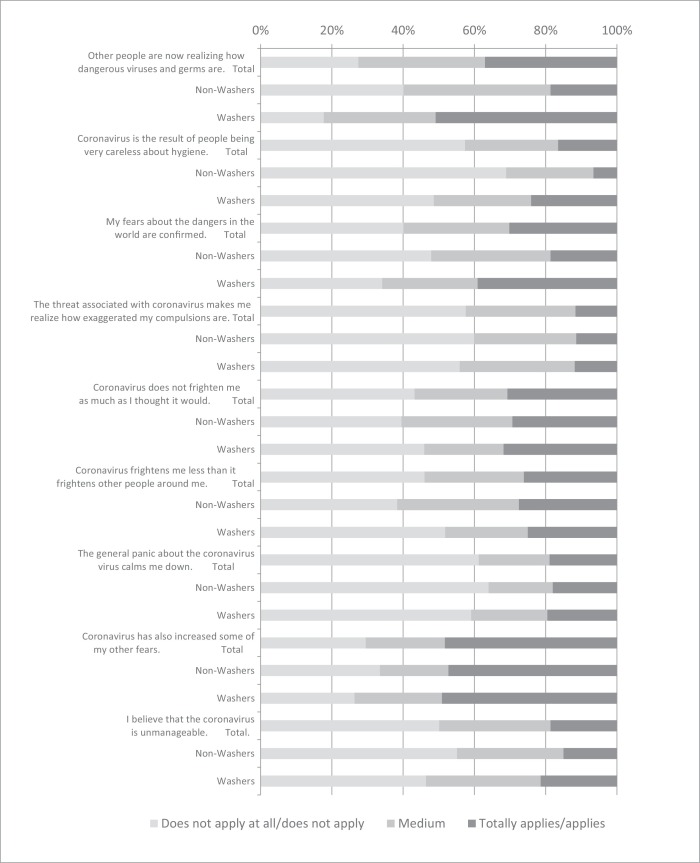
The COVID-19 pandemic has prompted global measures to prevent infection. Experts assume that it is particularly affecting people with obsessive-compulsive disorder (OCD), especially those with washing compulsions. Data, however, are currently lacking. 394 participants with OCD (n = 223 washers) participated in an online survey. Change in severity of OCD symptoms, reasons participants reported for the change (e.g., reduced mobility, reduced availability of cleaning products, economic factors, interpersonal conflicts), as well as participants' beliefs and experience associated with COVID-19 were assessed. 72 % of the participants reported an increase in OCD. This increase was significantly stronger in washers compared to non-washers. The worsening of symptoms was primarily associated with reduced mobility and interpersonal conflicts. Dysfunctional hygiene-related beliefs were significantly higher in washers than non-washers and were associated with greater symptom progression. Washers were more confident than non-washers about providing other people with helpful advice related to infection preventions. Washers, however, received more negative feedback from others in response to the advice they provided than non-washers. The majority of participants with OCD were negatively affected by the COVID-19 pandemic, and the negative effects were more pronounced in washers than in non-washers. Rapid interventions for OCD should be implemented to prevent long-term deterioration.
COVID-19 大流行促使全球采取措施预防感染。专家假设它特别影响强迫症(OCD)患者,尤其是那些有强迫洗涤的患者。然而,目前数据不足。394 名 OCD 患者(n=223 名洗涤者)参加了一项在线调查。评估了 OCD 症状严重程度的变化、参与者报告的变化原因(例如,活动能力下降、清洁产品供应减少、经济因素、人际冲突),以及与 COVID-19 相关的参与者信念和经验。72%的参与者报告 OCD 症状加重。与非洗涤者相比,洗涤者的这种增加更为明显。症状恶化主要与活动能力下降和人际冲突有关。与非洗涤者相比,洗涤者的与卫生相关的不良信念明显更高,与症状进展相关。与非洗涤者相比,洗涤者更有信心向他人提供有关感染预防的有用建议。然而,与非洗涤者相比,洗涤者从他人那里收到的关于他们提供的建议的负面反馈更多。大多数 OCD 患者受到 COVID-19 大流行的负面影响,洗涤者的负面影响比非洗涤者更明显。应实施针对 OCD 的快速干预措施,以防止长期恶化。