Hans Popper Laboratory of Molecular Hepatology, Division of Gastroenterology and Hepatology, Department of Internal Medicine III, Medical University of Vienna, Vienna, Austria.
Medical Intensive Care Unit 13H1. Division of Gastroenterology and Hepatology, Department of Internal Medicine III, Medical University of Vienna, Vienna, Austria.
Liver Int. 2021 Jan;41(1):20-32. doi: 10.1111/liv.14730. Epub 2020 Nov 29.
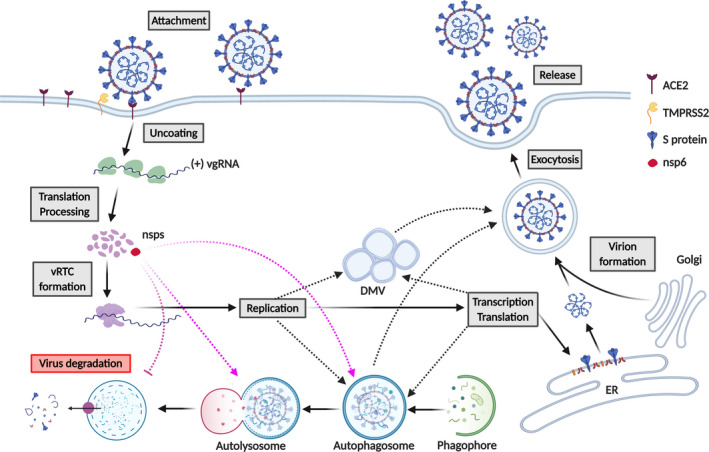
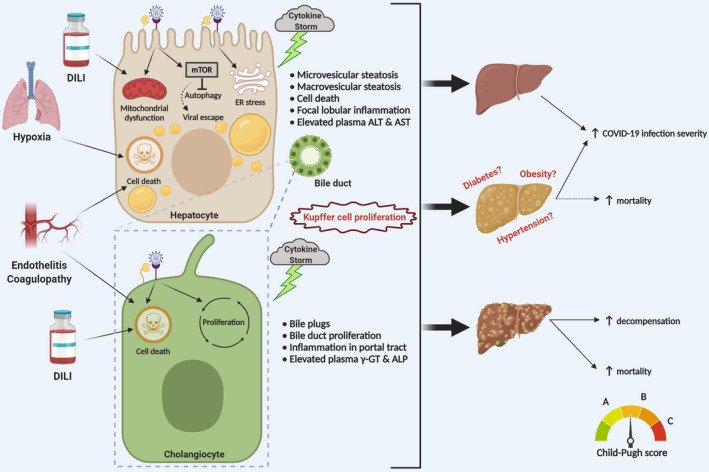
The recent outbreak of coronavirus disease 2019 (COVID-19), caused by the Severe Acute Respiratory Syndrome Coronavirus-2 (SARS-CoV-2) has resulted in a world-wide pandemic. Disseminated lung injury with the development of acute respiratory distress syndrome (ARDS) is the main cause of mortality in COVID-19. Although liver failure does not seem to occur in the absence of pre-existing liver disease, hepatic involvement in COVID-19 may correlate with overall disease severity and serve as a prognostic factor for the development of ARDS. The spectrum of liver injury in COVID-19 may range from direct infection by SARS-CoV-2, indirect involvement by systemic inflammation, hypoxic changes, iatrogenic causes such as drugs and ventilation to exacerbation of underlying liver disease. This concise review discusses the potential pathophysiological mechanisms for SARS-CoV-2 hepatic tropism as well as acute and possibly long-term liver injury in COVID-19.
2019 年冠状病毒病(COVID-19)的爆发是由严重急性呼吸系统综合症冠状病毒 2(SARS-CoV-2)引起的,已在全球范围内蔓延。弥漫性肺损伤伴发急性呼吸窘迫综合征(ARDS)是 COVID-19 患者死亡的主要原因。尽管在没有既往肝脏疾病的情况下似乎不会发生肝功能衰竭,但 COVID-19 中的肝损伤可能与整体疾病严重程度相关,并作为发生 ARDS 的预后因素。COVID-19 中的肝损伤谱可能包括 SARS-CoV-2 的直接感染、全身炎症的间接参与、缺氧变化、药物和通气等医源性因素,以及潜在肝脏疾病的恶化。本综述简要讨论了 SARS-CoV-2 对肝脏的嗜性以及 COVID-19 中急性和可能长期肝损伤的潜在病理生理机制。