Park No-June, Bong Sim-Kyu, Lee Sullim, Jung Yujung, Jegal Hyun, Kim Jinchul, Kim Si-Kwan, Kim Yong Kee, Kim Su-Nam
Natural Products Research Institute, Korea Institute of Science and Technology, Gangneung, Republic of Korea.
Department of Life Science, College of Bio-Nano Technology, Gachon University, Seongnam, Republic of Korea.
J Ginseng Res. 2020 Nov;44(6):799-807. doi: 10.1016/j.jgr.2019.11.006. Epub 2019 Nov 14.
The skin acts as a barrier to protect organisms against harmful exogenous agents. Compound K (CK) is an active metabolite of ginsenoside Rb1, Rb2 and Rc, and researchers have focused on its skin protective efficacy. In this study, we hypothesized that increased expression of the serine protease inhibitor Kazal type-5 (SPINK5) may improve skin barrier function.
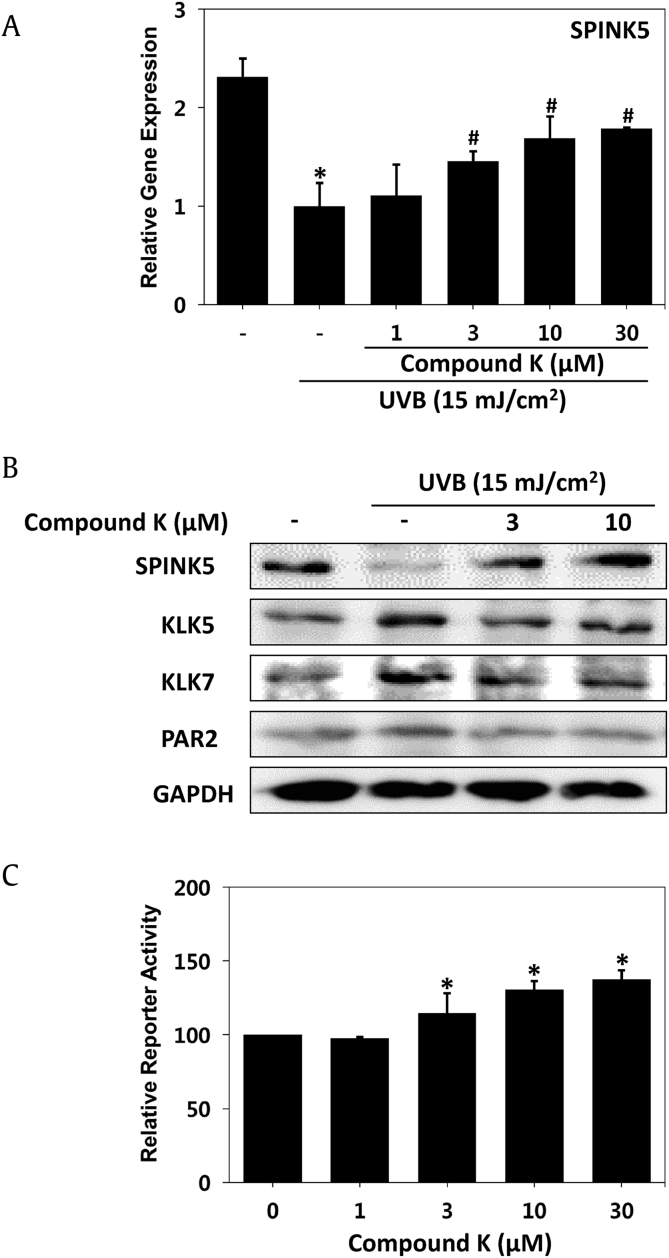
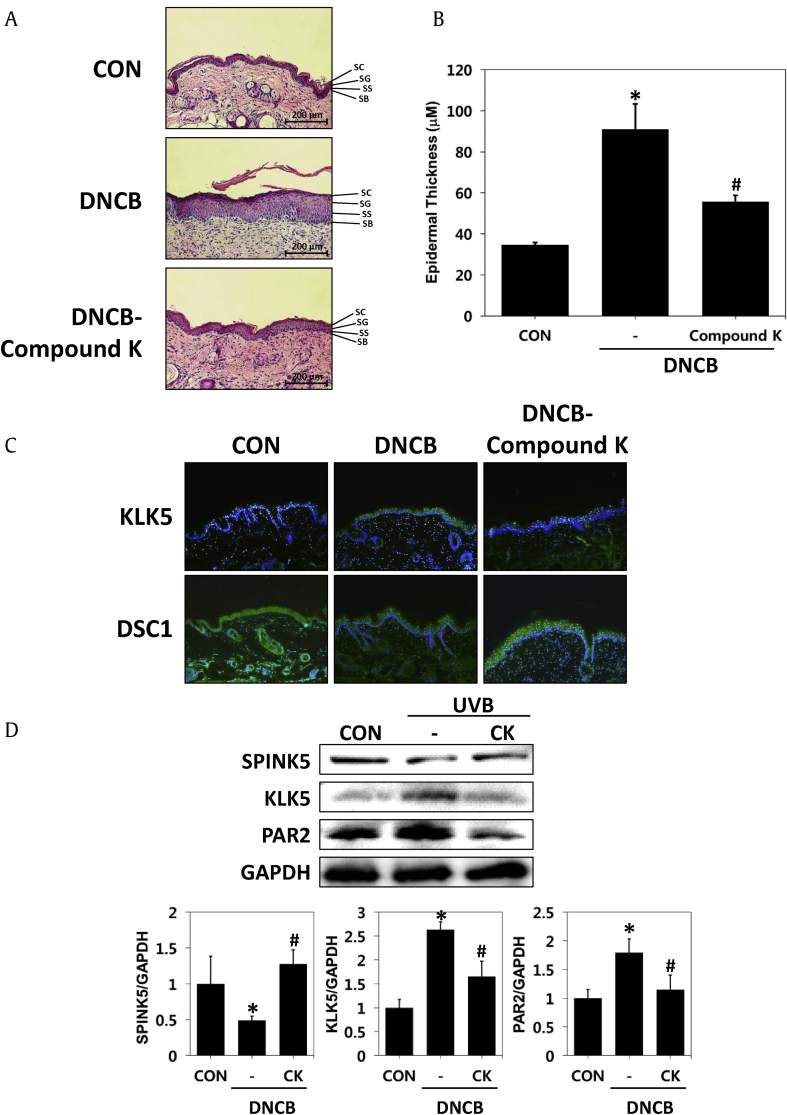
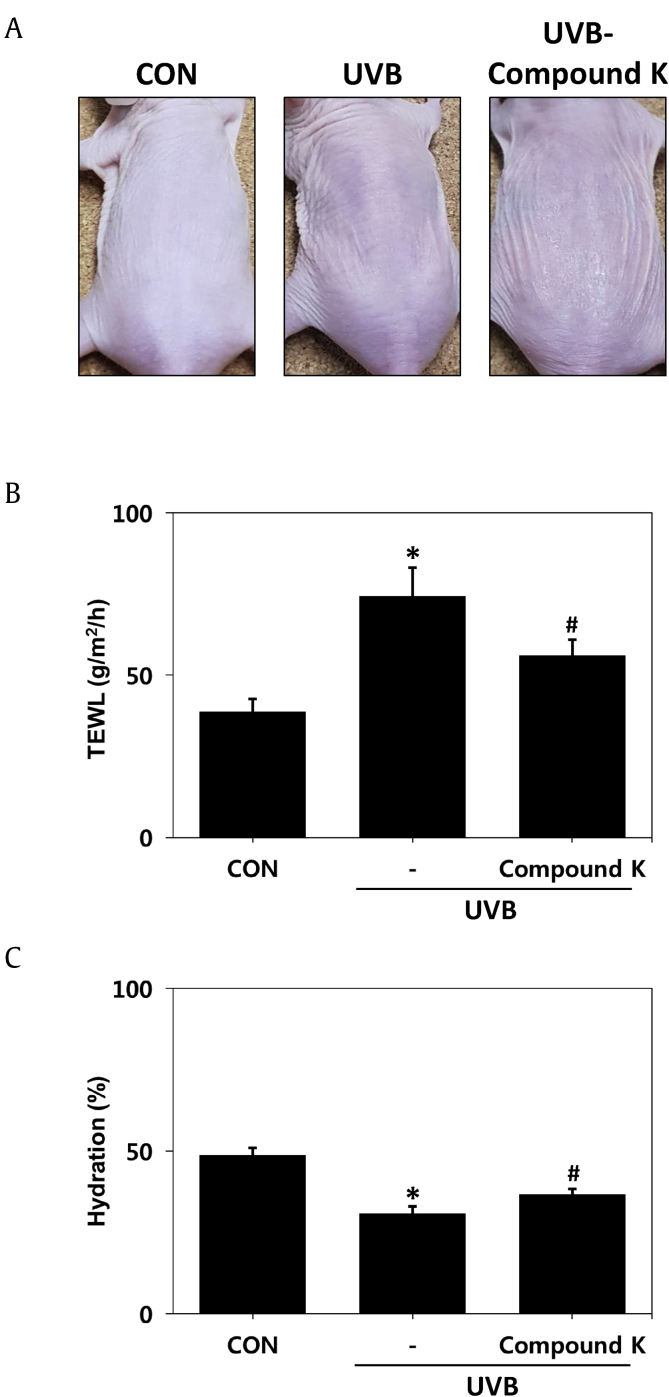
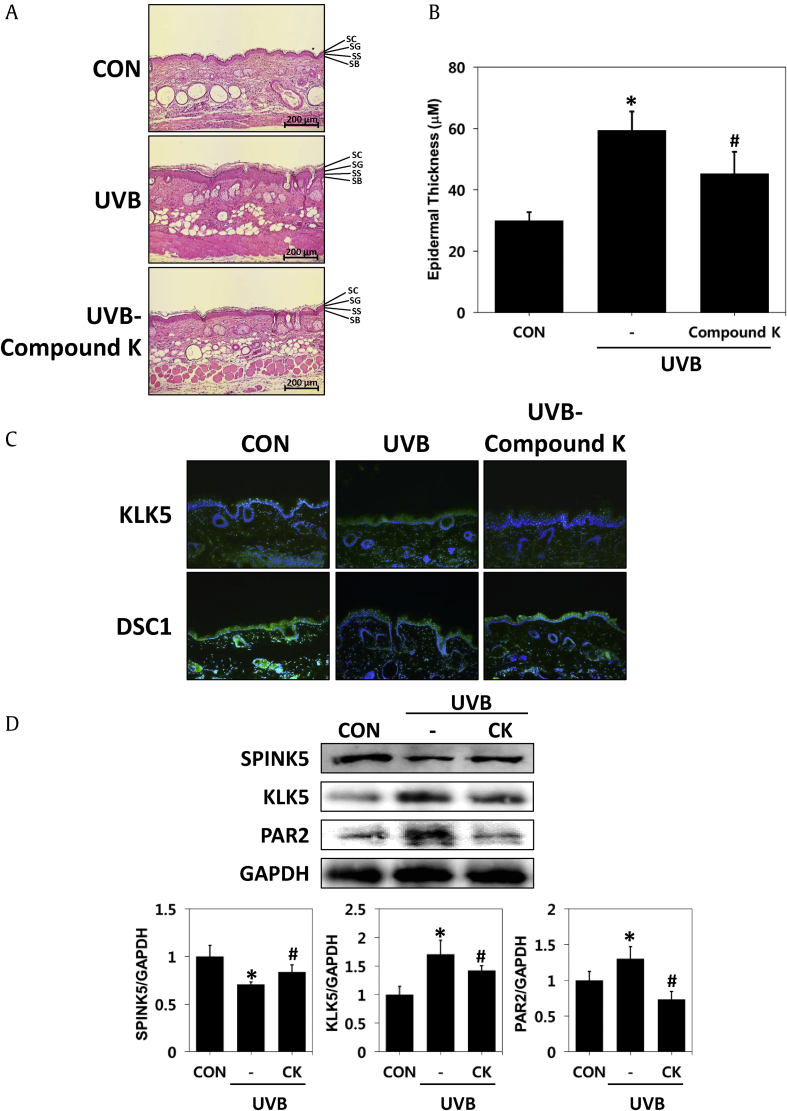
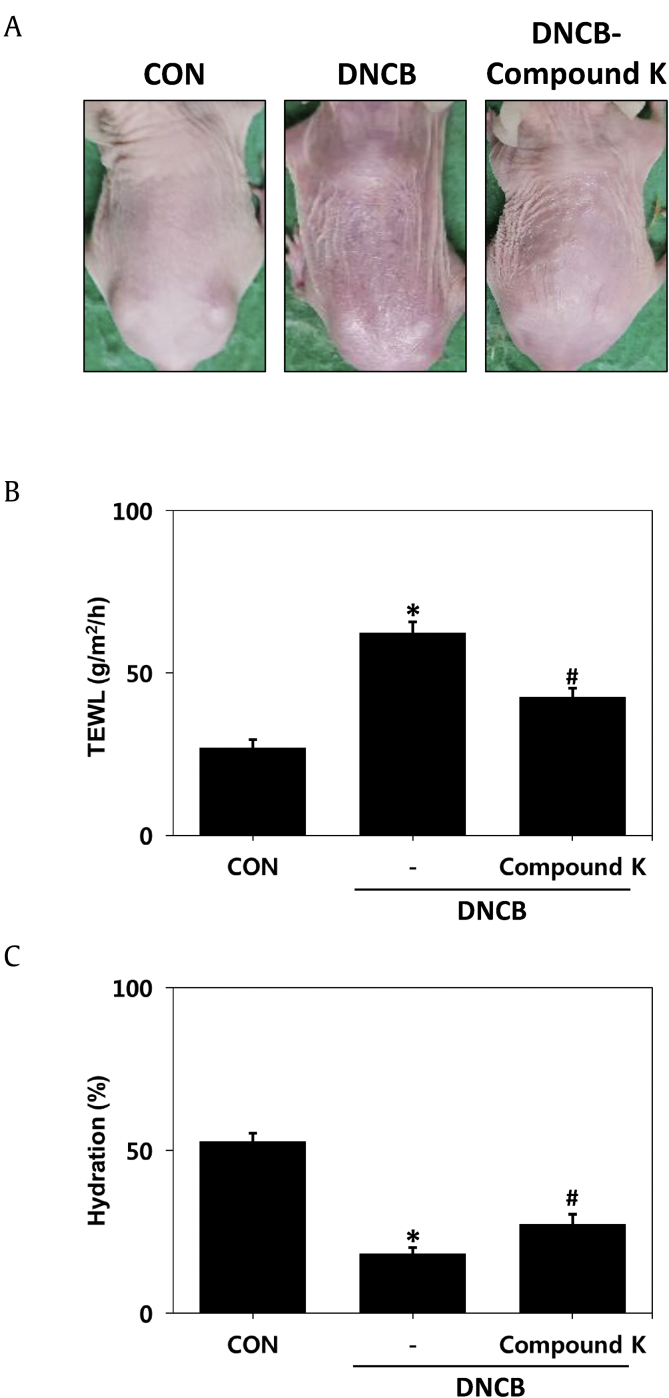
We screened several ginsenosides to increase SPINK5 gene promoter activity using a transactivation assay and found that CK can increase SPINK5 expression. To investigate the protective effect of CK on the skin barrier, RT-PCR and Western blotting were performed to investigate the expression levels of SPINK5, kallikrein 5 (KLK5), KLK7 and PAR2 in UVB-irradiated HaCaT cells. Measurement of transepidermal water loss (TEWL) and histological changes associated with the skin barrier were performed in a UVB-irradiated mouse model and a 1-chloro-2,4-dinitrobenzene (DNCB)-induced atopic dermatitis-like model.
CK treatment increased the expression of SPINK5 and decreased the expression of its downstream genes, such as KLKs and PAR2. In the UVB-irradiated mouse model and the DNCB-induced atopic dermatitis model, CK restored increased TEWL and decreased hydration and epidermal hyperplasia. In addition, CK normalized the reduced SPINK5 expression caused by UVB or DNCB, thereby restoring the expression of the proteins involved in desquamation to a level similar to normal.
Our data showed that CK contributes to improving skin-barrier function in UVB-irradiated and DNCB-induced atopic dermatitis-like models through SPINK5. These results suggest that therapeutic attempts with CK might be useful in treating barrier-disrupted diseases.
皮肤作为一道屏障,保护机体免受有害外源性物质的侵害。化合物K(CK)是人参皂苷Rb1、Rb2和Rc的活性代谢产物,研究人员一直关注其皮肤保护功效。在本研究中,我们假设丝氨酸蛋白酶抑制剂Kazal 5型(SPINK5)表达的增加可能会改善皮肤屏障功能。
我们使用反式激活试验筛选了几种人参皂苷以提高SPINK5基因启动子活性,发现CK可增加SPINK5表达。为研究CK对皮肤屏障的保护作用,我们进行了逆转录聚合酶链反应(RT-PCR)和蛋白质免疫印迹法,以研究紫外线B(UVB)照射的人永生化角质形成细胞(HaCaT细胞)中SPINK5、激肽释放酶5(KLK5)、KLK7和蛋白酶激活受体2(PAR2)的表达水平。在UVB照射的小鼠模型和1-氯-2,4-二硝基苯(DNCB)诱导的特应性皮炎样模型中,测量经表皮水分流失(TEWL)以及与皮肤屏障相关的组织学变化。
CK处理增加了SPINK5的表达,并降低了其下游基因如KLKs和PAR2的表达。在UVB照射的小鼠模型和DNCB诱导的特应性皮炎模型中,CK恢复了升高的TEWL,并减少了皮肤水合作用和表皮增生。此外,CK使由UVB或DNCB引起的SPINK5表达降低恢复正常,从而将参与脱屑的蛋白质表达恢复到与正常水平相似的水平。
我们的数据表明,在UVB照射和DNCB诱导的特应性皮炎样模型中,CK通过SPINK5有助于改善皮肤屏障功能。这些结果表明,用CK进行治疗尝试可能对治疗屏障破坏疾病有用。