Li Guozheng, Guan Chen, Xu Lingyu, Wang Lin, Yang Chengyu, Zhao Long, Zhou Bin, Luo Congjuan, Luan Hong, Jiang Wei, Li Chenyu, Xu Yan
The Affiliated Hospital of Qingdao University, Qingdao, China.
Medizinische Klinik und Poliklinik IV, Klinikum der Universität, LMU München, München, German.
Front Pharmacol. 2020 Oct 22;11:584942. doi: 10.3389/fphar.2020.584942. eCollection 2020.
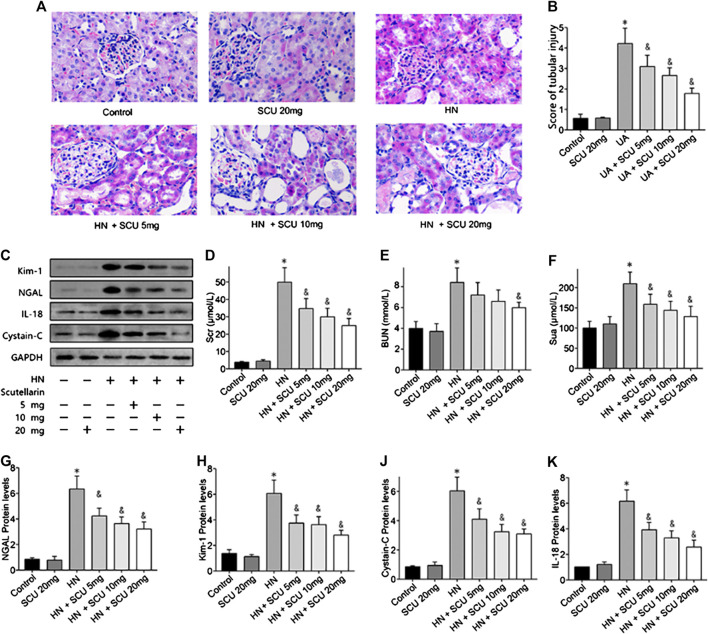
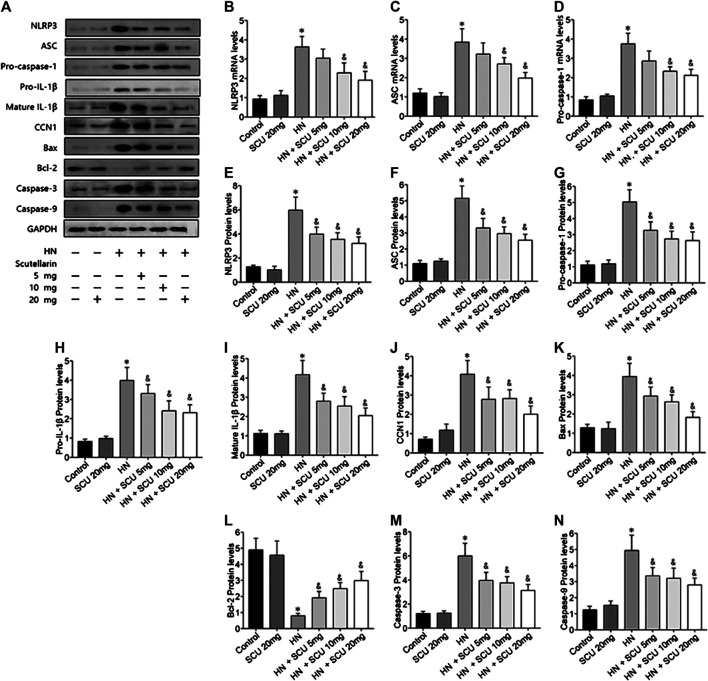
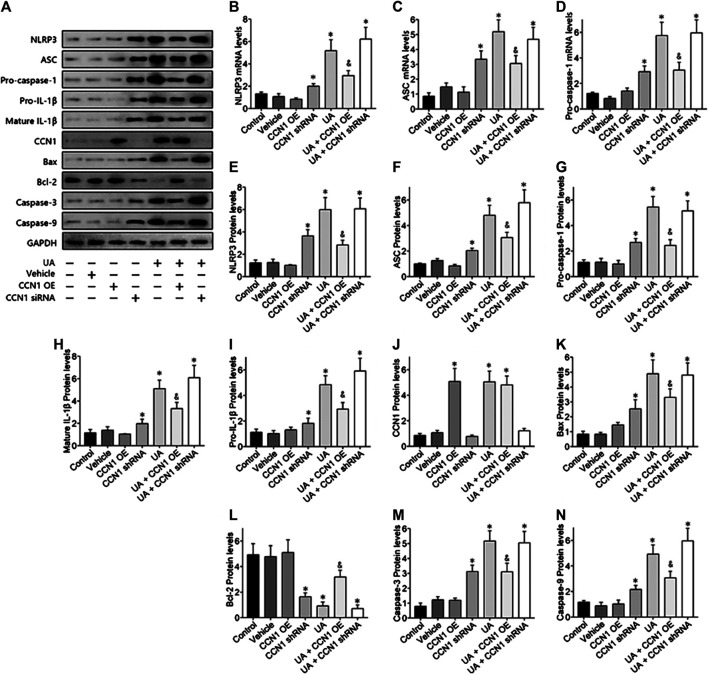
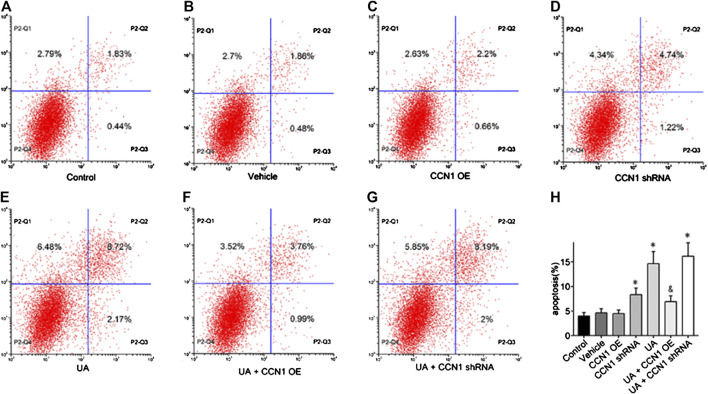
Considerable evidences have indicated that elevated uric acid (UA) was involved in renal tubular injury leading to hyperuricemic nephropathy (HN). Scutellarin is a biologically active flavonoid derived from the Chinese traditional herb Hand-Mazz, which has been widely used in the treatment of cardiovascular and cerebrovascular diseases. In the present study, we analyzed the effect of scutellarin on HN, by using C57BL/6 mice and human renal tubular epithelial cell line HK-2 which was subjected to adenine/potassium oxonate and UA to mimic a HN injury. The HN mice showed a significant decrease in renal function with the increased SCr and blood urea nitrogen (BUN) ( < 0.05). Hematoxylin-eosin staining results showed a histological injury in HN mice kidney tissues with severe tubular damage. Scutellarin dose dependently alleviated the renal injury of the HN model ( < 0.05), and a dose of 20 mg/kg/day remarkably reduced the Scr level (26.10 ± 3.23 μmol/ml vs. 48.39 ± 7.51 μmol/ml, < 0.05) and BUN (151.12 ± 30.24 mmol/L vs. 210.43 ± 45.67 mmol/L, < 0.05) compared with the HN model group. Similarly, scutellarin decreased NGAL, Kim-1, cystatin C, and IL-18 protein expression levels in HN mouse ( < 0.05). Overexpressed CCN1 could not induce NLRP3 inflammasome activation, with no change of mRNA and protein expression levels of NLRP3, ASC, and pro-caspase-1 compared with the control HK-2. However, HK-2 showed a significant NLRP3 inflammasome activation and apoptosis. Importantly, knockdown of CCN1 not only aggravated NLRP3 inflammasome activation and apoptosis but also abrogated the protective effect of scutellarin in UA-induced HK-2 injury. Thus, scutellarin might alleviate HN progression a mechanism involved in CCN1 regulation on NLRP3 inflammasome activation.
大量证据表明,尿酸(UA)升高与导致高尿酸血症肾病(HN)的肾小管损伤有关。灯盏花素是一种从传统中药半枝莲中提取的具有生物活性的黄酮类化合物,已广泛用于治疗心脑血管疾病。在本研究中,我们通过使用C57BL/6小鼠和人肾小管上皮细胞系HK-2来分析灯盏花素对HN的影响,其中HK-2细胞接受腺嘌呤/氧嗪酸钾和UA处理以模拟HN损伤。HN小鼠的肾功能显著下降,血清肌酐(SCr)和血尿素氮(BUN)升高(<0.05)。苏木精-伊红染色结果显示HN小鼠肾组织存在组织学损伤,肾小管严重受损。灯盏花素剂量依赖性地减轻了HN模型的肾损伤(<0.05),与HN模型组相比,20mg/kg/天的剂量显著降低了SCr水平(26.10±3.23μmol/ml对48.39±7.51μmol/ml,<0.05)和BUN(151.12±30.24mmol/L对210.43±45.67mmol/L,<0.05)。同样,灯盏花素降低了HN小鼠中中性粒细胞明胶酶相关脂质运载蛋白(NGAL)、肾损伤分子-1(Kim-1)、胱抑素C和白细胞介素-18(IL-18)的蛋白表达水平(<0.05)。与对照HK-2相比,过表达的细胞周期蛋白1(CCN1)不能诱导NLRP3炎性小体激活,NLRP3、凋亡相关斑点样蛋白(ASC)和前半胱天冬酶-1的mRNA和蛋白表达水平没有变化。然而,HK-2显示出显著的NLRP3炎性小体激活和凋亡。重要的是,敲低CCN1不仅加重了NLRP3炎性小体激活和凋亡,还消除了灯盏花素对UA诱导的HK-2损伤的保护作用。因此,灯盏花素可能通过CCN1对NLRP3炎性小体激活的调节机制减轻HN的进展。