Su Fan, Xu Wendong
Department of Hand Surgery, Huashan Hospital, Shanghai Medical College, Fudan University, Shanghai, China.
Front Neurol. 2020 Oct 30;11:554089. doi: 10.3389/fneur.2020.554089. eCollection 2020.
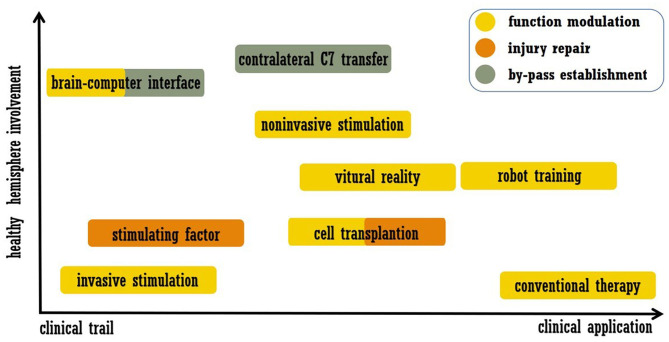
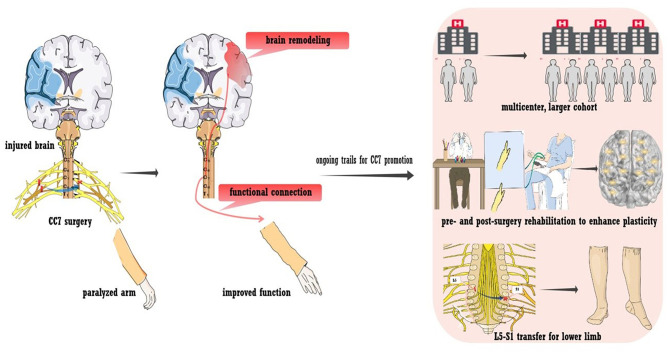
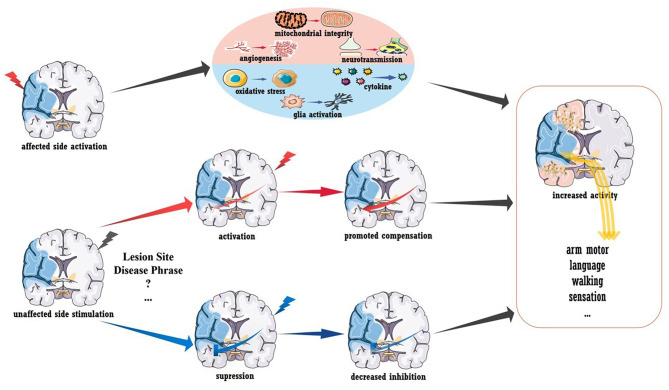
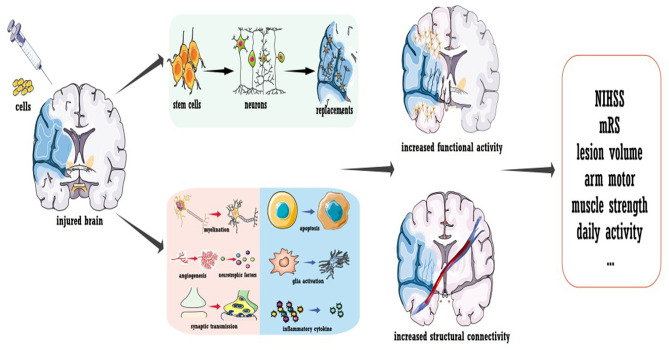
Stroke disturbs both the structural and functional integrity of the brain. The understanding of stroke pathophysiology has improved greatly in the past several decades. However, effective therapy is still limited, especially for patients who are in the subacute or chronic phase. Multiple novel therapies have been developed to improve clinical outcomes by improving brain plasticity. These approaches either focus on improving brain remodeling and restoration or on constructing a neural bypass to avoid brain injury. This review describes emerging therapies, including modern rehabilitation, brain stimulation, cell therapy, brain-computer interfaces, and peripheral nervous transfer, and highlights treatment-induced plasticity. Key evidence from basic studies on the underlying mechanisms is also briefly discussed. These insights should lead to a deeper understanding of the overall neural circuit changes, the clinical relevance of these changes in stroke, and stroke treatment progress, which will assist in the development of future approaches to enhance brain function after stroke.
中风会扰乱大脑的结构和功能完整性。在过去几十年里,对中风病理生理学的理解有了很大进步。然而,有效的治疗方法仍然有限,尤其是对于处于亚急性或慢性期的患者。已经开发了多种新疗法,旨在通过改善脑可塑性来提高临床疗效。这些方法要么侧重于改善脑重塑和恢复,要么侧重于构建神经旁路以避免脑损伤。本综述描述了新兴疗法,包括现代康复、脑刺激、细胞疗法、脑机接口和周围神经移植,并强调了治疗诱导的可塑性。还简要讨论了关于潜在机制的基础研究的关键证据。这些见解应能加深对整体神经回路变化、这些变化在中风中的临床相关性以及中风治疗进展的理解,这将有助于开发未来提高中风后脑功能的方法。