Chen Yu-Wen, Li Shiao-Wen, Lin Chia-Der, Huang Mei-Zi, Lin Hwai-Jeng, Chin Chia-Yin, Lai Yi-Ru, Chiu Cheng-Hsun, Yang Chia-Yu, Lai Chih-Ho
Department of Microbiology and Immunology, Graduate Institute of Biomedical Sciences, College of Medicine, Chang Gung University, Taoyuan, Taiwan.
Molecular Medicine Research Center, Chang Gung University, Taoyuan, Taiwan.
Front Cell Dev Biol. 2020 Oct 26;8:570484. doi: 10.3389/fcell.2020.570484. eCollection 2020.
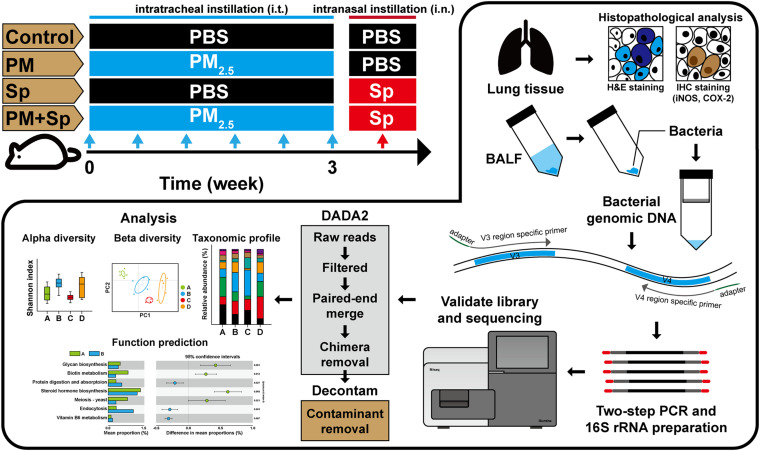
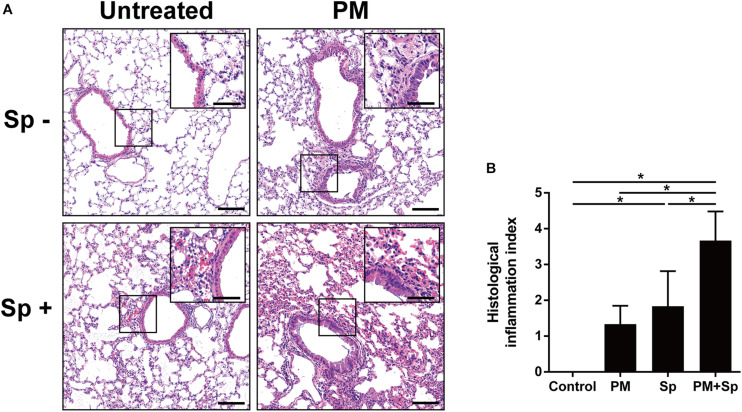
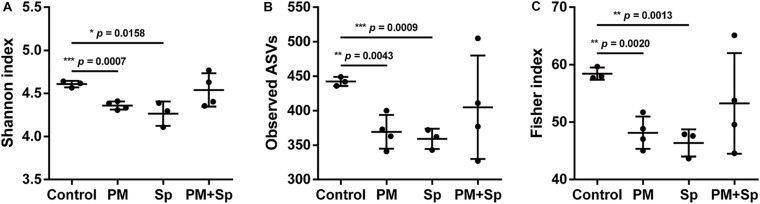
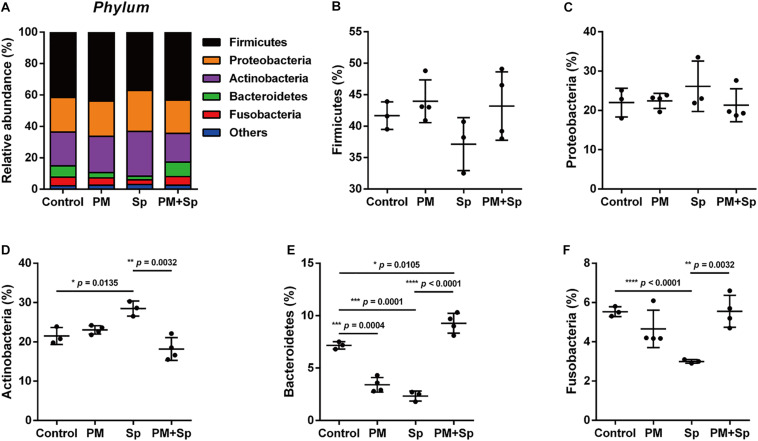
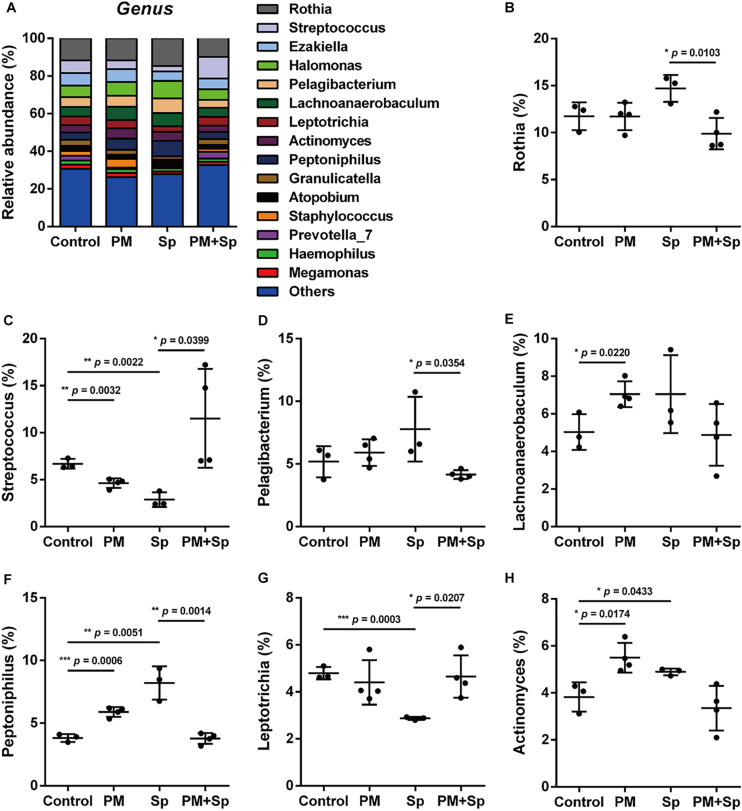
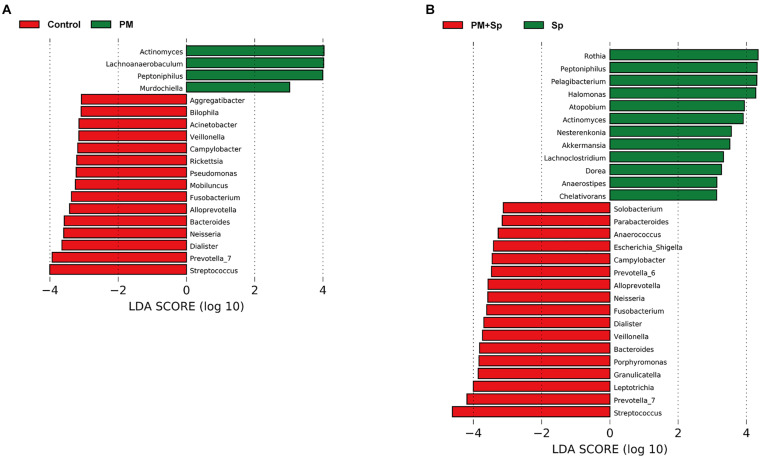
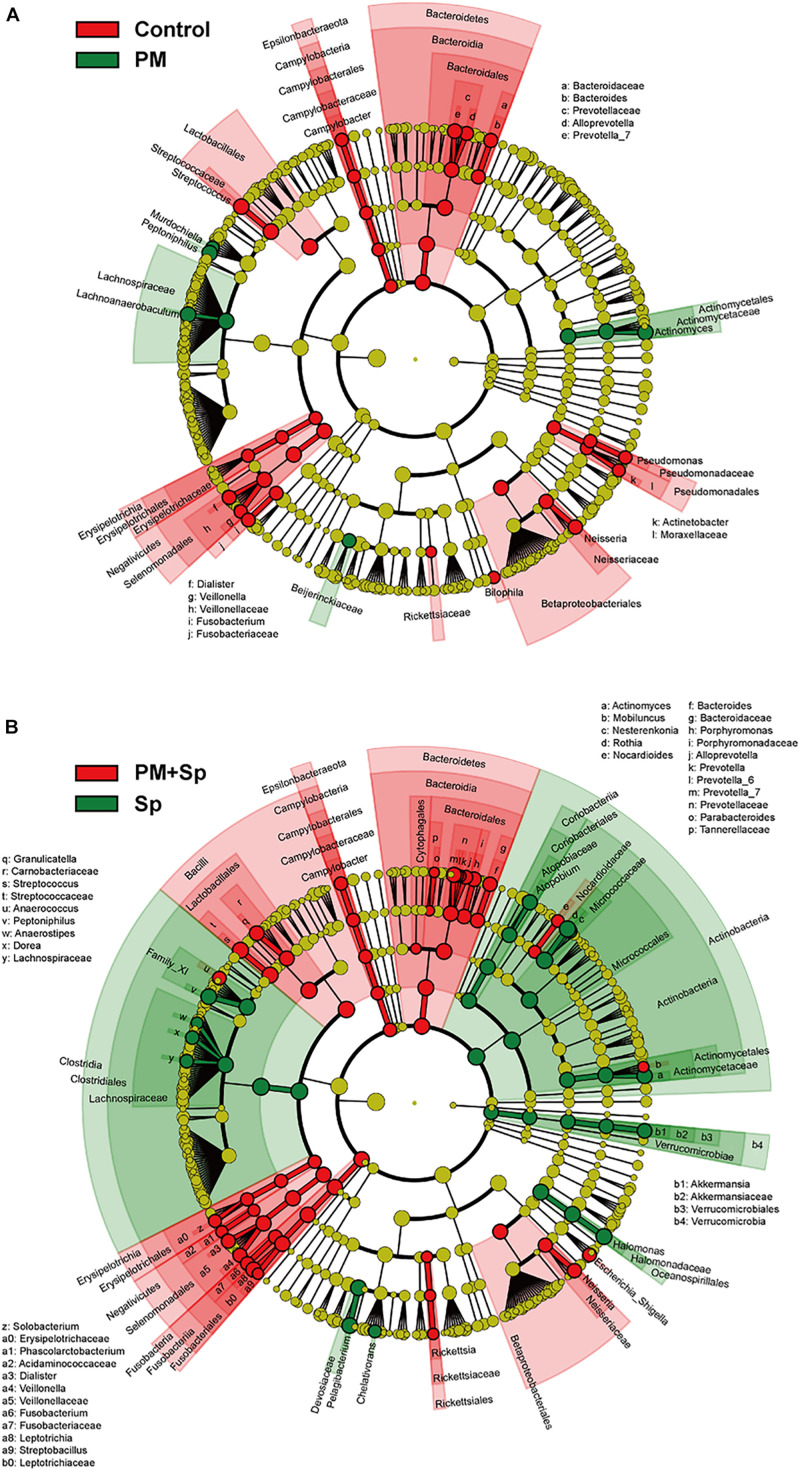
Exposure to fine particulate matter (PM) with aerodynamic diameter ≤2.5 μm (PM ) is closely correlated with respiratory diseases. Microbiota plays a key role in maintaining body homeostasis including regulation of host immune status and metabolism. As reported recently, PM exposure causes microbiota dysbiosis and thus promotes disease progression. However, whether PM alters pulmonary microbiota distribution and aggravates bacteria-induced pathogenesis remains unknown. In this study, we used mouse experimental models of PM exposure combined with infection. We characterized the airway microbiota of bronchoalveolar lavage fluid (BALF) by sequencing the 16S rRNA V3-V4 amplicon on the Illumina MiSeq platform, followed by a combination of bioinformatics and statistical analyses. Shannon-diversity index, observed ASVs, and Fisher's diversity index indicated that microbiota richness was significantly decreased in the mice treated with either PM or pneumococcus when compared with the control group. The genera , , , and were remarkably increased in mice exposed to PM combined with pneumococcal infection as compared to mice with pneumococcal infection alone. Histopathological examination exhibited that a more pronounced inflammation was present in lungs of mice treated with PM and pneumococcus than that in mouse groups exposed to either PM or pneumococcal infection alone. Our results demonstrate that PM alters the microbiota composition, thereby enhancing susceptibility to pneumococcal infection and exacerbating lung pathogenesis.
暴露于空气动力学直径≤2.5μm的细颗粒物(PM)与呼吸道疾病密切相关。微生物群在维持身体内环境稳态中起关键作用,包括调节宿主免疫状态和新陈代谢。最近有报道称,暴露于PM会导致微生物群失调,从而促进疾病进展。然而,PM是否会改变肺部微生物群分布并加重细菌诱导的发病机制仍不清楚。在本研究中,我们使用了PM暴露与感染相结合的小鼠实验模型。我们通过在Illumina MiSeq平台上对16S rRNA V3-V4扩增子进行测序,随后结合生物信息学和统计分析,对支气管肺泡灌洗液(BALF)的气道微生物群进行了表征。香农多样性指数、观察到的ASV和费舍尔多样性指数表明,与对照组相比,用PM或肺炎球菌处理的小鼠中微生物群丰富度显著降低。与仅感染肺炎球菌的小鼠相比,暴露于PM并合并肺炎球菌感染的小鼠中、、、属显著增加。组织病理学检查显示,用PM和肺炎球菌处理的小鼠肺部炎症比仅暴露于PM或肺炎球菌感染的小鼠组更明显。我们的结果表明,PM会改变微生物群组成,从而增强对肺炎球菌感染的易感性并加剧肺部发病机制。