Guangzhou Institute of Cardiovascular Disease, Guangdong Key Laboratory of Vascular Diseases, State Key Laboratory of Respiratory Disease, The Second Affiliated Hospital, Guangzhou Medical University, Guangzhou, Guangdong, China.
Guangzhou Municipal and Guangdong Provincial Key Laboratory of Protein Modification and Degradation, School of Basic Medical Sciences, Guangzhou Medical University, Guangzhou, China.
Aging (Albany NY). 2020 Nov 10;12(22):22892-22905. doi: 10.18632/aging.104003.
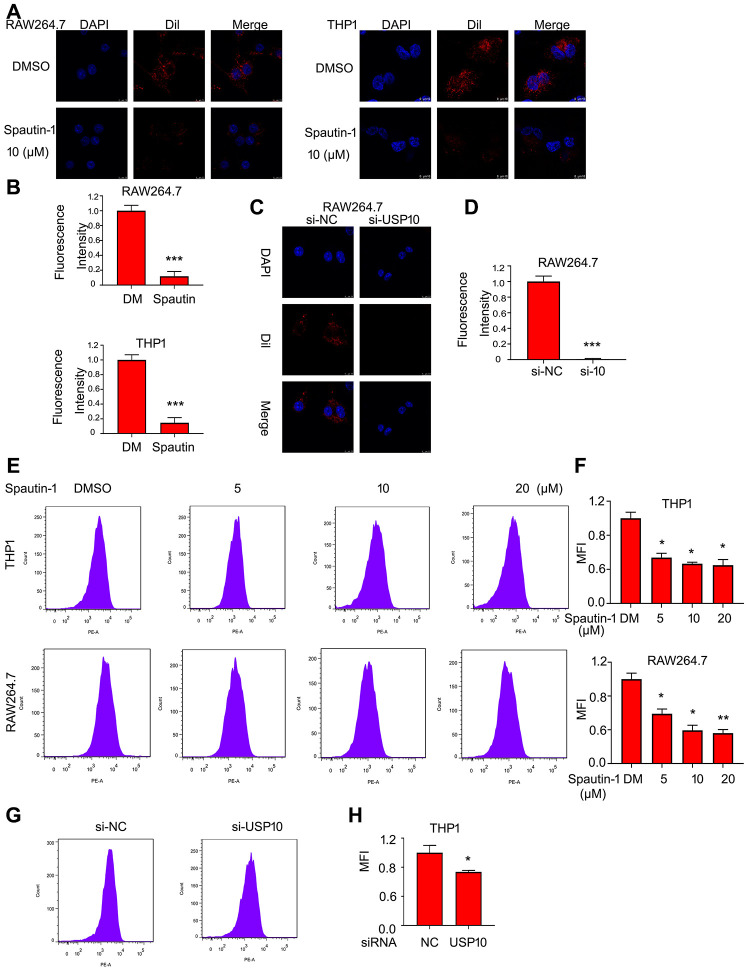
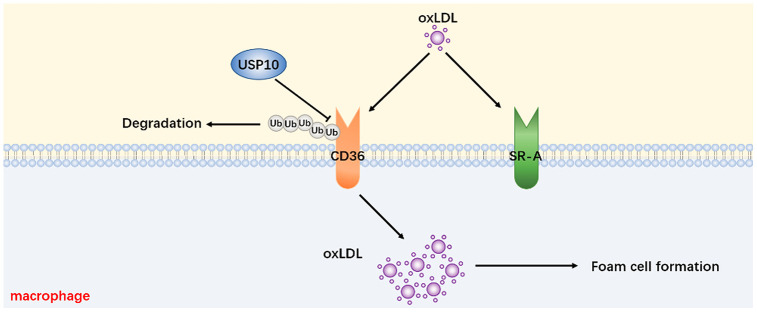
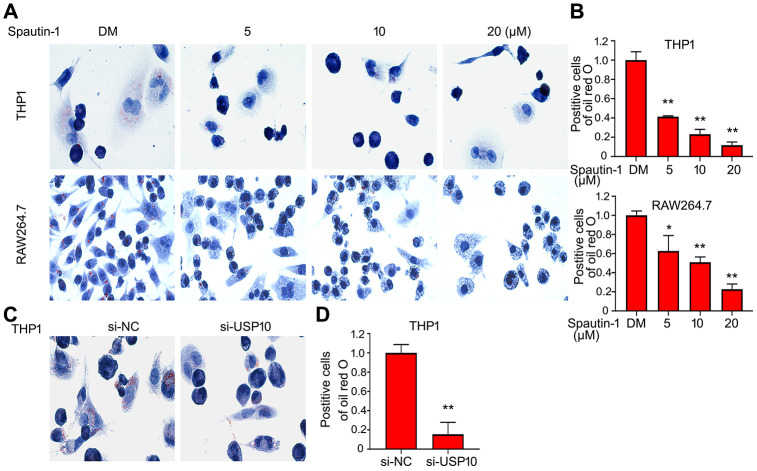
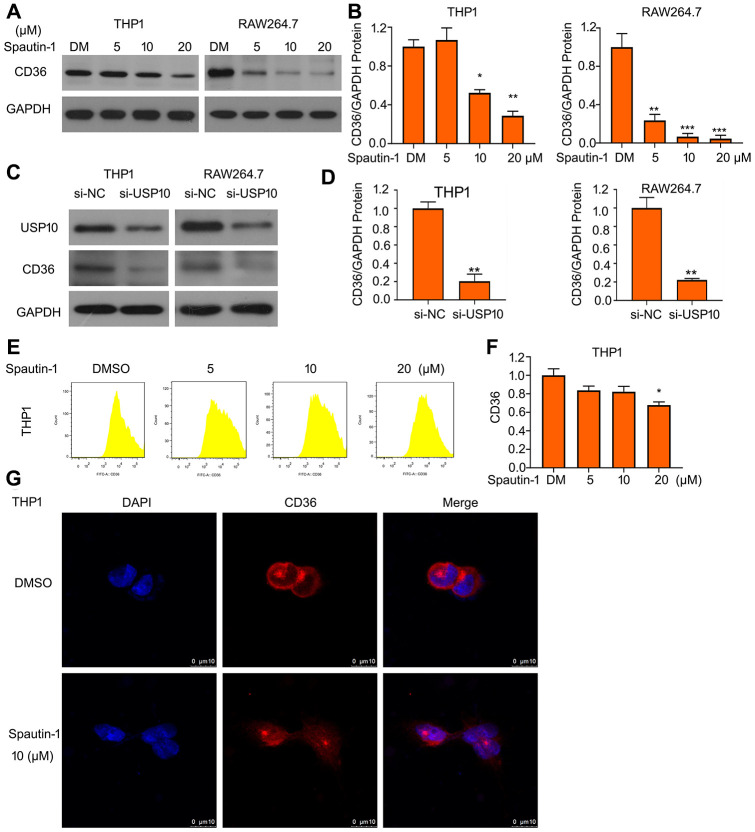
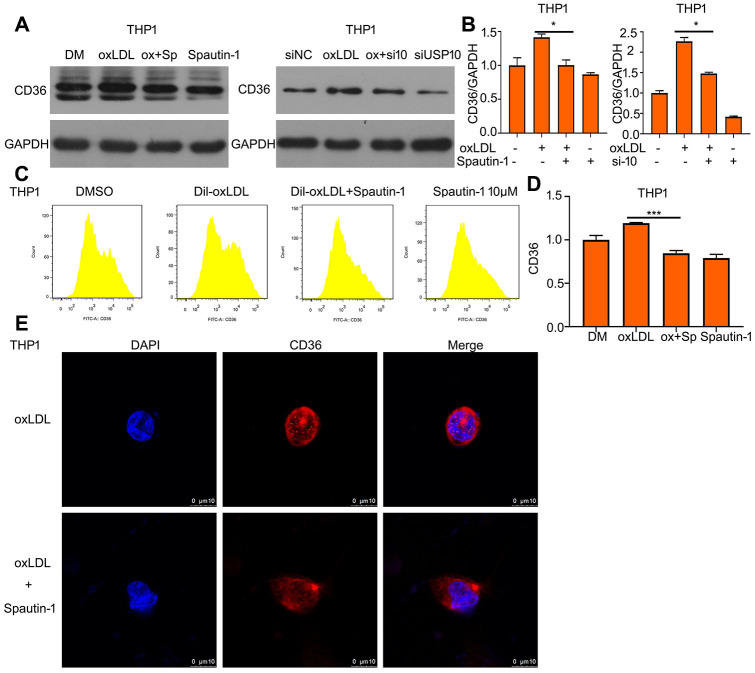
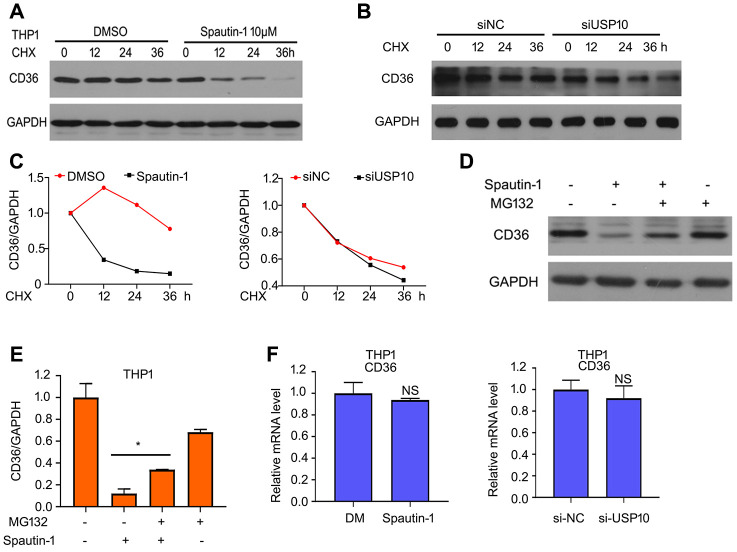
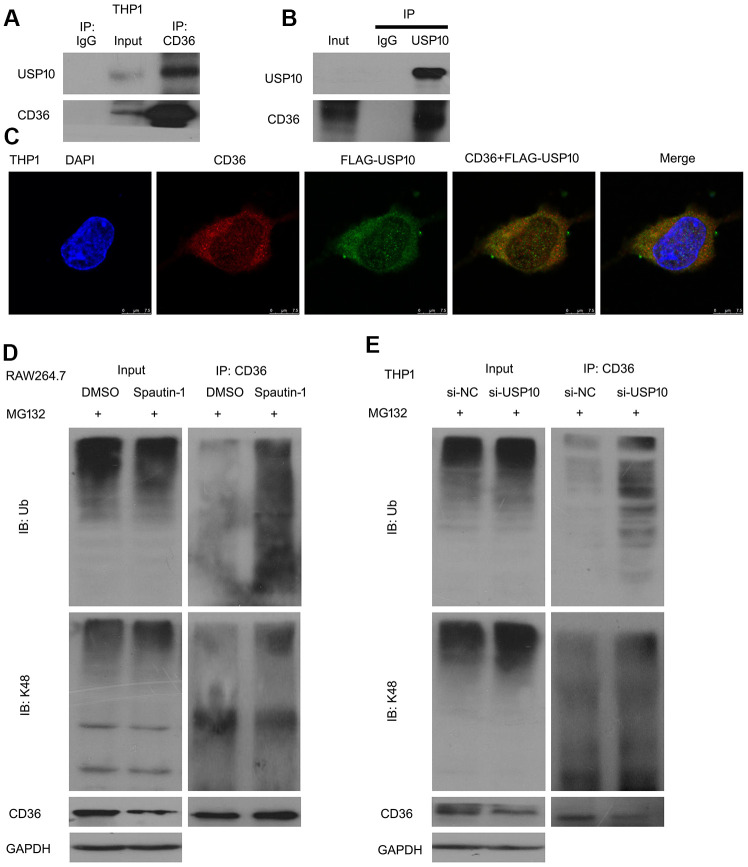
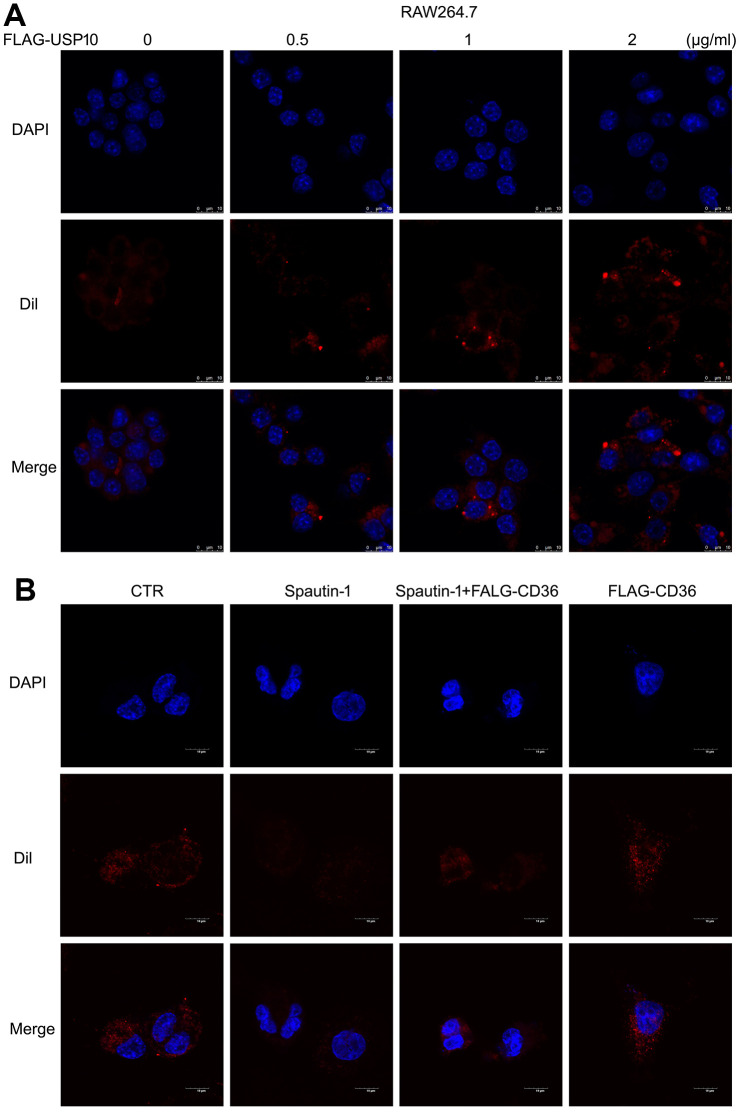
Foam cell formation process is involved in the pathogenesis of atherosclerosis (AS). Activation of this biological process depends on lipid uptake by scavenger receptors, such as CD36, SR-A and SR-B1. Among these receptors, CD36 is the principal one because it dominates roughly 50% lipid uptake in monocytes. In this study, our western blotting and RT-qPCR assays revealed that USP10 inhibition promotes the degradation of CD36 protein but does not change its mRNA level. In addition, Co-IP results showed that USP10 interacts with CD36 and stabilizes CD36 protein by cleaving poly-ubiquitin on CD36. Significantly, USP10 promotes foam cell formation. Immunofluorescence and Oil red O staining assays show that inhibition or knockdown of USP10 suppresses lipid uptake and foam cell formation by macrophages. In conclusion, USP10 promotes the development and progression of atherosclerosis through stabilizing CD36 protein expression. The regulation of USP10-CD36 may provide a significant therapeutic scheme in atherosclerosis.
泡沫细胞的形成过程涉及动脉粥样硬化(AS)的发病机制。这个生物过程的激活依赖于清道夫受体(如 CD36、SR-A 和 SR-B1)摄取脂质。在这些受体中,CD36 是主要的受体,因为它在单核细胞中大约占 50%的脂质摄取量。在这项研究中,我们的 Western blot 和 RT-qPCR 检测结果显示,USP10 抑制促进 CD36 蛋白的降解,但不改变其 mRNA 水平。此外,Co-IP 结果表明,USP10 通过切割 CD36 上的多聚泛素与 CD36 相互作用并稳定 CD36 蛋白。值得注意的是,USP10 促进泡沫细胞的形成。免疫荧光和油红 O 染色检测结果表明,抑制或敲低 USP10 可抑制巨噬细胞摄取脂质和形成泡沫细胞。总之,USP10 通过稳定 CD36 蛋白表达促进动脉粥样硬化的发生和发展。USP10-CD36 的调节可能为动脉粥样硬化提供一种有意义的治疗方案。