Liao Yuning, Liu Ningning, Xia Xiaohong, Guo Zhiqiang, Li Yanling, Jiang Lili, Zhou Ruiqing, Tang Daolin, Huang Hongbiao, Liu Jinbao
1Affiliated Cancer Hospital and institute of Guangzhou Medical University; Key Laboratory of Protein Modification and Degradation, State Key Laboratory of Respiratory Disease, School of Basic Medical Sciences, Guangzhou Medical University, Guangzhou, Guangdong 511436 China.
2Guangzhou Institute of Cardiovascular Disease, the Second Affiliated Hospital, Guangzhou Medical University, Guangzhou, Guangdong 510260 China.
Cell Discov. 2019 Apr 30;5:24. doi: 10.1038/s41421-019-0092-z. eCollection 2019.
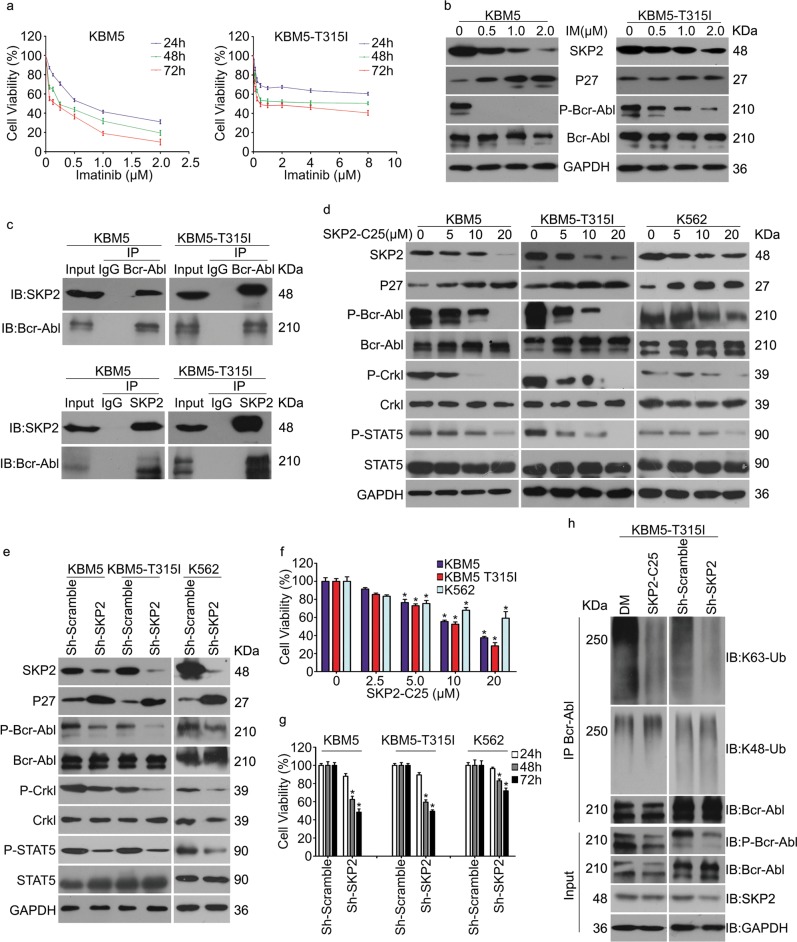
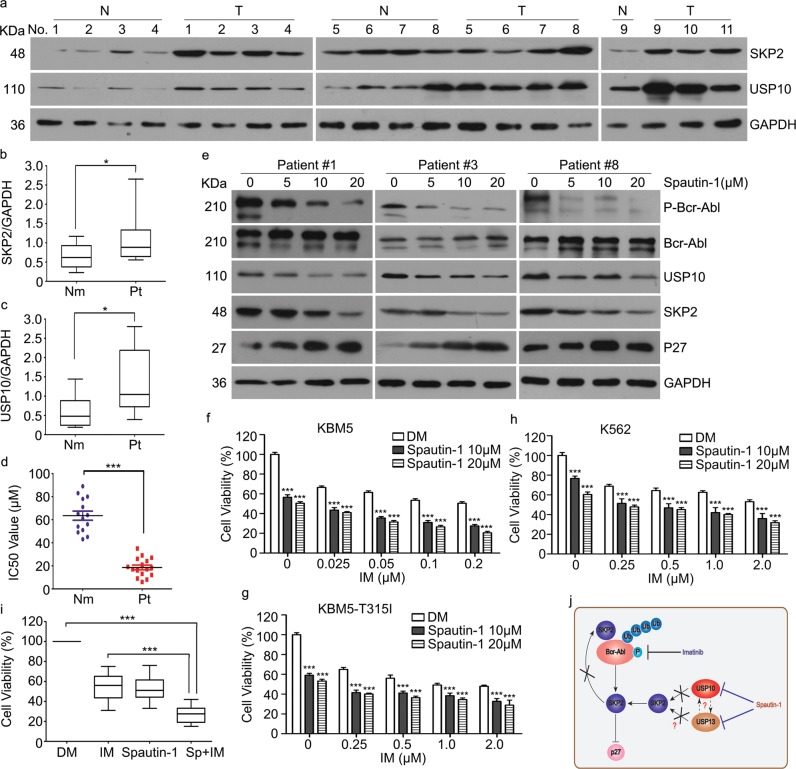
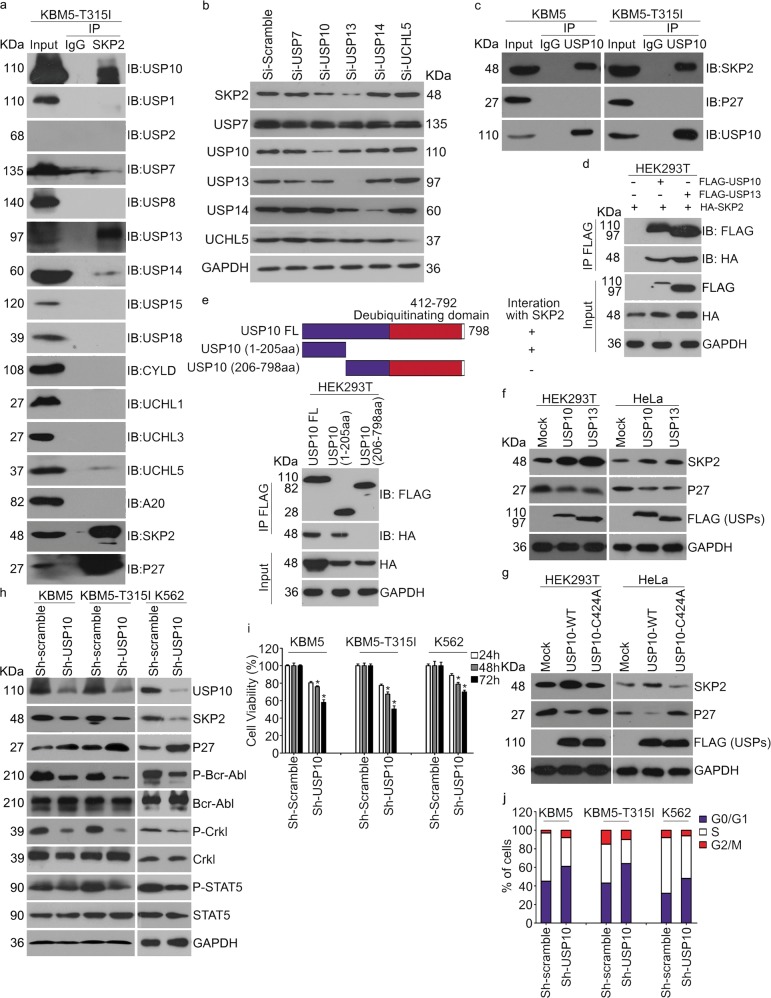
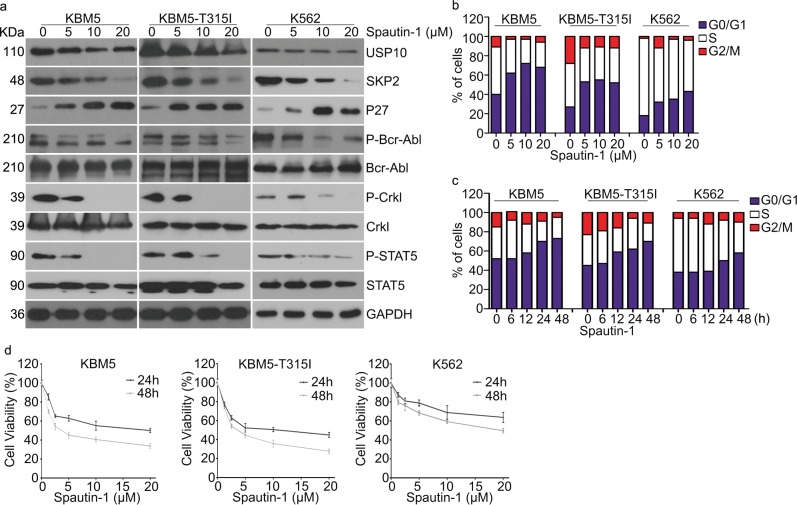
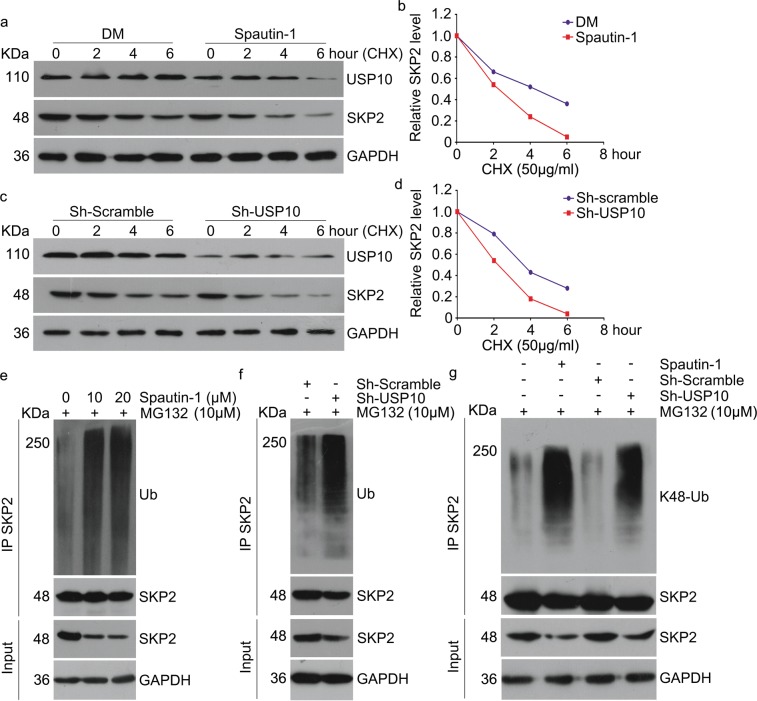
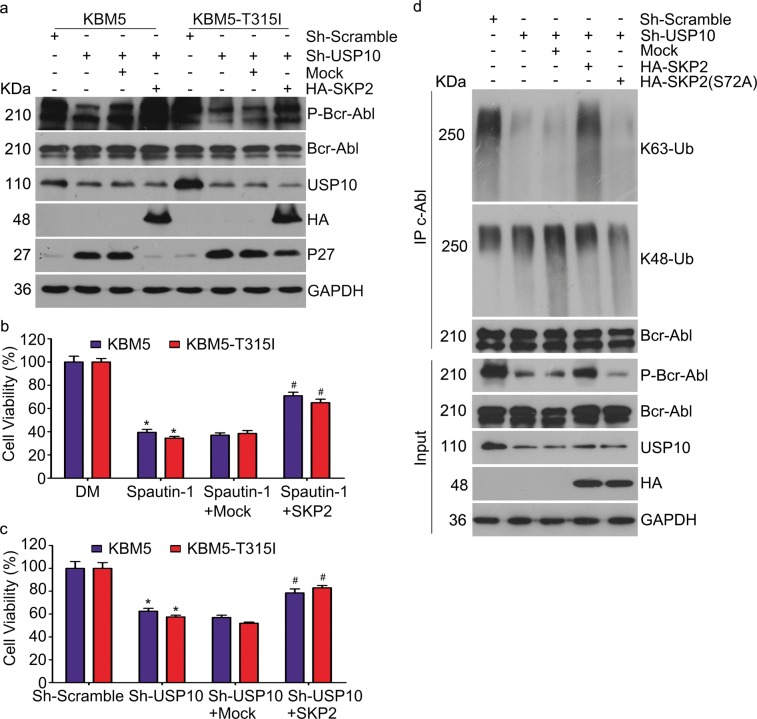
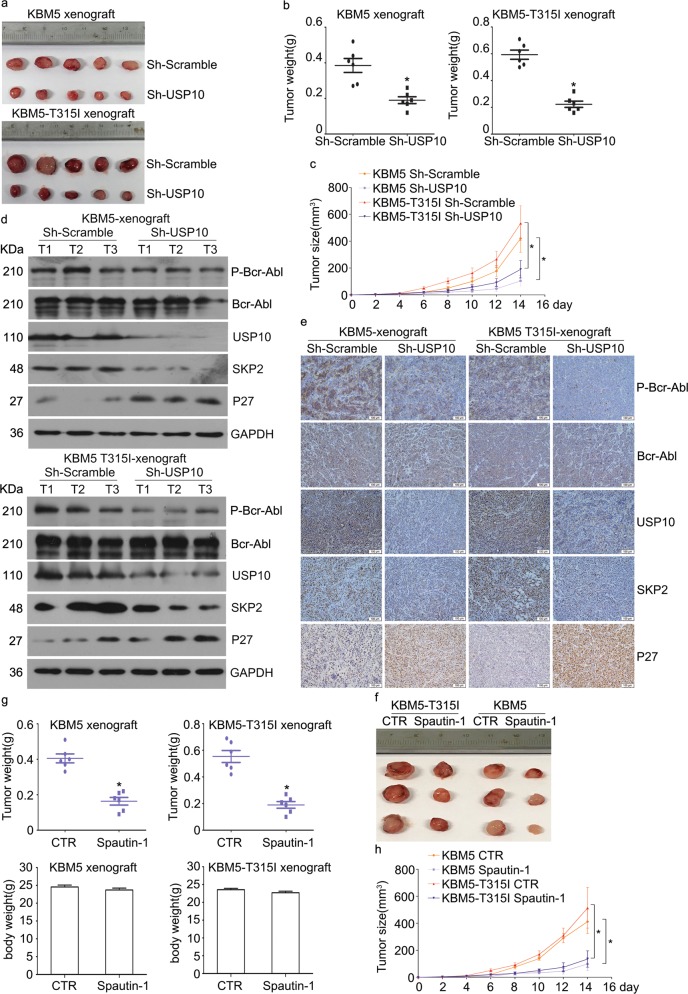
Constitutive activation of tyrosine kinase Bcr-Abl is the leading cause of the development and progression of chronic myeloid leukemia (CML). Currently, the application of tyrosine kinase inhibitors (TKIs) targeting the Bcr-Abl is the primary therapy for CML patients. However, acquired resistance to TKIs that develops overtime in the long-term administration renders TKIs ineffective to patients with advanced CML. Therefore, increasing studies focus on the amplified expression or activation of Bcr-Abl which is proposed to contribute to the advanced phase. Here, we show that S-phase kinase-associated protein 2 (SKP2) acts as a co-regulator of Bcr-Abl by mediating its K63-linked ubiquitination and activation. Further investigations show that USP10 as a novel deubiquitinase of SKP2 amplifies the activation of Bcr-Abl via mediating deubiquitination and stabilization of SKP2 in CML cells. Moreover, inhibition of USP10 significantly suppresses the proliferation of both imatinib-sensitive and imatinib-resistant CML cells, which likely depends on SKP2 status. This findings are confirmed in primary CML cells because these cells are over-expressed with USP10 and SKP2 and are sensitive to a USP10 inhibitor. Taken together, the present study not only provides a novel insight into the amplified activation of Bcr-Abl in CML, but also demonstrates that targeting the USP10/SKP2/Bcr-Abl axis is a potential strategy to overcome imatinib resistance in CML patients.
酪氨酸激酶Bcr-Abl的组成性激活是慢性髓性白血病(CML)发生和进展的主要原因。目前,应用靶向Bcr-Abl的酪氨酸激酶抑制剂(TKIs)是CML患者的主要治疗方法。然而,长期给药过程中逐渐产生的对TKIs的获得性耐药使TKIs对晚期CML患者无效。因此,越来越多的研究聚焦于Bcr-Abl的扩增表达或激活,这被认为与疾病进展期有关。在此,我们表明S期激酶相关蛋白2(SKP2)通过介导其K63连接的泛素化和激活作用,作为Bcr-Abl的协同调节因子。进一步研究表明,USP10作为SKP2的一种新型去泛素酶,通过介导CML细胞中SKP2的去泛素化和稳定作用,增强了Bcr-Abl的激活。此外,抑制USP10可显著抑制伊马替尼敏感和耐药的CML细胞的增殖,这可能取决于SKP2的状态。这一发现在原发性CML细胞中得到证实,因为这些细胞中USP10和SKP2过表达,且对USP10抑制剂敏感。综上所述,本研究不仅为CML中Bcr-Abl的扩增激活提供了新的见解,还表明靶向USP10/SKP2/Bcr-Abl轴是克服CML患者伊马替尼耐药的潜在策略。