Department of Translational Hematology and Oncology Research, Taussig Cancer Institute, Cleveland Clinic, Cleveland, OH 44195, USA.
Department of Biomedicine and Prevention, University of Rome Tor Vergata, 00133 Rome, Italy.
Int J Mol Sci. 2020 Nov 12;21(22):8505. doi: 10.3390/ijms21228505.
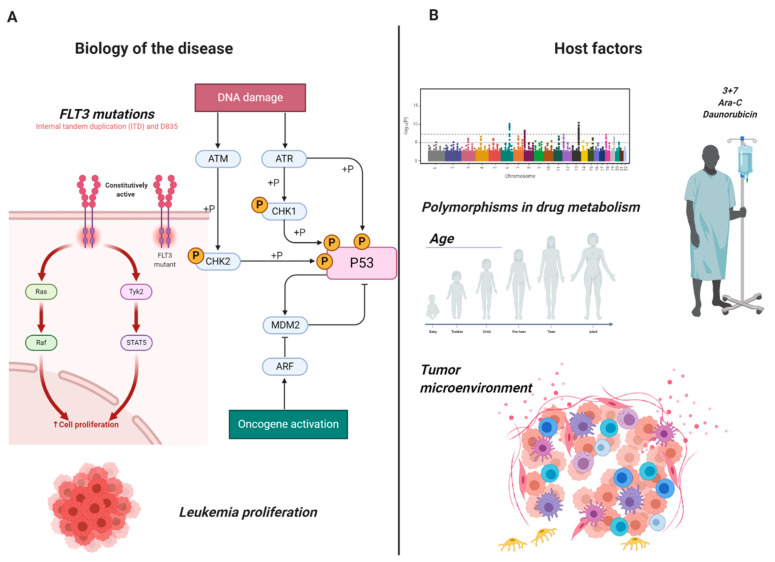
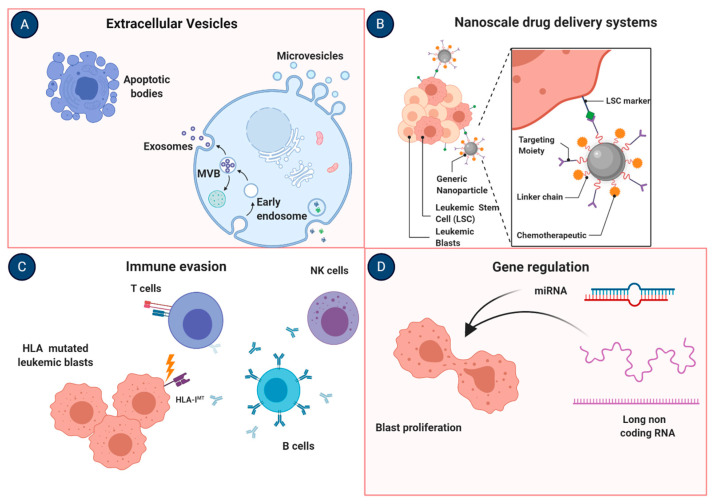
Acute myeloid leukemia (AML) is a clonal hematopoietic disorder characterized by abnormal proliferation, lack of cellular differentiation, and infiltration of bone marrow, peripheral blood, or other organs. Induction failure and in general resistance to chemotherapeutic agents represent a hindrance for improving survival outcomes in AML. Here, we review the latest insights in AML biology concerning refractoriness to therapies with a specific focus on cytarabine and daunorubicin which still represent milestones agents for inducing therapeutic response and disease eradication. However, failure to achieve complete remission in AML is still high especially in elderly patients (40-60% in patients >65 years old). Several lines of basic and clinical research have been employed to improve the achievement of complete remission. These lines of research include molecular targeted therapy and more recently immunotherapy. In terms of molecular targeted therapies, specific attention is given to and mutant AML by reviewing the mechanisms underlying epigenetic therapies' (e.g., hypomethylating agents) resistance and providing critical points and hints for possible future therapies overcoming AML refractoriness.
急性髓系白血病 (AML) 是一种克隆性造血系统疾病,其特征为异常增殖、缺乏细胞分化以及骨髓、外周血或其他器官浸润。诱导失败和对化疗药物的普遍耐药性是改善 AML 患者生存结果的障碍。在这里,我们综述了 AML 生物学中关于对治疗产生耐药性的最新见解,特别关注阿糖胞苷和柔红霉素,它们仍然是诱导治疗反应和消除疾病的里程碑药物。然而,AML 未能达到完全缓解的情况仍然很高,尤其是在老年患者中(>65 岁患者中为 40-60%)。已经进行了几条基础和临床研究来提高完全缓解的实现。这些研究包括分子靶向治疗,以及最近的免疫治疗。在分子靶向治疗方面,通过综述表观遗传治疗(例如,低甲基化剂)耐药性的机制,并为可能克服 AML 耐药性的未来治疗提供关键点和提示,特别关注 和 突变型 AML。