Spertini Caroline, Bénéchet Alexandre P, Birch Flora, Bellotti Axel, Román-Trufero Mónica, Arber Caroline, Auner Holger W, Mitchell Robert A, Spertini Olivier, Smirnova Tatiana
Service and Central Laboratory of Hematology, Lausanne University Hospital (CHUV), 1011, Lausanne, Switzerland.
In Vivo Imaging Facility (IVIF), Department of Research and Training, Lausanne University Hospital and University of Lausanne, Lausanne, 1011, Switzerland.
Cell Death Discov. 2024 Mar 28;10(1):157. doi: 10.1038/s41420-024-01924-5.
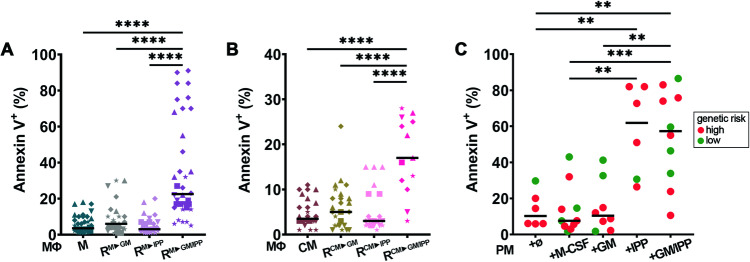
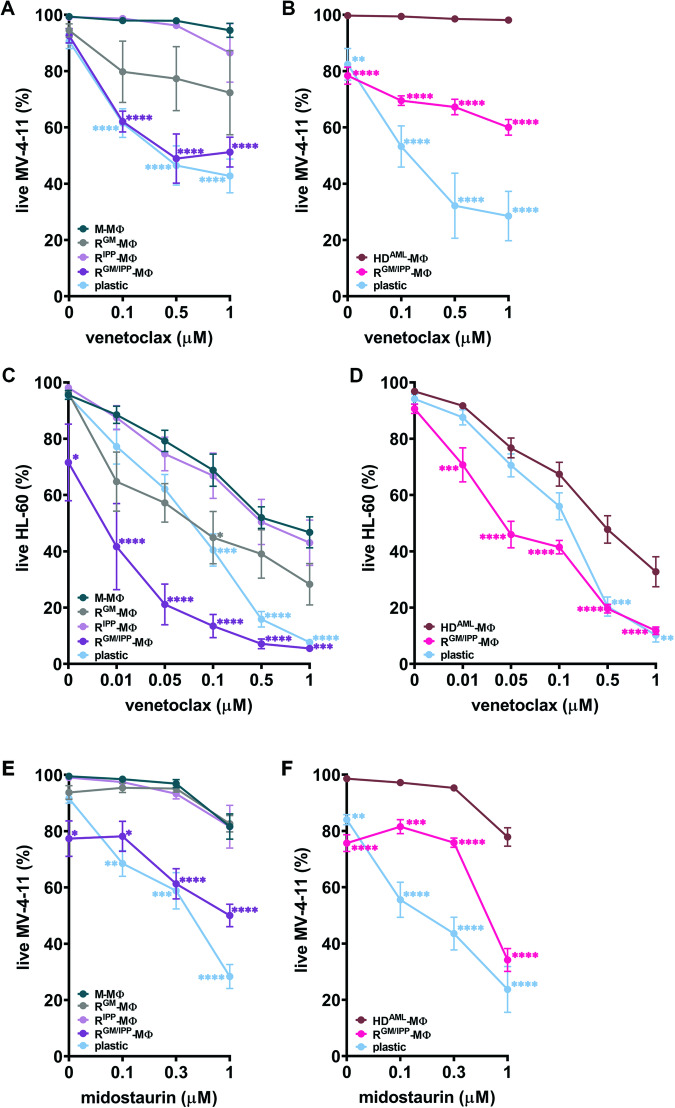
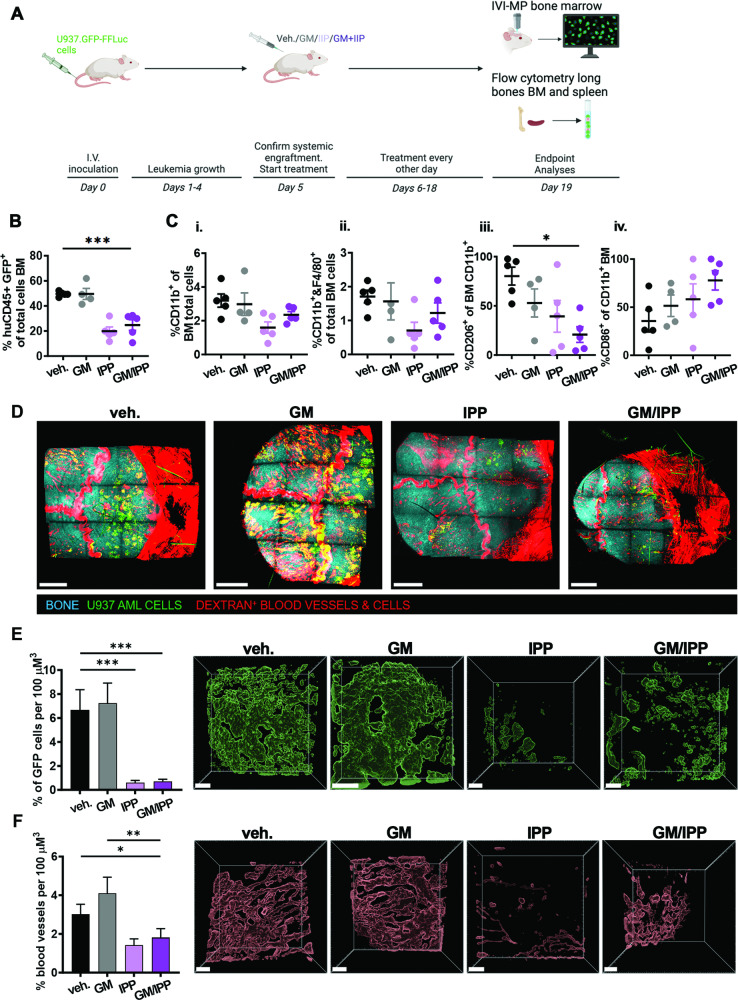
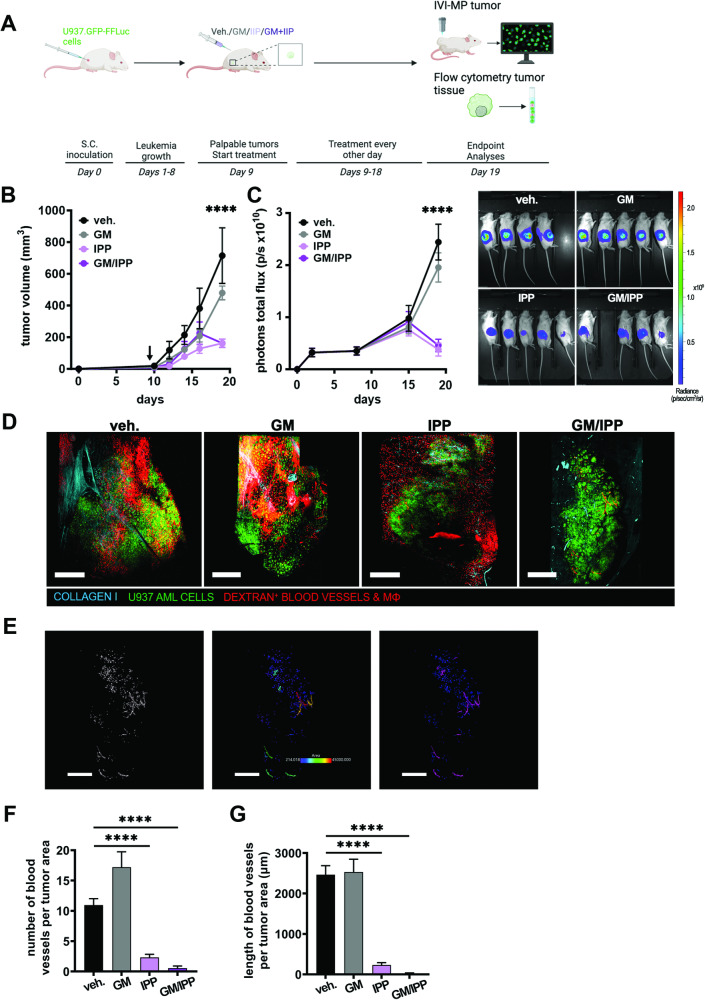
The malignant microenvironment plays a major role in the development of resistance to therapies and the occurrence of relapses in acute myeloid leukemia (AML). We previously showed that interactions of AML blasts with bone marrow macrophages (MΦ) shift their polarization towards a protumoral (M2-like) phenotype, promoting drug resistance; we demonstrated that inhibiting the colony-stimulating factor-1 receptor (CSF1R) repolarizes MΦ towards an antitumoral (M1-like) phenotype and that other factors may be involved. We investigated here macrophage migration inhibitory factor (MIF) as a target in AML blast survival and protumoral interactions with MΦ. We show that pharmacologically inhibiting MIF secreted by AML blasts results in their apoptosis. However, this effect is abrogated when blasts are co-cultured in close contact with M2-like MΦ. We next demonstrate that pharmacological inhibition of MIF secreted by MΦ, in the presence of granulocyte macrophage-colony stimulating factor (GM-CSF), efficiently reprograms MΦ to an M1-like phenotype that triggers apoptosis of interacting blasts. Furthermore, contact with reprogrammed MΦ relieves blast resistance to venetoclax and midostaurin acquired in contact with CD163 protumoral MΦ. Using intravital imaging in mice, we also show that treatment with MIF inhibitor 4-IPP and GM-CSF profoundly affects the tumor microenvironment in vivo: it strikingly inhibits tumor vasculature, reduces protumoral MΦ, and slows down leukemia progression. Thus, our data demonstrate that MIF plays a crucial role in AML MΦ M2-like protumoral phenotype that can be reversed by inhibiting its activity and suggest the therapeutic targeting of MIF as an avenue towards improved AML treatment outcomes.
恶性微环境在急性髓系白血病(AML)的治疗耐药性发展和复发发生中起主要作用。我们之前表明,AML原始细胞与骨髓巨噬细胞(MΦ)的相互作用会使其极化向促肿瘤(M2样)表型转变,从而促进耐药性;我们证明抑制集落刺激因子-1受体(CSF1R)可使MΦ重新极化向抗肿瘤(M1样)表型,并且可能涉及其他因素。我们在此研究巨噬细胞迁移抑制因子(MIF)作为AML原始细胞存活以及与MΦ促肿瘤相互作用的一个靶点。我们发现,药理学抑制AML原始细胞分泌的MIF会导致其凋亡。然而,当原始细胞与M2样MΦ紧密共培养时,这种效应会被消除。接下来我们证明,在粒细胞巨噬细胞集落刺激因子(GM-CSF)存在的情况下,药理学抑制MΦ分泌的MIF能有效地将MΦ重编程为M1样表型,从而触发相互作用的原始细胞凋亡。此外,与重编程的MΦ接触可缓解原始细胞对在与CD163促肿瘤MΦ接触时所获得的维奈托克和米哚妥林的耐药性。利用小鼠体内成像,我们还表明用MIF抑制剂4-IPP和GM-CSF进行治疗会在体内深刻影响肿瘤微环境:它显著抑制肿瘤血管生成,减少促肿瘤MΦ,并减缓白血病进展。因此,我们的数据表明MIF在AML的MΦ M2样促肿瘤表型中起关键作用,抑制其活性可使其逆转,并提示将MIF作为治疗靶点是改善AML治疗结果的一条途径。