School of Chemical and Biological Engineering, Taiyuan University of Science & Technology, Taiyuan, 030021, China.
Key Laboratory of Chemical Biology and Molecular Engineering of Ministry of Education, Institutes of Biomedical Sciences, Shanxi University, No. 92, Wucheng Road, Xiaodian District, TaiyuanShanxi, 030006, China.
Sci Rep. 2020 Nov 16;10(1):19917. doi: 10.1038/s41598-020-77085-z.
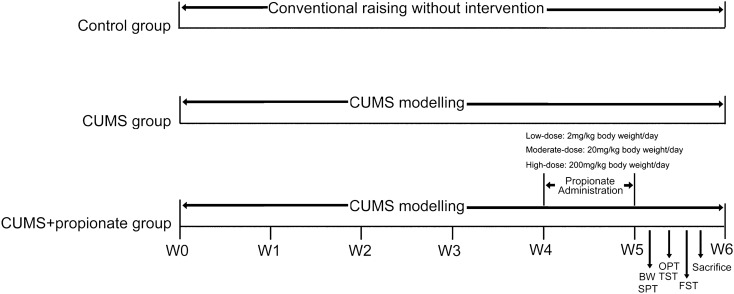
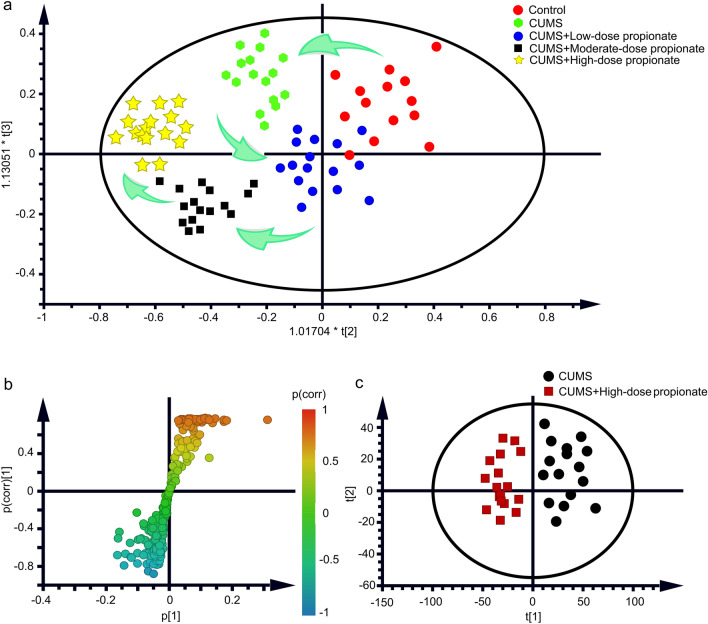
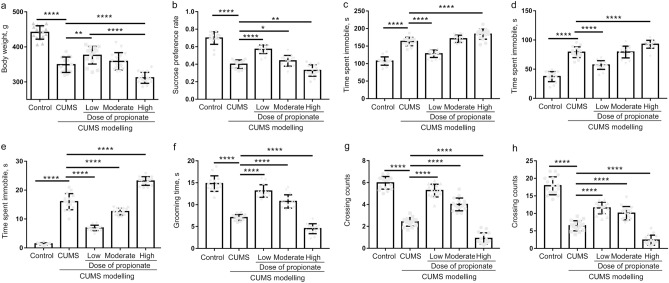
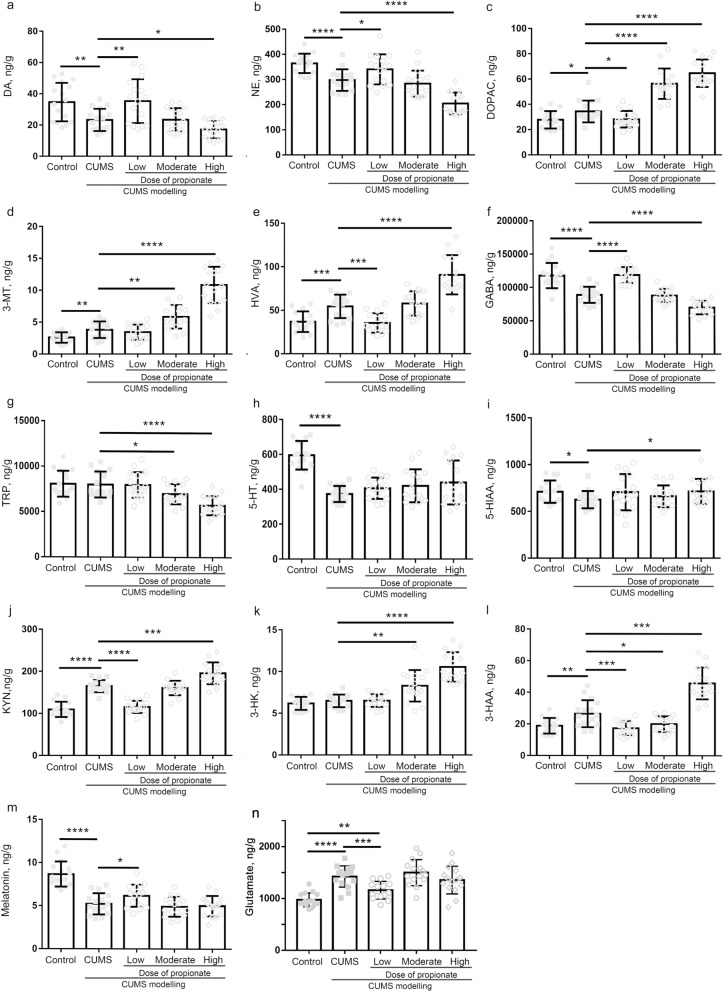
Propionate has been reported to exert antidepressant effects, but high-dose propionate may induce autism-like symptoms in experimental animals through induction of dysbiosis of neurotransmitters. The bi-directional effects of propionate seem to be dose-dependent. However, due to the pathological discrepancies between depression and autism, conclusions drawn from autism may not be simply transferable to depression. The effect and underlying action mechanisms of high-dose propionate on depression remains undetermined. To investigate the effects of propionate on depression, propionate dose gradients were intravenously administrated to rats exposed to chronic unpredictable mild stress (CUMS) for 1 week. Results of these behavioral tests demonstrate that low-dose propionate (2 mg/kg body weight/day) induces antidepressant effect through bodyweight recovery, elevated reward-seeking behaviors, and reduced depression-like behaviors, while high-dose propionate (200 mg/kg body weight/day) induces prodepressant effects opposite of those of low-dose propionate. A comprehensive profiling of neurotransmitters in the hippocampus demonstrated that CUMS induces reduction of NE (Norepinephrine), DA (Dopamine). GABA (γ-aminobutyric acid) was recovered by low-dose propionate, while high-dose propionate exerted more complicated effects on neurotransmitters, including reduction of NE, DA, 5-Hydroxytryptamine and Tryptophan, and increase of GABA, Kynurenine, Homovanillic acid, 3-hydroxyanthranilic acid, 3-hydroxykynurenine, 3,4-dihydroxyphenylacetic acid, and 3-methoxytyramine. The neurotransmitters disturbed by high-dose propionate suggest metabolic disorders in the hippocampus, which were confirmed by the clear group separation in PCA of metabolomic profiling. The results of this study demonstrate the double-edged dose-dependent effects of propionate on depression and suggest potential cumulative toxicity of propionate as a food additive to mood disorders.
丙酸已被报道具有抗抑郁作用,但高剂量丙酸可能通过诱导神经递质的失调在实验动物中引起自闭症样症状。丙酸的双向作用似乎是剂量依赖性的。然而,由于抑郁症和自闭症之间存在病理差异,从自闭症中得出的结论可能不能简单地应用于抑郁症。高剂量丙酸对抑郁症的影响及其潜在作用机制仍不确定。为了研究丙酸对抑郁症的影响,将丙酸剂量梯度静脉注射到连续 1 周暴露于慢性不可预测轻度应激(CUMS)的大鼠中。这些行为测试的结果表明,低剂量丙酸(2mg/kg 体重/天)通过体重恢复、提高奖励寻求行为和减少抑郁样行为来诱导抗抑郁作用,而高剂量丙酸(200mg/kg 体重/天)则诱导与低剂量丙酸相反的促抑郁作用。对海马体神经递质的全面分析表明,CUMS 导致 NE(去甲肾上腺素)、DA(多巴胺)减少。低剂量丙酸恢复 GABA(γ-氨基丁酸),而高剂量丙酸对神经递质产生更复杂的影响,包括降低 NE、DA、5-羟色胺和色氨酸,增加 GABA、犬尿氨酸、高香草酸、3-羟基邻氨基苯甲酸、3-羟基犬尿氨酸、3,4-二羟基苯乙酸和 3-甲氧基酪胺。高剂量丙酸干扰的神经递质提示海马体代谢紊乱,代谢组学分析的 PCA 清楚地区分了这些紊乱。这项研究的结果表明,丙酸对抑郁症有双重剂量依赖性影响,并提示丙酸作为食品添加剂对情绪障碍的潜在累积毒性。