Li Jianguo, Hou Luwen, Wang Cui, Jia Xueyang, Qin Xuemei, Wu Changxin
Laboratory for Microbiome Sciences, Institute of Biomedical Sciences, Shanxi University, Taiyuan, China.
Key Laboratory of Chemical Biology and Molecular Engineering of Ministry of Education, Shanxi University, Taiyuan, China.
Front Psychiatry. 2018 Sep 27;9:454. doi: 10.3389/fpsyt.2018.00454. eCollection 2018.
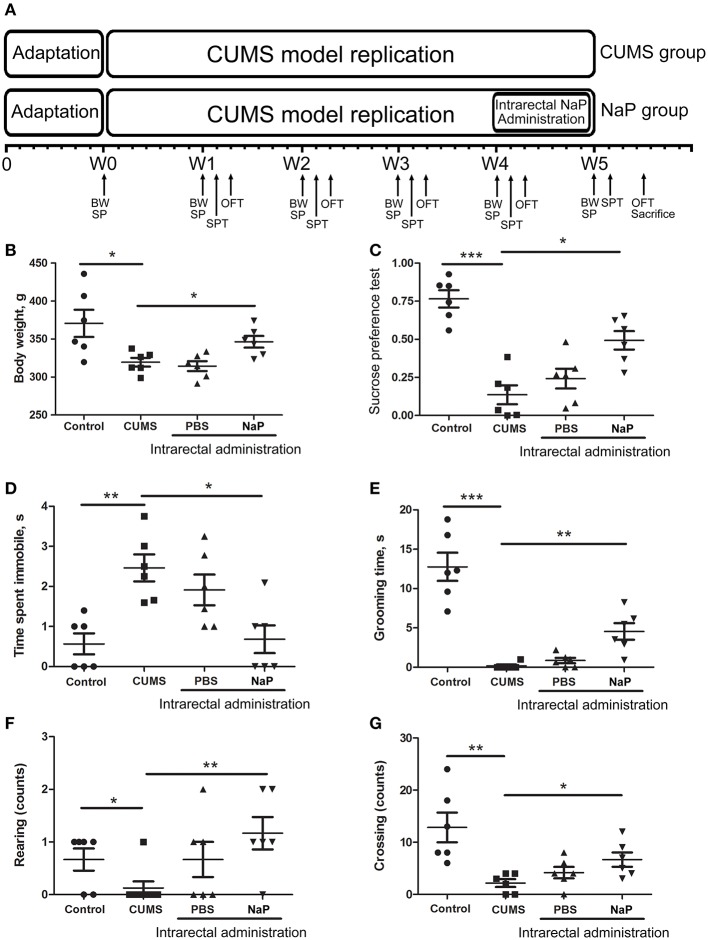
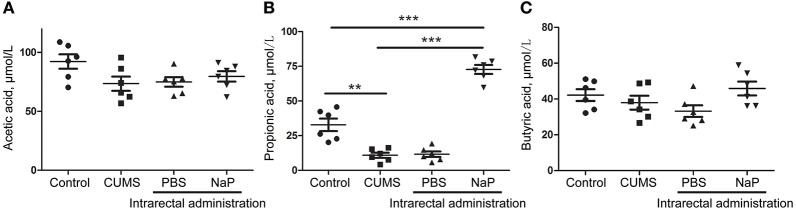
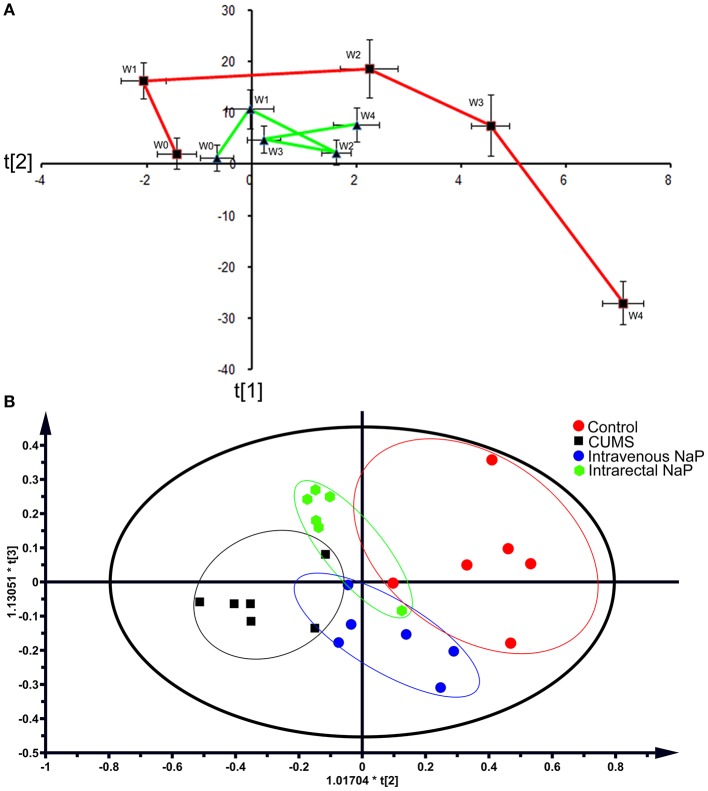
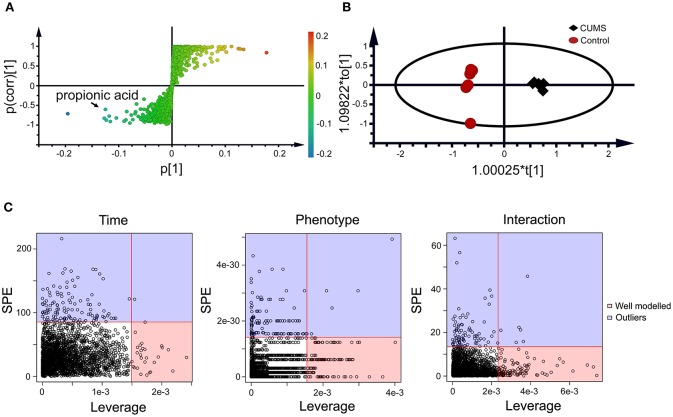
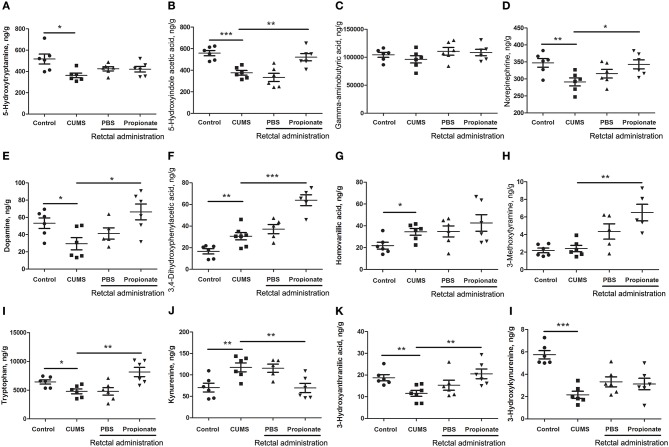
Depression has been correlated with metabolic disorders, and the gut microbiota and its metabolites have been reported to be key factors affecting metabolic disorders. Several metabolites generated by the gut microbiota have been reported to exert antidepressant-like effects, including the short chain fatty acid (SCFA) butyrate. However, recent work has suggested that the abundance of butyrate is not significantly changed in neither human nor experimental animals with depression, and butyrate has been reported to decrease upon the administration of prebiotics with antidepressant-like effects. Supplementation of endogenous metabolites that are unchanged in depression may induce additional metabolic disorders and may lead to poorer clinical outcomes. However, the endogenous metabolites that are imbalanced in depression may include several antidepressant candidates that could circumvent these problems. In this study, we used GC-MS spectrometry to study the fecal metabolome of rats under Chronic Unpredictable Mild Stress (CUMS). We carried out static and dynamic metabolomics analyses to identify the differential metabolites between the CUMS rats and control rats. We identified propionic acid, rather than butyric acid, as a differential metabolite of the CUMS rats. Consistent with this, a 1-week intrarectal administration of sodium propionate (NaP, the salt form of propionic acid) induced antidepressant-like effects and partially rebalanced the plasma metabolome. The antidepressant-like effects of NaP were correlated with differential rescue of neurotransmitters in the prefrontal cortex, which may be achieved through the reduction of catabolism of noradrenaline, tryptophan and dopamine, rather than serotonin. These findings support NaP as a potential candidate in fighting depression by administering an endogenous metabolite.
抑郁症与代谢紊乱有关,据报道,肠道微生物群及其代谢产物是影响代谢紊乱的关键因素。据报道,肠道微生物群产生的几种代谢产物具有抗抑郁样效应,包括短链脂肪酸(SCFA)丁酸。然而,最近的研究表明,在患有抑郁症的人类和实验动物中,丁酸的丰度均无显著变化,而且据报道,给予具有抗抑郁样效应的益生元后,丁酸含量会降低。补充在抑郁症中未发生变化的内源性代谢产物可能会引发额外的代谢紊乱,并可能导致更差的临床结果。然而,在抑郁症中失衡的内源性代谢产物可能包括几种可以规避这些问题的抗抑郁候选物。在本研究中,我们使用气相色谱-质谱联用技术研究了慢性不可预测轻度应激(CUMS)大鼠的粪便代谢组。我们进行了静态和动态代谢组学分析,以确定CUMS大鼠和对照大鼠之间的差异代谢产物。我们确定丙酸而非丁酸是CUMS大鼠的差异代谢产物。与此一致的是,为期1周的直肠内注射丙酸钠(NaP,丙酸的盐形式)可产生抗抑郁样效应,并部分恢复血浆代谢组的平衡。NaP的抗抑郁样效应与前额叶皮质中神经递质的差异挽救有关,这可能是通过减少去甲肾上腺素、色氨酸和多巴胺的分解代谢而非血清素的分解代谢来实现的。这些发现支持NaP作为一种通过给予内源性代谢产物来对抗抑郁症的潜在候选物。