Department of Mechanical Engineering, University of Michigan, Ann Arbor, MI, USA.
Department of Biomedical Engineering, University of Michigan, Ann Arbor, MI, USA.
Nat Mater. 2021 Feb;20(2):132-144. doi: 10.1038/s41563-020-00829-9. Epub 2020 Nov 16.
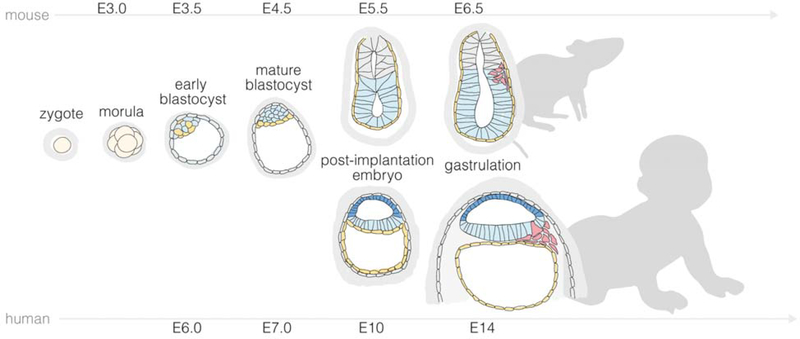
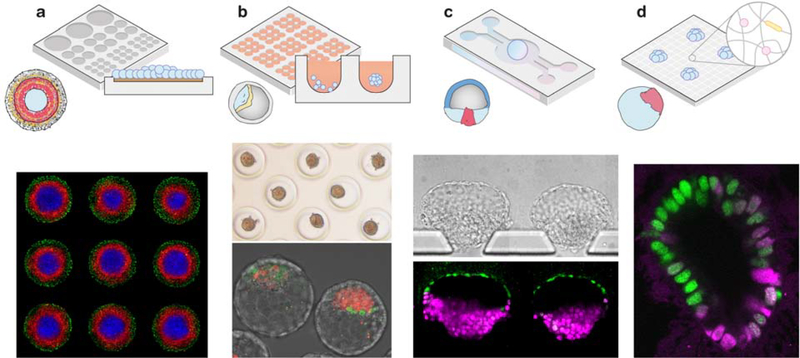
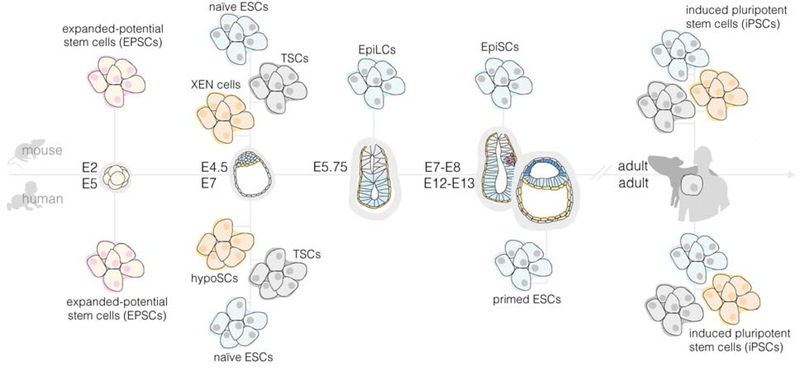
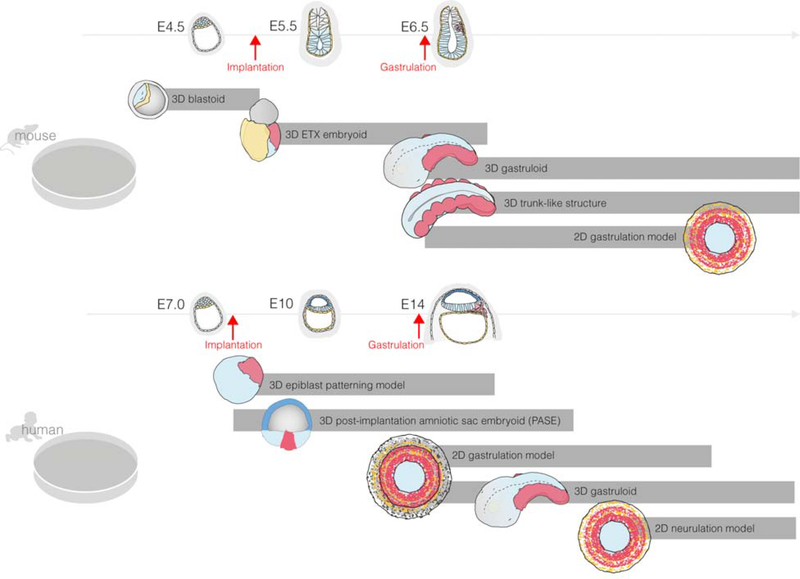
Despite its importance, understanding the early phases of human development has been limited by availability of human samples. The recent emergence of stem-cell-derived embryo models, a new field aiming to use stem cells to construct in vitro models to recapitulate snapshots of the development of the mammalian conceptus, opens up exciting opportunities to promote fundamental understanding of human development and advance reproductive and regenerative medicine. This Review provides a summary of the current knowledge of early mammalian development, using mouse and human conceptuses as models, and emphasizes their similarities and critical differences. We then highlight existing embryo models that mimic different aspects of mouse and human development. We further discuss bioengineering tools used for controlling multicellular interactions and self-organization critical for the development of these models. We conclude with a discussion of the important next steps and exciting future opportunities of stem-cell-derived embryo models for fundamental discovery and translation.
尽管其重要性不言而喻,但由于人类样本的可用性有限,人们对人类发育早期阶段的认识一直受到限制。最近出现的干细胞衍生胚胎模型是一个旨在利用干细胞构建体外模型以重现哺乳动物胚胎发育片段的新领域,为促进对人类发育的基本认识和推进生殖和再生医学提供了令人兴奋的机会。本综述以小鼠和人类胚胎为模型,概述了当前关于早期哺乳动物发育的知识,并强调了它们的相似性和关键差异。然后,我们重点介绍了模拟不同方面的小鼠和人类发育的现有胚胎模型。我们进一步讨论了用于控制对这些模型的发育至关重要的细胞间相互作用和自组织的生物工程工具。最后,我们讨论了干细胞衍生胚胎模型在基础发现和转化方面的重要下一步和令人兴奋的未来机会。