Department of Urology, The Affiliated Hospital of Qingdao University, Qingdao 266003, P.R. China.
Department of Geratology, The 971th Hospital of PLA Navy, Qingdao 266000, P.R. China.
Oncol Rep. 2021 Jan;45(1):191-201. doi: 10.3892/or.2020.7853. Epub 2020 Nov 13.
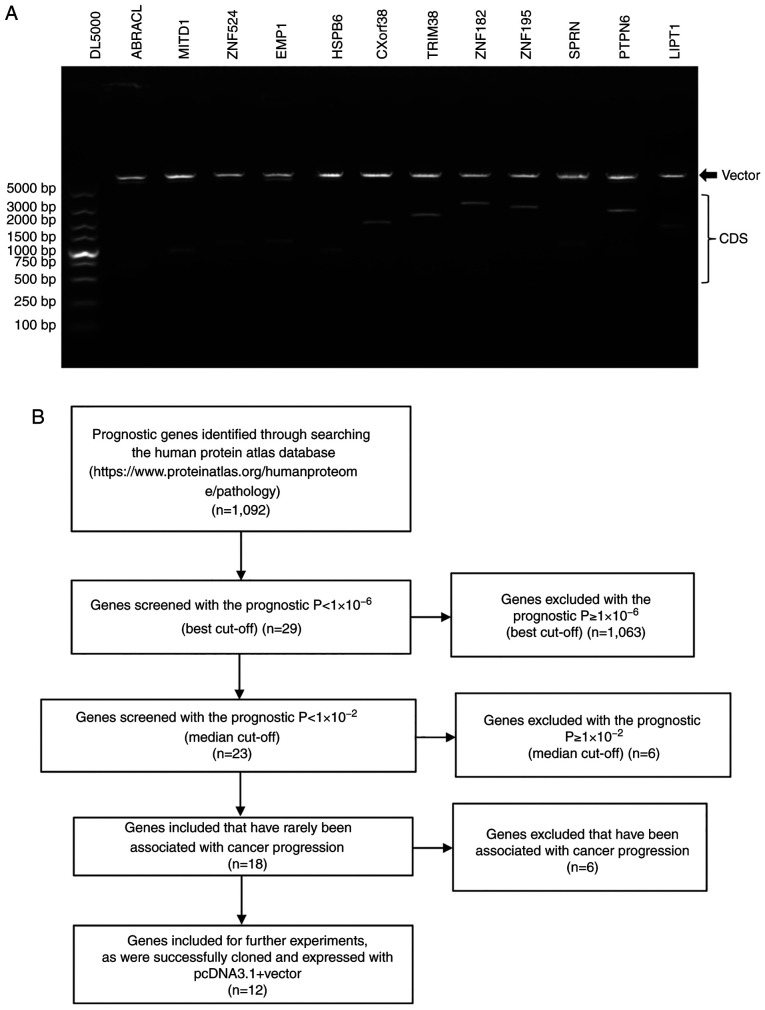
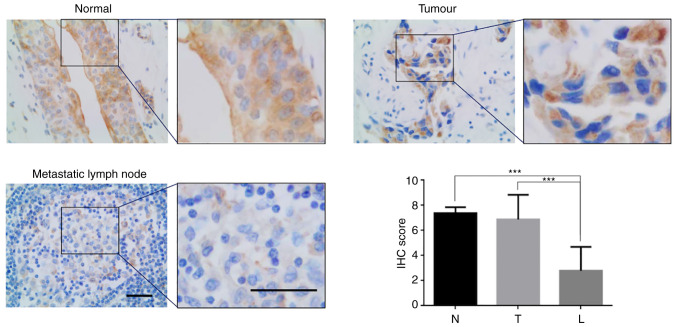
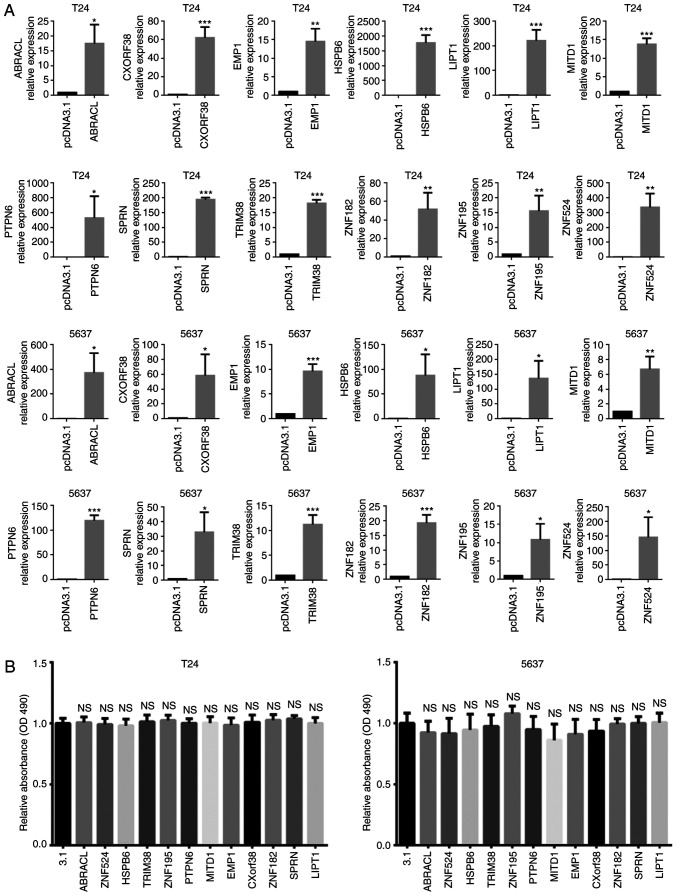
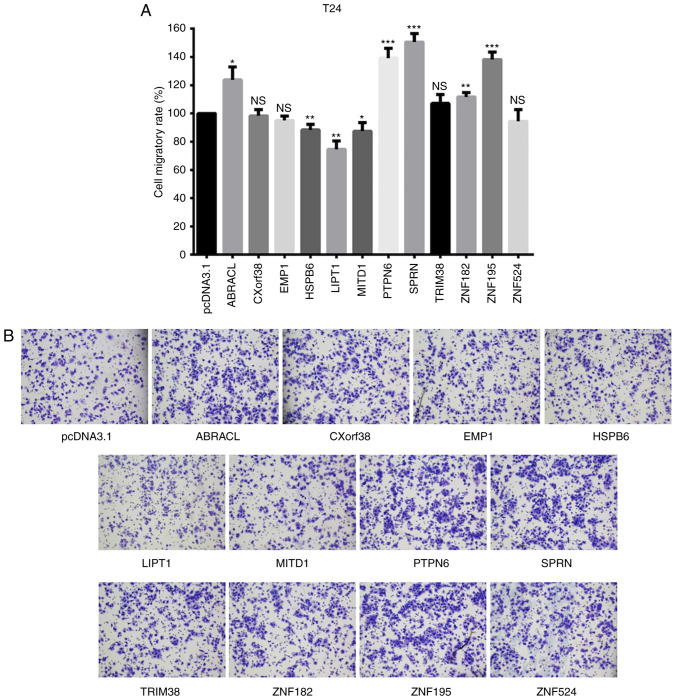
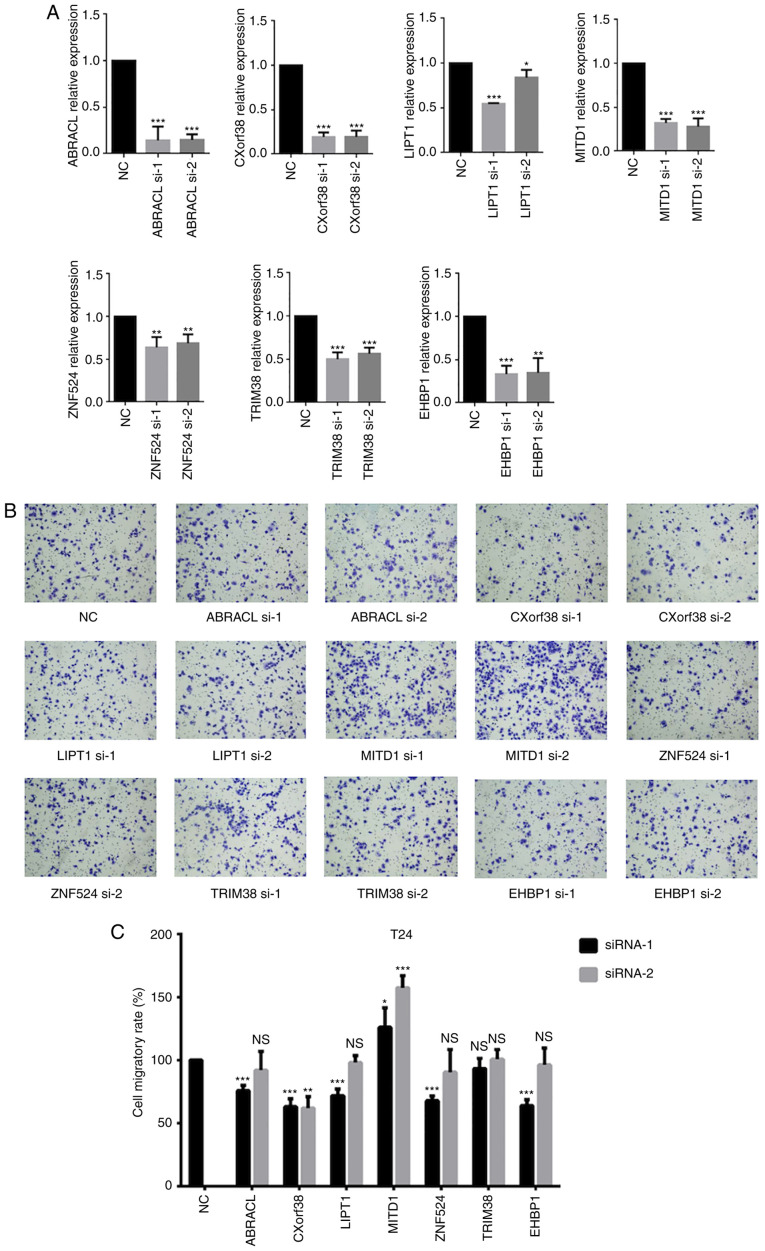
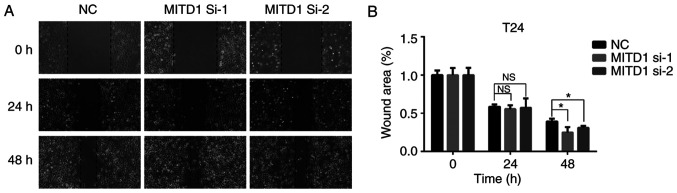
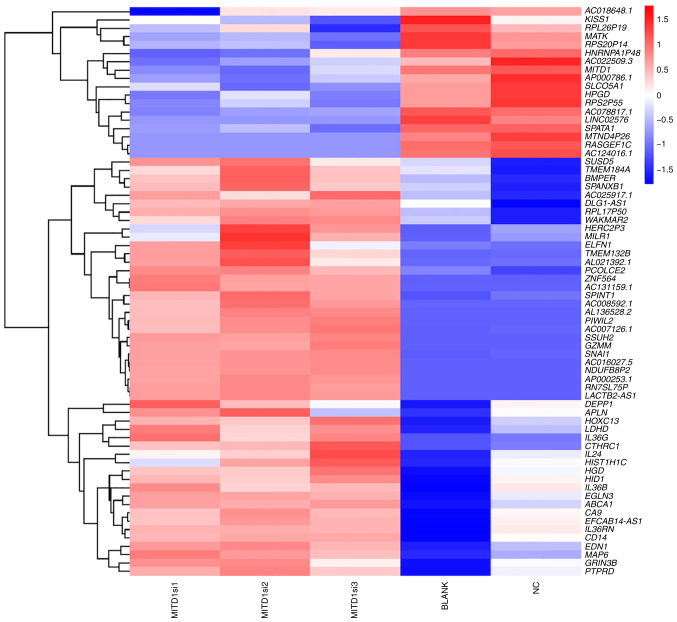
The prognosis‑associated genes of urinary bladder cancer have been systematically investigated in the Pathology Atlas project based on The Cancer Genome Atlas data. However, the biological functions of most genes in bladder cancer remain unknown. The present study investigated the biological function of 12 of the most significant survival‑associated genes (ABRACL, MITD1, ZNF524, EMP1, HSPB6, CXorf38, TRIM38, ZNF182, ZNF195, SPRN, PTPN6 and LIPT1) in urothelial cancer reported by the Pathology Atlas project, with respect to cell proliferation and migration. In vitro, proliferation and migration analyses of T24 cells were performed following the transfection of the 12 prognostic genes. The results were validated with a small interfering (si)RNA library. Immunohistochemistry (IHC) analysis of clinical samples was performed to determine the association between gene expression and tumor metastasis. Furthermore, RNA sequencing was used to investigate the downstream signals. Among the 12 prognostic genes, MIT‑domain containing protein 1 (MITD1) transfection was demonstrated to inhibit T24 cell migration to a certain degree. Experiments performed with a 7‑gene siRNA library demonstrated that MITD1 knockdown markedly upregulated cell migratory abilities. Mechanistically, the influence of MITD1 on cell signal transduction was assessed via RNA sequencing. Cell migration‑associated genes, including KISS1, SPANXB1, SPINT1, PIWIL2, SNAI1, APLN and CTHRC1 were dysregulated. IHC analysis demonstrated that MITD1 protein expression was notably lower in metastatic lymph nodes compared with the primary tumors. Taken together, the results of the present study suggest that the prognostic gene, MITD1 may serve as a migration inhibitor, and be developed as a potential therapeutic target for improving the prognosis of bladder cancer.
基于癌症基因组图谱数据,病理学图谱项目已对膀胱癌的预后相关基因进行了系统研究。然而,大多数膀胱癌基因的生物学功能仍然未知。本研究调查了病理学图谱项目报道的 12 个与生存显著相关的基因(ABRACL、MITD1、ZNF524、EMP1、HSPB6、CXorf38、TRIM38、ZNF182、ZNF195、SPRN、PTPN6 和 LIPT1)在尿路上皮癌中的生物学功能,涉及细胞增殖和迁移。在体外,通过转染 12 个预后基因对 T24 细胞进行增殖和迁移分析。结果用小干扰(si)RNA 文库进行了验证。对临床样本进行免疫组织化学(IHC)分析,以确定基因表达与肿瘤转移之间的关系。此外,还进行了 RNA 测序以研究下游信号。在这 12 个预后基因中,MIT 结构域包含蛋白 1(MITD1)转染被证明在一定程度上抑制了 T24 细胞的迁移。使用 7 个基因 siRNA 文库进行的实验表明,MITD1 敲低显著上调了细胞迁移能力。从机制上讲,通过 RNA 测序评估了 MITD1 对细胞信号转导的影响。细胞迁移相关基因,包括 KISS1、SPANXB1、SPINT1、PIWIL2、SNAI1、APLN 和 CTHRC1 失调。IHC 分析表明,MITD1 蛋白表达在转移性淋巴结中明显低于原发性肿瘤。总之,本研究的结果表明,预后基因 MITD1 可能作为一种迁移抑制剂,并可作为改善膀胱癌预后的潜在治疗靶点。