Genomic Medicine Institute, Lerner Research Institute, Cleveland Clinic, Cleveland, OH, USA.
Epilepsy Center, Neurological Institute, Cleveland Clinic, Cleveland, OH, USA.
Epilepsia. 2021 Jan;62(1):143-151. doi: 10.1111/epi.16755. Epub 2020 Nov 17.
Clinical genetic sequencing is frequently utilized to diagnose individuals with neurodevelopmental disorders (NDDs). Here we perform a meta-analysis and systematic review of the success rate (diagnostic yield) of clinical sequencing through next-generation sequencing (NGS) across NDDs. We compare the genetic testing yield across NDD subtypes and sequencing technology.
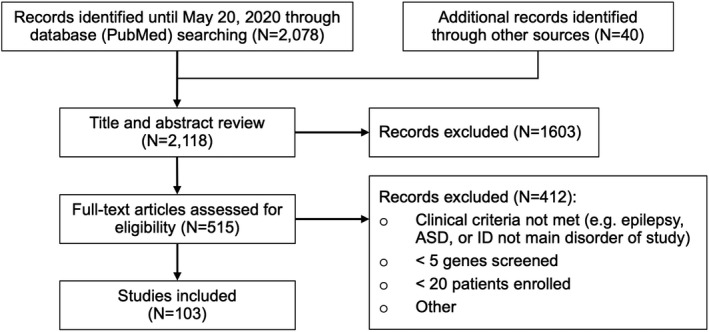
We performed a systematic review of the PubMed literature until May 2020. We included clinical sequencing studies that utilized NGS in individuals with epilepsy, autism spectrum disorder (ASD), or intellectual disability (ID). Data were extracted, reviewed, and categorized according to the Preferred Reporting Items for Systematic Reviews and Meta-Analyses (PRISMA) guidelines. Two investigators performed clinical evaluation and grouping following the International League Against Epilepsy (ILAE) guidelines. Pooled rates of the diagnostic yield and 95% confidence intervals were estimated with a random-effects model.
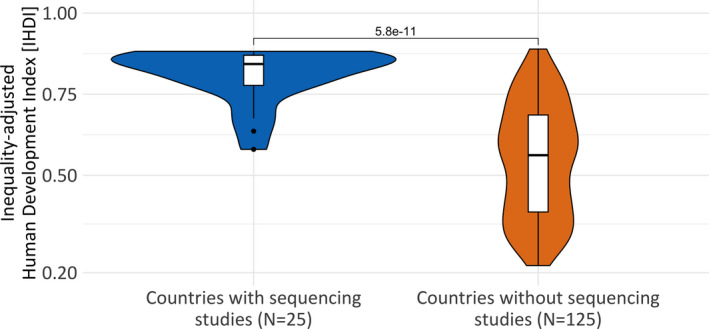
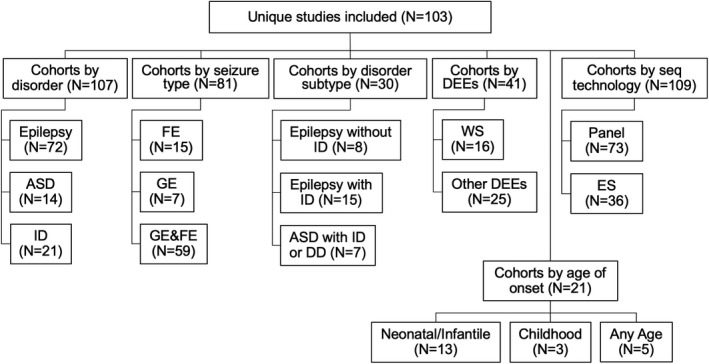
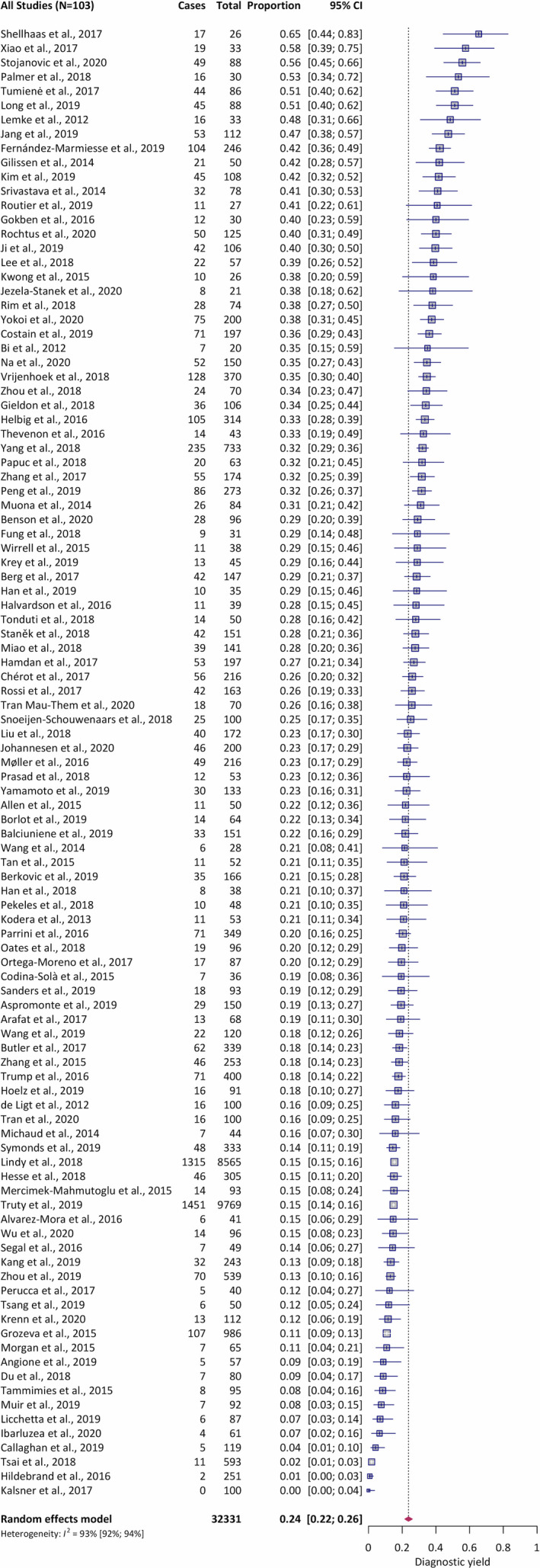
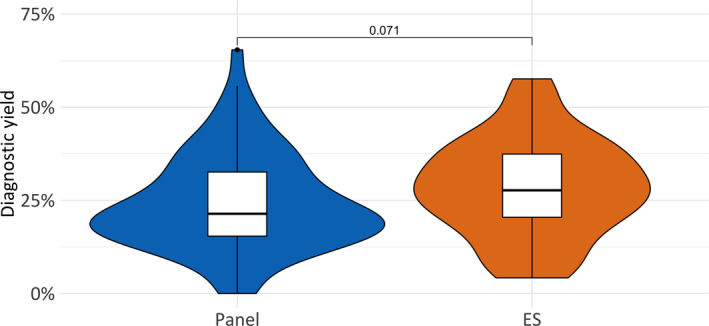
We identified 103 studies (epilepsy, N = 72; ASD, N = 14; ID, N = 21) across 32,331 individuals. Targeted gene panel sequencing was used in 73, and exome sequencing in 36 cohorts. Given highly selected patient cohorts, the diagnostic yield was 17.1% for ASD, 24% for epilepsy, and 28.2% for ID (23.7% overall). The highest diagnostic yield for epilepsy subtypes was observed in individuals with ID (27.9%) and early onset seizures (36.8%). The diagnostic yield for exome sequencing was higher than for panel sequencing, even though not statistically significant (27.2% vs 22.6%, P = .071). We observed that clinical sequencing studies are performed predominantly in countries with a high Inequality-adjusted Human Development Index (IHDI) (countries with sequencing studies: IHDI median = 0.84, interquartile range [IQR] = 0.09 vs countries without sequencing studies: IHDI median = 0.56, IQR = 0.3). No studies from Africa, India, or Latin America were identified, indicating potential barriers to genetic testing.
This meta-analysis and systematic review provides a comprehensive overview of clinical sequencing studies of NDDs and will help guide policymaking and steer decision-making in patient management.
临床基因测序常用于诊断神经发育障碍(NDD)患者。本研究通过下一代测序(NGS)对 NDD 患者的临床测序成功率(诊断率)进行荟萃分析和系统评价,并比较不同 NDD 亚型和测序技术的基因检测率。
我们对 PubMed 文献进行了系统评价,截至 2020 年 5 月。我们纳入了使用 NGS 对癫痫、自闭症谱系障碍(ASD)或智力障碍(ID)患者进行临床测序的研究。根据系统评价和荟萃分析的首选报告项目(PRISMA)指南提取、审查和分类数据。两名研究人员根据国际抗癫痫联盟(ILAE)指南进行临床评估和分组。使用随机效应模型估计诊断率和 95%置信区间的汇总率。
我们共纳入了 32331 例患者的 103 项研究(癫痫 72 项、ASD 14 项、ID 21 项)。73 项研究使用靶向基因panel 测序,36 项研究使用外显子组测序。由于患者队列选择非常严格,ASD 的诊断率为 17.1%,癫痫为 24%,ID 为 28.2%(总体为 23.7%)。在 ID(27.9%)和早发性癫痫(36.8%)患者中,癫痫亚型的诊断率最高。虽然外显子组测序的诊断率高于基因 panel 测序,但差异无统计学意义(27.2% vs 22.6%,P=0.071)。我们发现,临床测序研究主要在人类发展指数(HDI)调整后不平等程度较高的国家(测序研究国家:HDI 中位数=0.84,四分位距 [IQR]=0.09;无测序研究国家:HDI 中位数=0.56,IQR=0.3)开展。没有发现来自非洲、印度或拉丁美洲的研究,表明这些地区可能存在基因检测障碍。
本荟萃分析和系统评价全面概述了 NDD 的临床测序研究,将有助于指导政策制定和指导患者管理中的决策。