Department of Community Dentistry, University of the Witwatersrand, School of Oral Health Sciences, Johannesburg, South Africa.
University of the Witwatersrand, School of Therapeutic Sciences, Johannesburg, South Africa.
PLoS One. 2020 Nov 17;15(11):e0241988. doi: 10.1371/journal.pone.0241988. eCollection 2020.
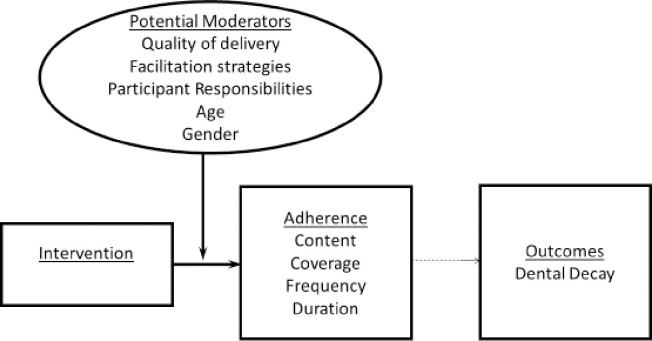
It is important that components contributing to success of a program are well understood to ensure better outcomes and strengthen interventions. Hence the purpose of the study was to assess the level of fidelity achieved by school oral health programs in our study district and to determine elements of fidelity that predict the risk of dental decay.
A cross-sectional study design was utilised. A multistage sampling technique was employed to randomly select 10 schools, two grades in each school were selected and all pupils in the selected grades were included in an oral health examination. Ten oral hygienists were observed and interviewed as they carried out the activities of the program and records were reviewed. Data collection tools included an oral health examination form, and an implementation fidelity checklist.
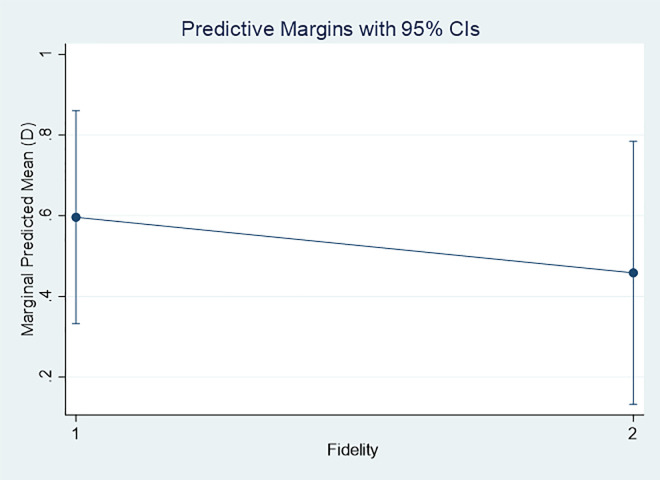
The average level of fidelity obtained was 40% and it was shown to be inversely correlated with levels of decay, as decay was predicted to decrease with increasing levels of fidelity. The fidelity elements that were found to directly predict the outcome of decay included duration (IRR, 0.49; p = 0.02) coverage (IRR, 0.54; p = 008), content (IRR, 1.36; p = 0.03) and age (IRR, 2.14; p = 0.00). Moderating factors of fidelity which indirectly influenced the outcome of decay included facilitation strategy, duration and age. These were predicted to reduce the risk of decay by 92%, 83% and 48% respectively.
The school oral health programs exhibited high levels of pupil coverage, however, the content of the programs offered was low (28%). Coverage was high in the context of lack of dental assistance and time. Multi-sectoral participation is therefore necessary to re-organise the program for improving implementation fidelity and bringing about quality implementation.
了解促成项目成功的因素非常重要,这有助于确保更好的结果并加强干预措施。因此,本研究的目的是评估我们研究区域内学校口腔卫生计划的实施保真度水平,并确定预测龋齿风险的保真度要素。
采用横断面研究设计。采用多阶段抽样技术随机选择 10 所学校,每所学校选择两个年级,所有选定年级的学生都接受口腔健康检查。对 10 名口腔卫生员进行观察和访谈,记录他们开展项目活动的情况,并审查记录。数据收集工具包括口腔健康检查表和实施保真度检查表。
平均获得的保真度为 40%,并且与龋齿水平呈负相关,因为随着保真度水平的提高,龋齿被预测会减少。发现直接预测龋齿结果的保真度要素包括持续时间(IRR,0.49;p=0.02)、覆盖范围(IRR,0.54;p=0.08)、内容(IRR,1.36;p=0.03)和年龄(IRR,2.14;p=0.00)。保真度的调节因素间接影响龋齿的结果,包括促进策略、持续时间和年龄。这些因素分别预测龋齿风险降低 92%、83%和 48%。
学校口腔卫生计划表现出高比例的学生覆盖率,但提供的课程内容较低(28%)。在缺乏牙科协助和时间的情况下,覆盖率较高。因此,需要多部门参与,重新组织该计划,以提高实施保真度并实现高质量的实施。