Department of Respiratory and Critical Care Medicine, Jinling Hospital, Medical School of Nanjing University, Nanjing, China.
The Second Affiliated Hospital of Nanjing University of Chinese Medicine, Nanjing, China; and.
Am J Respir Cell Mol Biol. 2021 Feb;64(2):196-207. doi: 10.1165/rcmb.2020-0112OC.
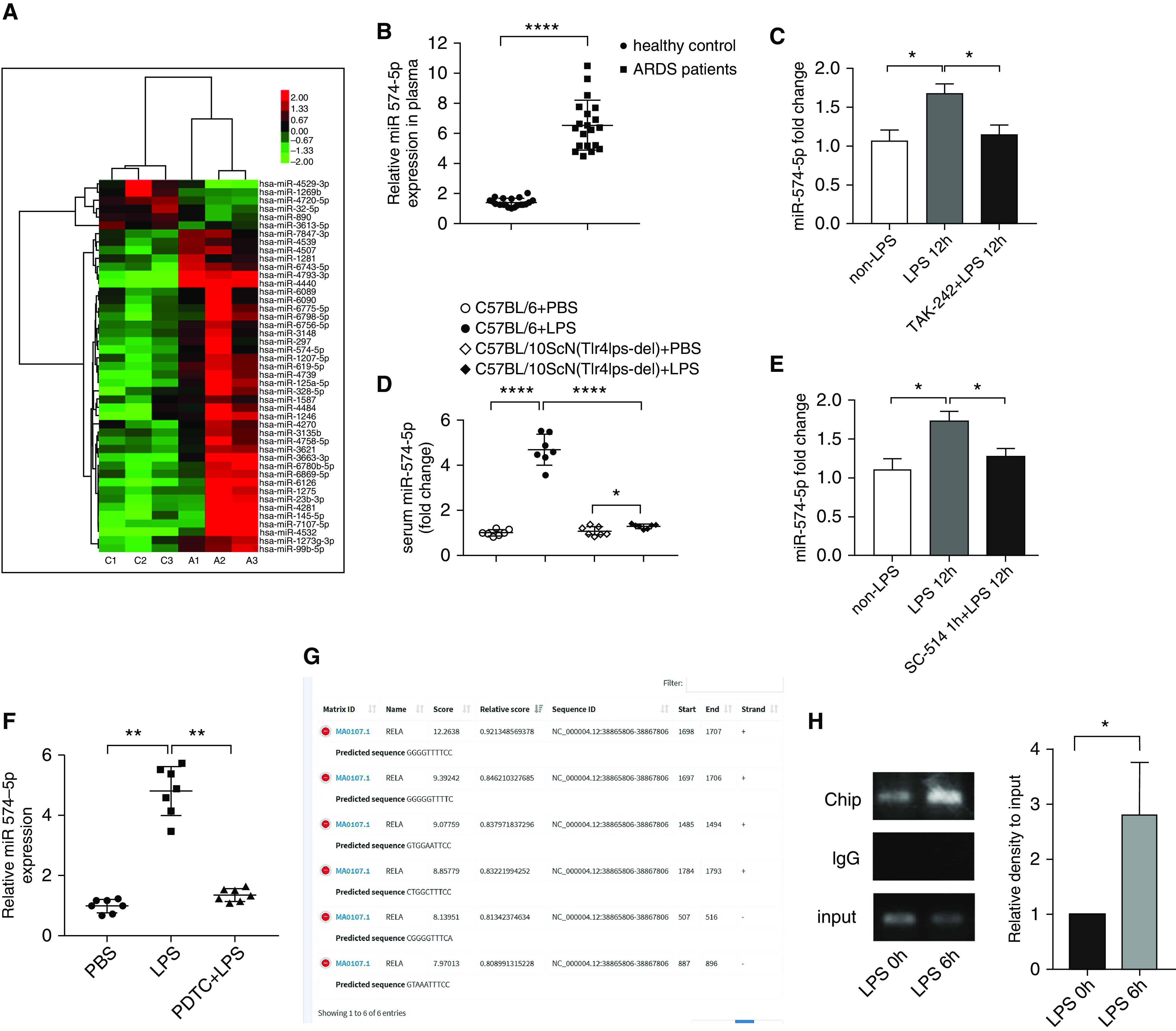
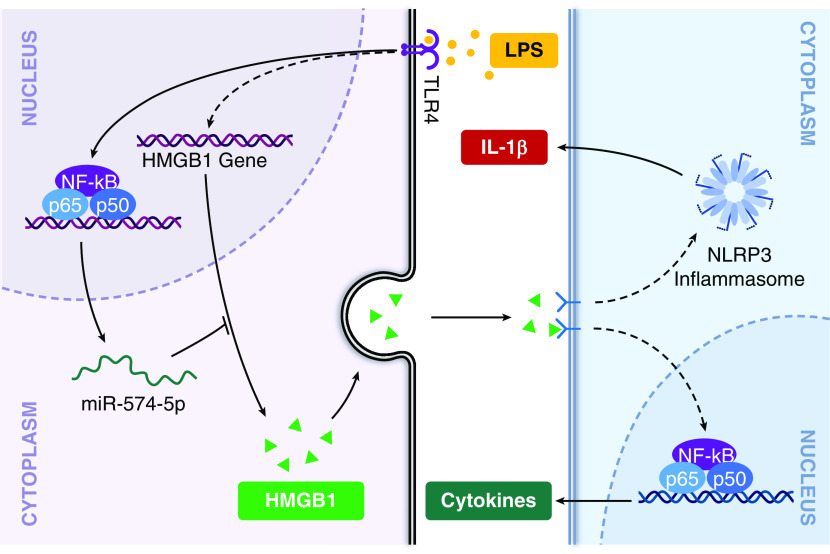
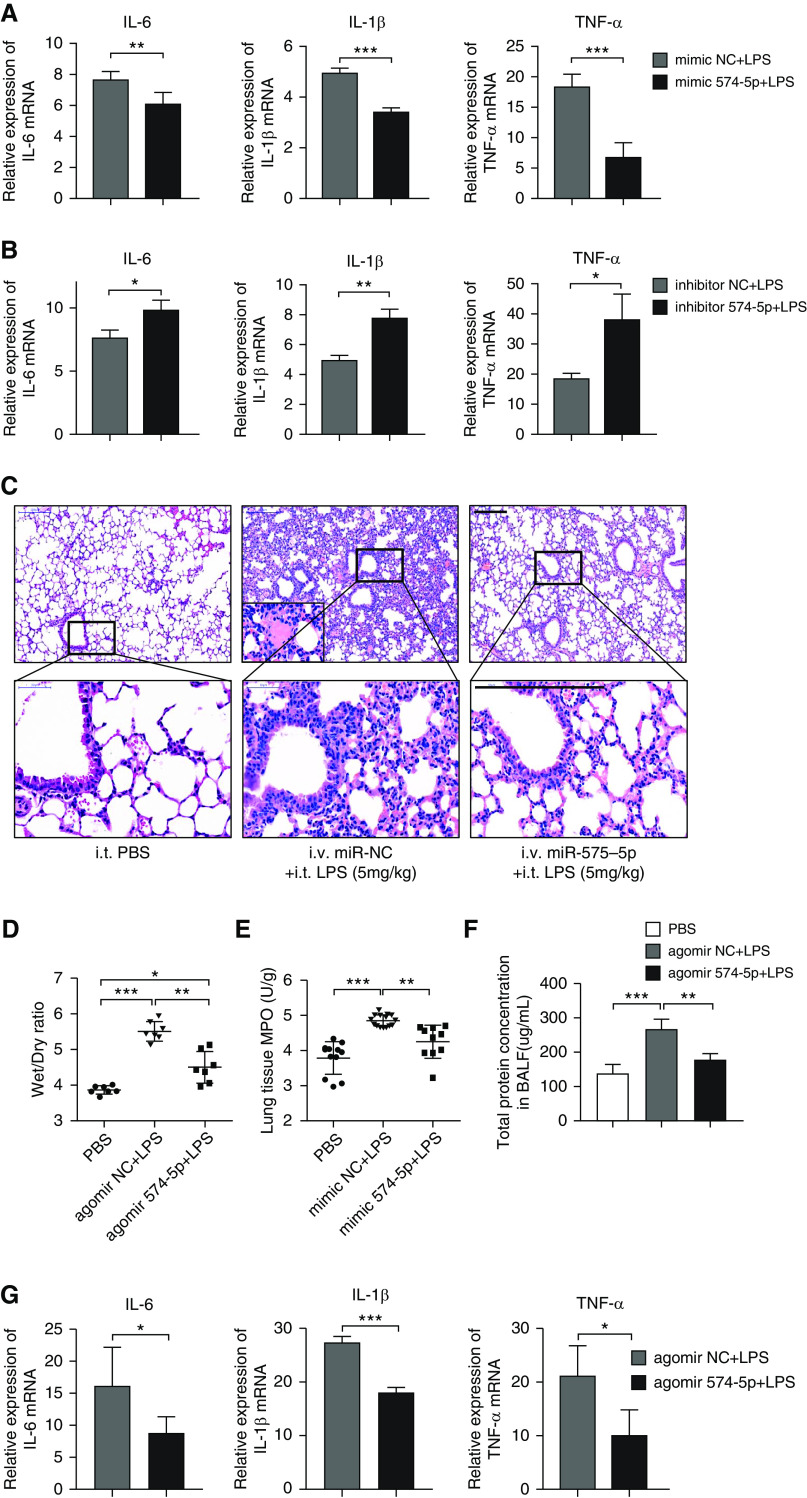
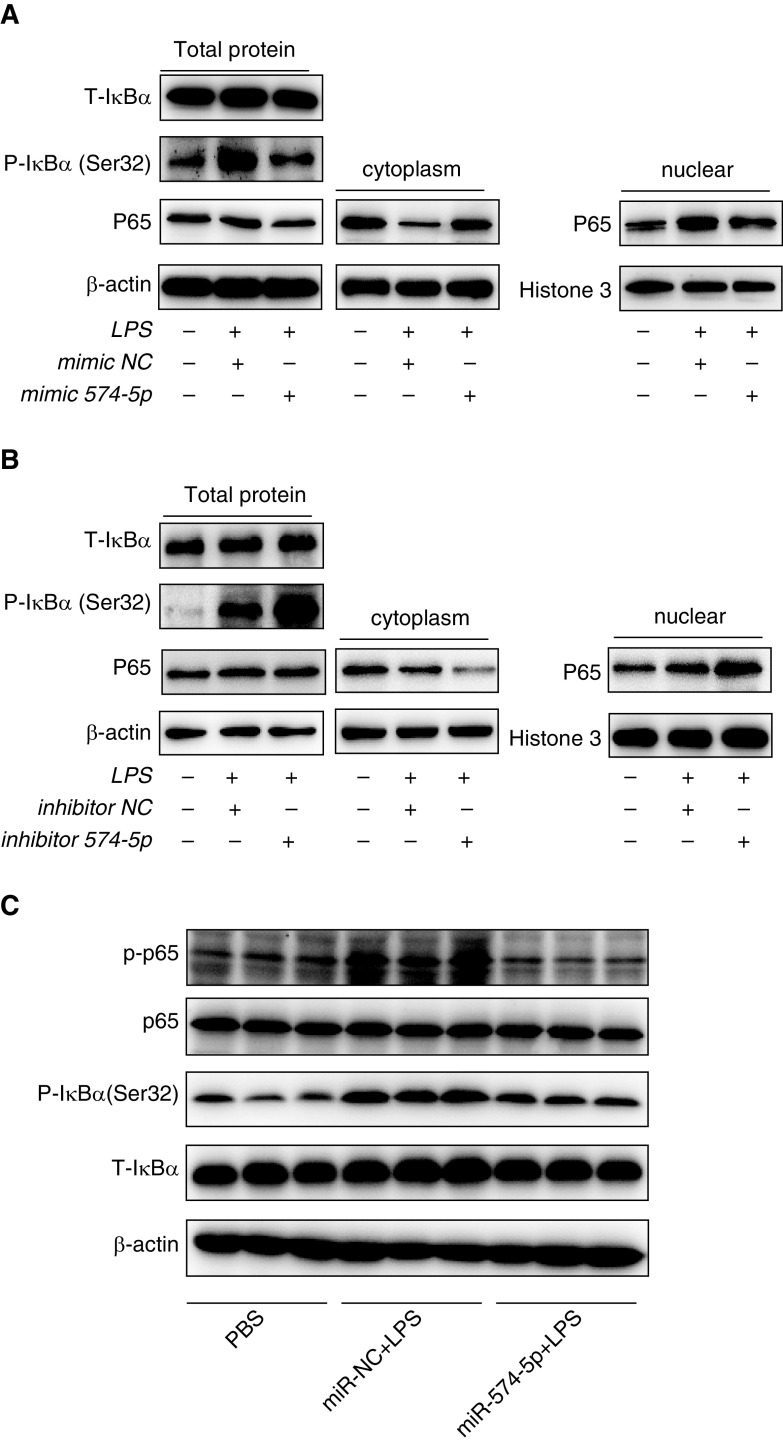
Acute respiratory distress syndrome (ARDS) is a critical condition with high mortality. HMGB1 (high-mobility group protein B1) is one of the key proinflammatory factors in the ARDS "inflammatory storm." According to previous studies, some microRNAs (miRNAs) play important roles in this process. We aimed to determine the contributing miRNAs targeting the expression and release of HMGB1. miRNA expression in the peripheral blood of patients with ARDS was measured by miRNA microarray. miRNAs targeting HMGB1 were screened and explored for further study. In LPS-induced cell and mouse ARDS models, we explored the effect of this miRNA on the expression and secretion of HMGB1 by Western blot, real-time qPCR, and ELISA. The effects of this miRNA on the NF-κB signaling pathway, proinflammatory cytokines, and NLRP3 (nod-like receptor protein 3) inflammasome were detected by Western blot and real-time qPCR. In ARDS models, microRNA-574-5p (miR-574-5p) expression could be induced by the TLR4/NF-κB pathway upon LPS stimulation. It could suppress the inflammatory response by targeting HMGB1. Enforcing the expression of miR-574-5p or HMGB1 siRNA silencing inhibits the activation of NF-κB signaling pathway and the NLRP3 inflammasome. Moreover, overexpression of HMGB1 reversed the antiinflammatory effect of miR-574-5p. In ARDS mice, overexpression of miR-574-5p suppresses alveolar leukocytes infiltration, interstitial edema, protein effusion, and inflammation. This study demonstrated that miR-574-5p provided negative feedback to LPS-induced inflammation and relieved ARDS. It may provide new therapeutic strategies for ARDS.
急性呼吸窘迫综合征(ARDS)是一种死亡率很高的危急病症。高迁移率族蛋白 B1(HMGB1)是 ARDS“炎症风暴”中的关键促炎因子之一。根据之前的研究,一些 microRNAs(miRNAs)在这个过程中发挥着重要作用。我们旨在确定针对 HMGB1 表达和释放的 miRNA。通过 miRNA 微阵列测量 ARDS 患者外周血中的 miRNA 表达。筛选针对 HMGB1 的 miRNA 并进行进一步研究。在 LPS 诱导的细胞和小鼠 ARDS 模型中,我们通过 Western blot、实时 qPCR 和 ELISA 探讨了该 miRNA 对 HMGB1 表达和分泌的影响。通过 Western blot 和实时 qPCR 检测该 miRNA 对 NF-κB 信号通路、促炎细胞因子和 NLRP3(核苷酸结合寡聚化结构域样受体蛋白 3)炎性小体的影响。在 ARDS 模型中,miR-574-5p(miR-574-5p)表达可被 LPS 刺激 TLR4/NF-κB 通路诱导。它可以通过靶向 HMGB1 来抑制炎症反应。增强 miR-574-5p 的表达或 HMGB1 siRNA 沉默抑制 NF-κB 信号通路和 NLRP3 炎性小体的激活。此外,HMGB1 的过表达逆转了 miR-574-5p 的抗炎作用。在 ARDS 小鼠中,miR-574-5p 的过表达抑制肺泡白细胞浸润、间质水肿、蛋白渗出和炎症。本研究表明,miR-574-5p 对 LPS 诱导的炎症提供了负反馈,并缓解了 ARDS。它可能为 ARDS 提供新的治疗策略。