Department of Clinical Laboratory Sciences, College of Applied Medical Sciences, University of Hafr Albatin, Hafar Al-Batin, Saudi Arabia.
Department of Medical Histology and Cell Biology, Faculty of Medicine, Zagazig University, Zagazig, Egypt.
Stem Cell Res Ther. 2024 Sep 20;15(1):316. doi: 10.1186/s13287-024-03889-9.
Coronavirus disease 2019 (COVID-19) has created a global pandemic with significant morbidity and mortality. SARS-CoV-2 primarily infects the lungs and is associated with various organ complications. Therapeutic approaches to combat COVID-19, including convalescent plasma and vaccination, have been developed. However, the high mutation rate of SARS-CoV-2 and its ability to inhibit host T-cell activity pose challenges for effective treatment. Mesenchymal stem cells (MSCs) and their extracellular vesicles (MSCs-EVs) have shown promise in COVID-19 therapy because of their immunomodulatory and regenerative properties. MicroRNAs (miRNAs) play crucial regulatory roles in various biological processes and can be manipulated for therapeutic purposes.
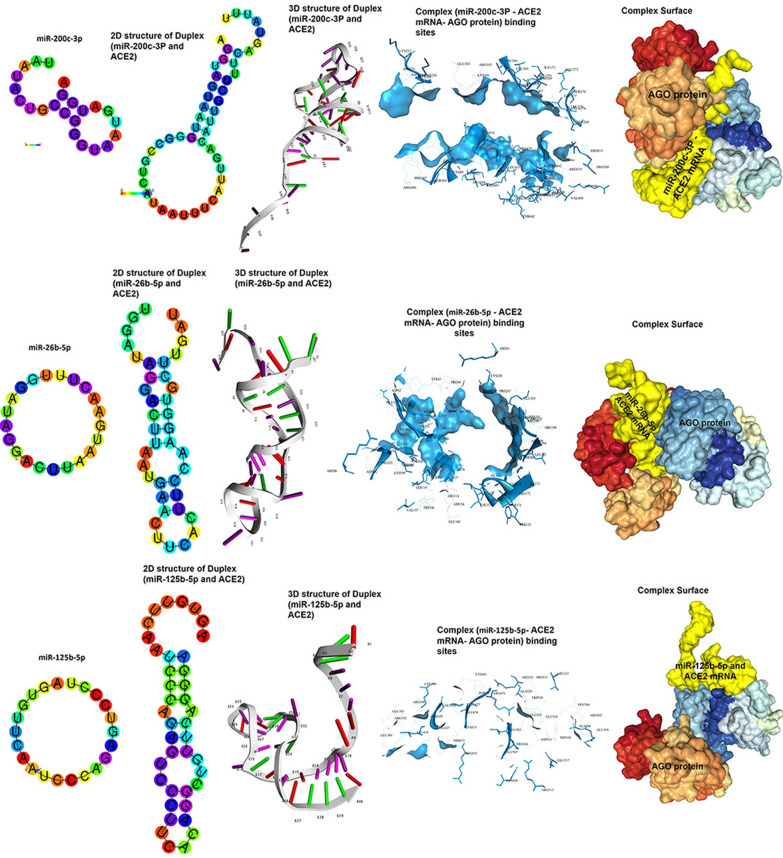
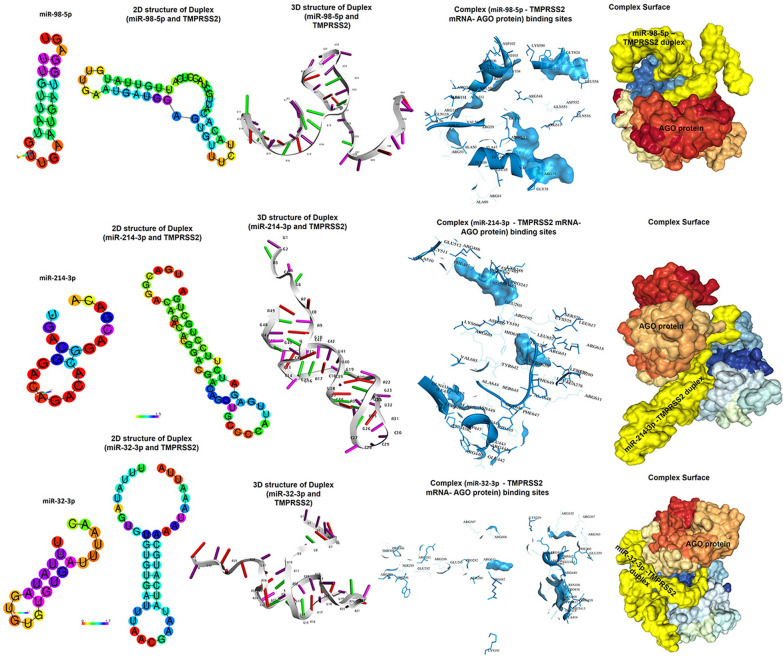
We aimed to investigate the role of lyophilized MSC-EVs and their microRNAs in targeting the receptors involved in SARS-CoV-2 entry into host cells as a strategy to limit infection. In silico microRNA prediction, structural predictions of the microRNA-mRNA duplex, and molecular docking with the Argonaut protein were performed.
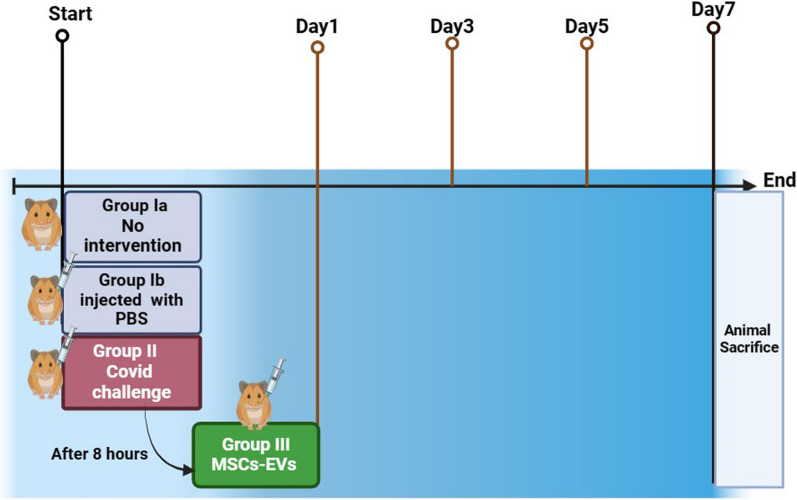
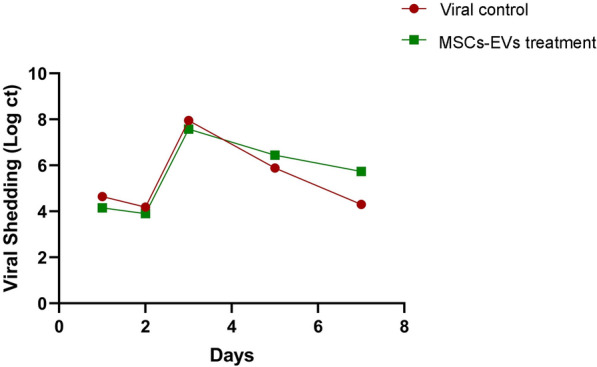
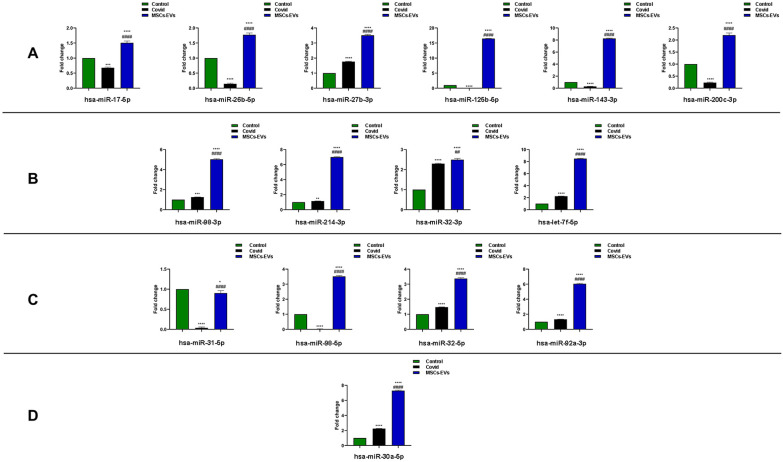
Male Syrian hamsters infected with SARS-CoV-2 were treated with human Wharton's jelly-derived Mesenchymal Stem cell-derived lyophilized exosomes (Bioluga Company)via intraperitoneal injection, and viral shedding was assessed. The potential therapeutic effects of MSCs-EVs were measured via histopathology of lung tissues and PCR for microRNAs.
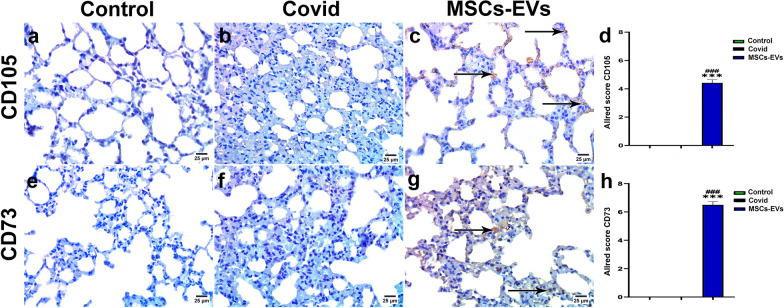
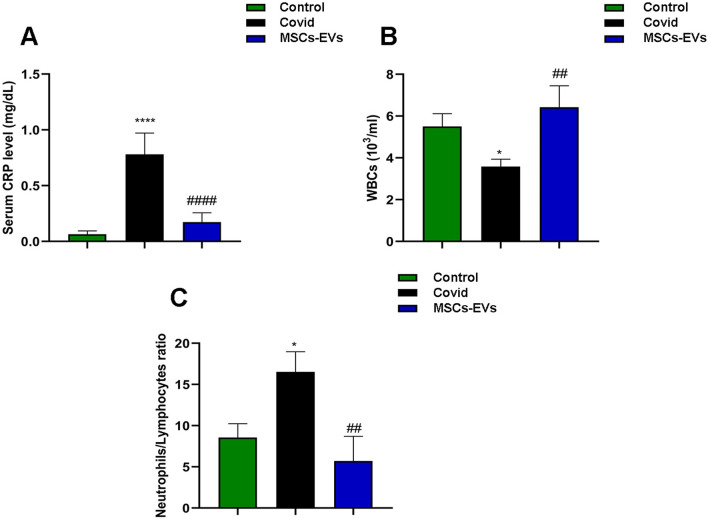
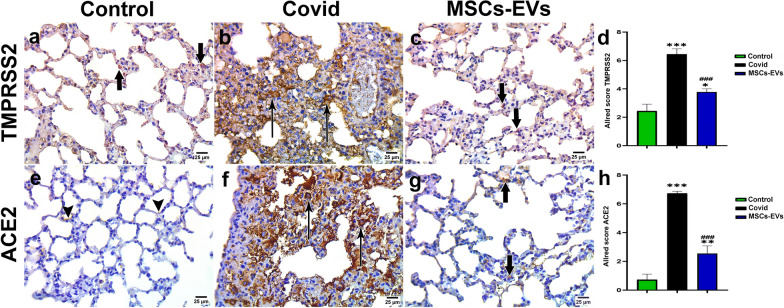
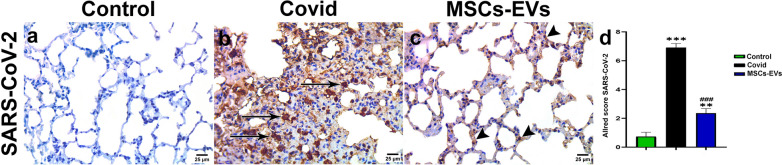
The results revealed strong binding potential between miRNA‒mRNA duplexes and the AGO protein via molecular docking. MSCs-EVs reduced inflammation markers and normalized blood indices via the suppression of viral entry by regulating ACE2 and TMPRSS2 expression. MSCs-EVs alleviated histopathological aberrations. They improved lung histology and reduced collagen fiber deposition in infected lungs.
We demonstrated that MSCs-EVs are a potential therapeutic option for treating COVID-19 by preventing viral entry into host cells.
2019 年冠状病毒病(COVID-19)造成了全球大流行,发病率和死亡率都很高。SARS-CoV-2 主要感染肺部,并与各种器官并发症有关。已经开发出了针对 COVID-19 的治疗方法,包括恢复期血浆和疫苗接种。但是,SARS-CoV-2 的高突变率及其抑制宿主 T 细胞活性的能力对有效治疗构成了挑战。间充质干细胞(MSCs)及其细胞外囊泡(MSCs-EVs)因其具有免疫调节和再生特性,在 COVID-19 治疗中显示出了潜力。微小 RNA(miRNA)在各种生物过程中发挥着至关重要的调节作用,并且可以被操纵用于治疗目的。
我们旨在研究冻干 MSC-EVs 及其 miRNA 靶向 SARS-CoV-2 进入宿主细胞的受体的作用,作为限制感染的一种策略。进行了 miRNA 的计算机预测、miRNA-mRNA 双链的结构预测以及与 Argonaut 蛋白的分子对接。
通过腹腔注射,用人类 Wharton 胶源间充质干细胞衍生的冻干细胞外囊泡(Bioluga 公司)治疗感染 SARS-CoV-2 的雄性叙利亚仓鼠,并评估病毒脱落情况。通过肺组织的组织病理学和 miRNA 的 PCR 来测量 MSC-EVs 的潜在治疗效果。
分子对接结果显示,miRNA-mRNA 双链与 AGO 蛋白之间具有很强的结合潜力。MSC-EVs 通过调节 ACE2 和 TMPRSS2 的表达来抑制病毒进入,从而减少炎症标志物并使血液指数正常化。MSC-EVs 减轻了组织病理学异常。它们改善了感染肺的肺组织学,并减少了胶原蛋白纤维在感染肺中的沉积。
我们证明了 MSC-EVs 通过防止病毒进入宿主细胞,是治疗 COVID-19 的一种潜在治疗选择。