Department of Biochemistry and Molecular Genetics, University of Virginia, Charlottesville, VA, USA.
Center for Public Health Genomics, University of Virginia, Charlottesville, VA, USA.
Trends Genet. 2021 May;37(5):433-443. doi: 10.1016/j.tig.2020.10.005. Epub 2020 Nov 14.
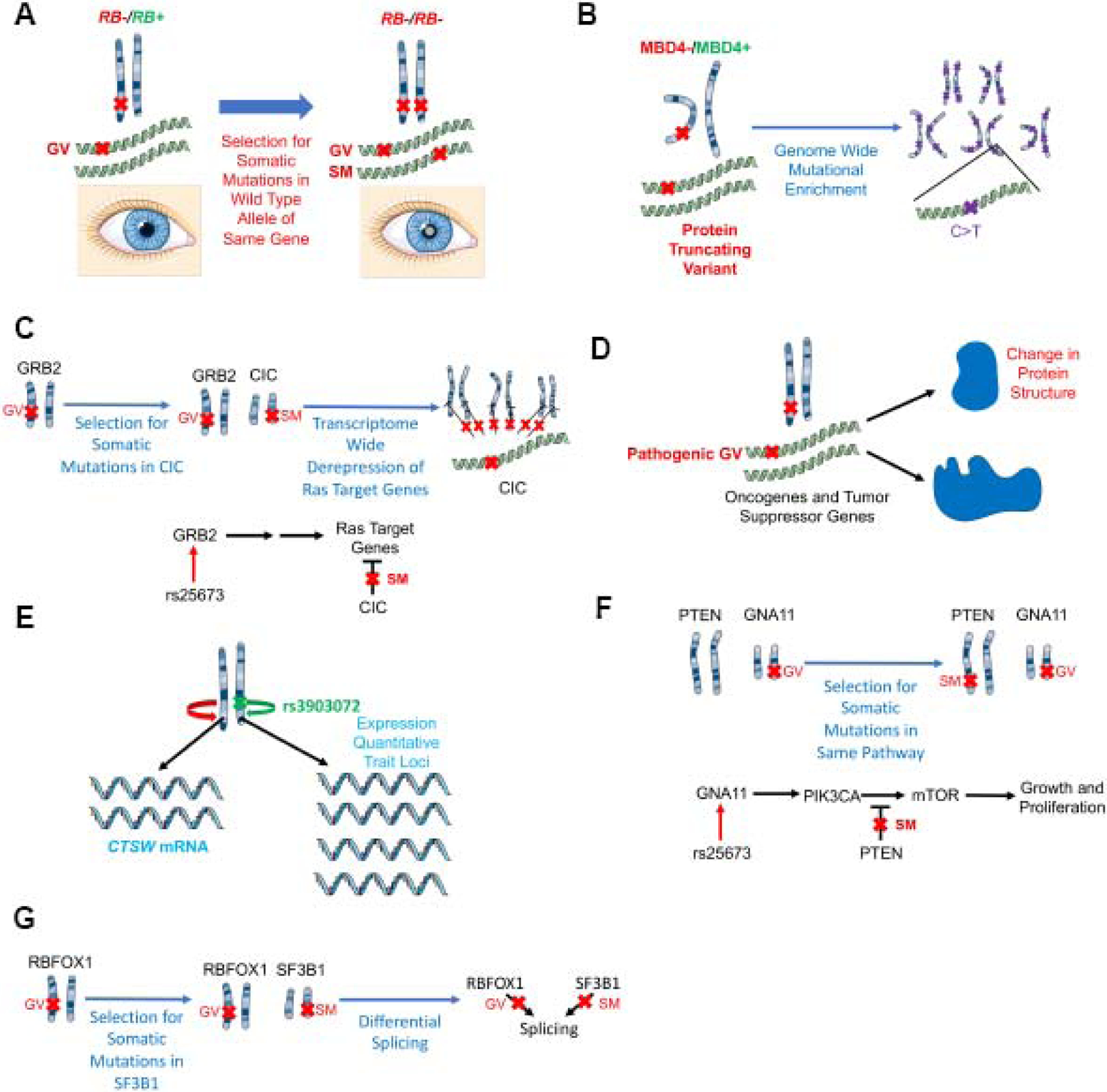
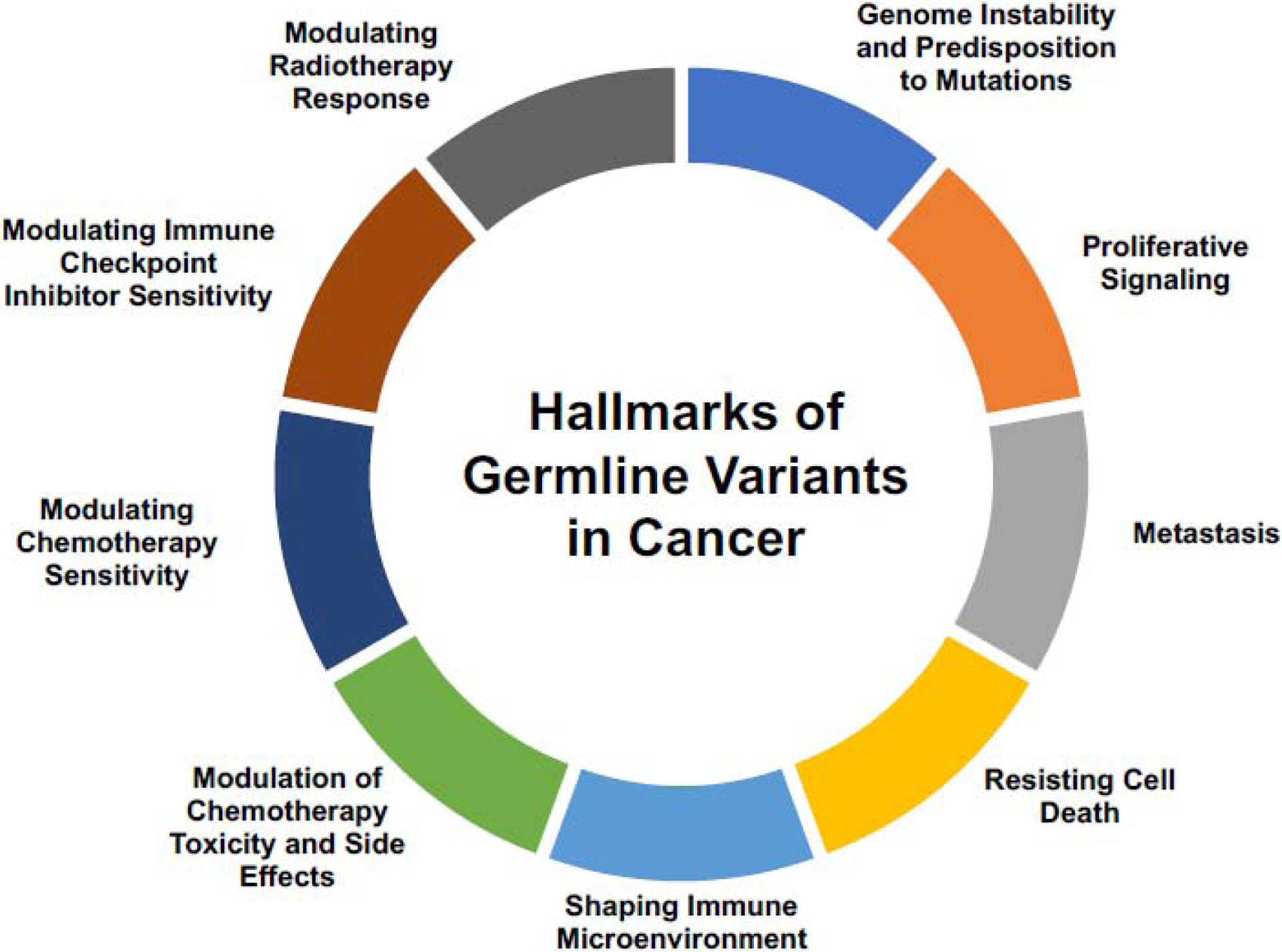
Germline variants have a rich history of being studied in the context of cancer risk. Emerging studies now suggest that germline variants contribute not only to cancer risk but to tumor progression as well. In this opinion article, we discuss the initial discoveries associating germline variants with patient outcome and the mechanisms by which germline variants affect molecular pathways. Germline variants affect molecular pathways through amino acid changes, alteration of splicing patterns or expression of genes, influencing the selection for somatic mutations, and causing genome-wide mutational enrichment. These molecular alterations can lead to tumor phenotypes that become clinically apparent such as metastasis, alterations to the immune microenvironment, and modulation of therapeutic response. Overall, the growing body of evidence suggests that germline variants play a larger role in tumor progression than has been previously appreciated and that germline variation holds substantial potential for improving personalized medicine and patient outcomes.
胚系变异在癌症风险的研究中有着悠久的历史。新兴研究表明,胚系变异不仅与癌症风险有关,而且与肿瘤进展有关。在这篇观点文章中,我们讨论了最初发现的与患者预后相关的胚系变异以及胚系变异影响分子途径的机制。胚系变异通过氨基酸变化、剪接模式的改变或基因表达来影响体细胞突变的选择,并导致全基因组突变富集,从而影响分子途径。这些分子改变可导致肿瘤表型变得明显,如转移、免疫微环境改变和治疗反应的调节。总的来说,越来越多的证据表明,胚系变异在肿瘤进展中起着比以前认识到的更大的作用,胚系变异为改善个性化医学和患者预后提供了巨大的潜力。