Department of Physiology II, Kanazawa Medical University, 1-1 Daigaku, Uchinada, 920-0293, Japan.
Department of Pharmacology, Graduate School of Medicine, Osaka University, 2-2 Yamada-oka, Suita, 565-0871, Japan.
Sci Rep. 2020 Nov 17;10(1):19964. doi: 10.1038/s41598-020-76681-3.
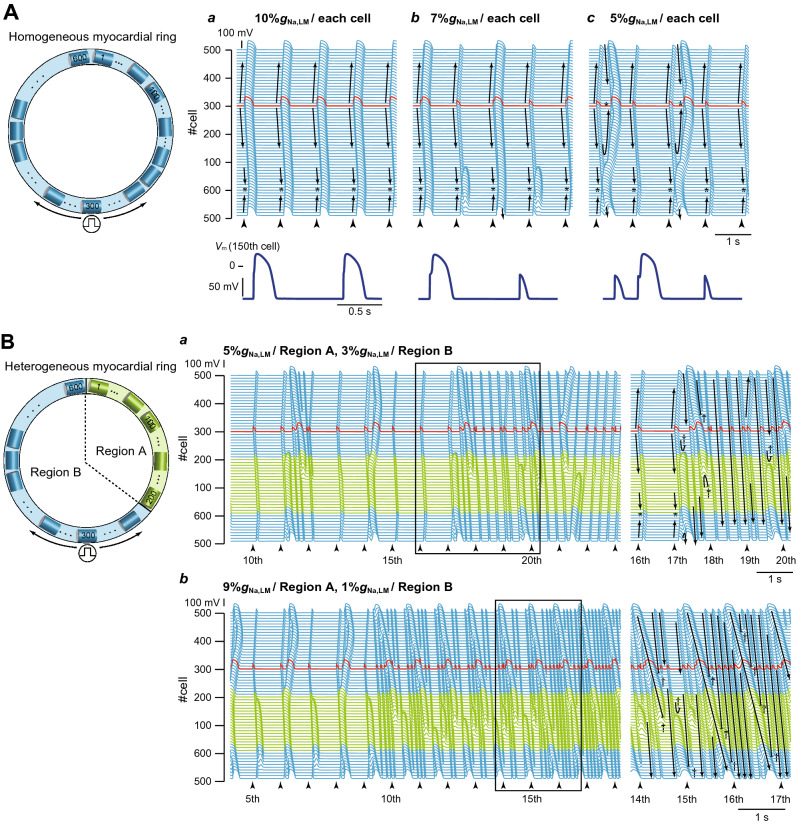
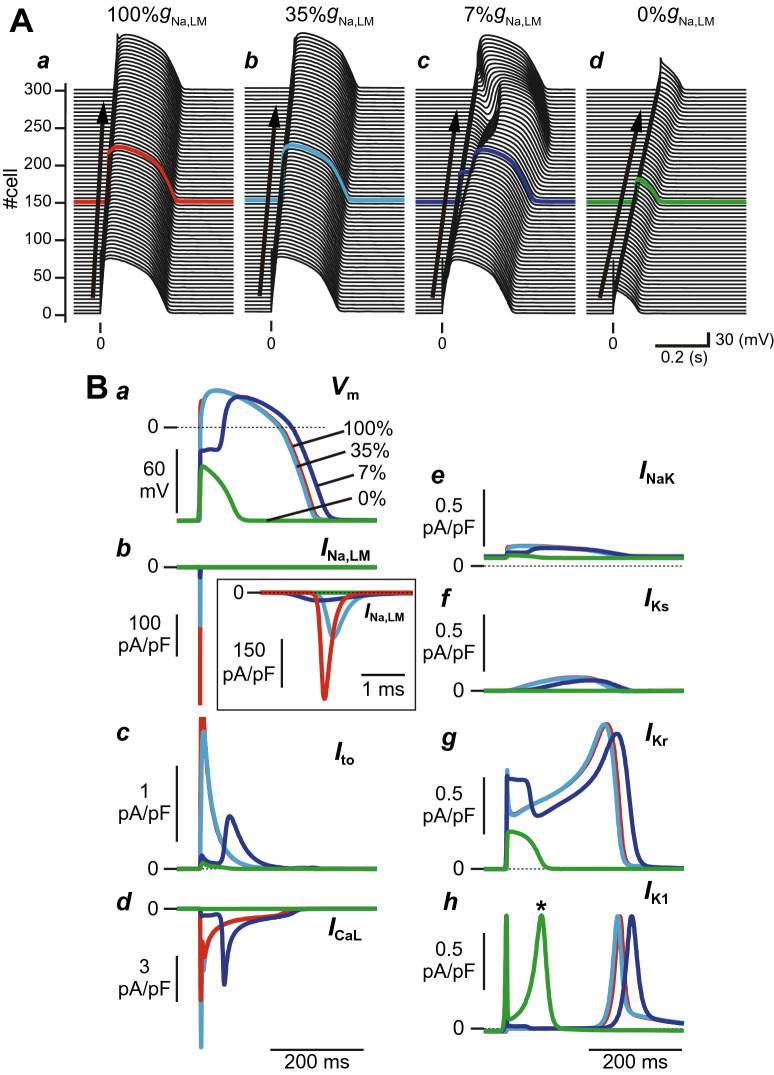
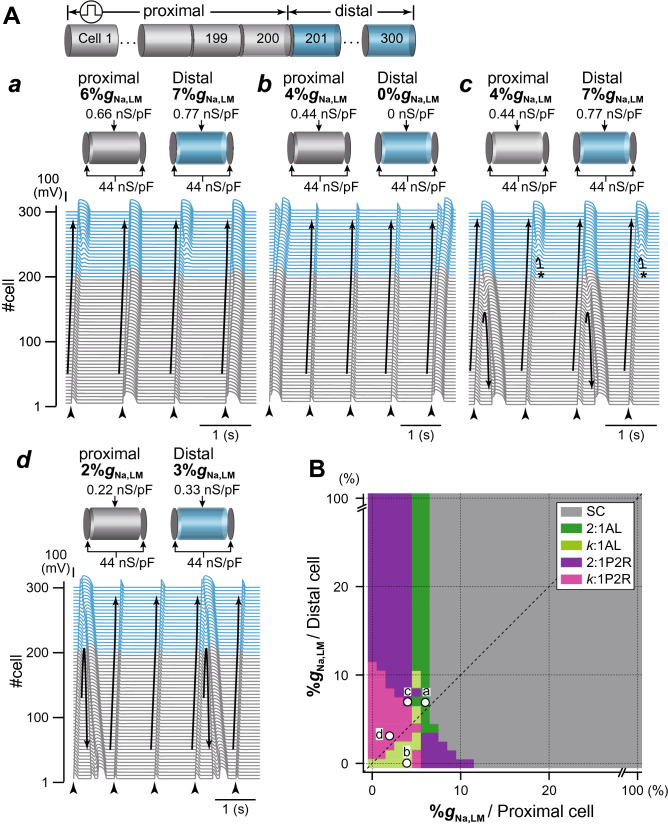
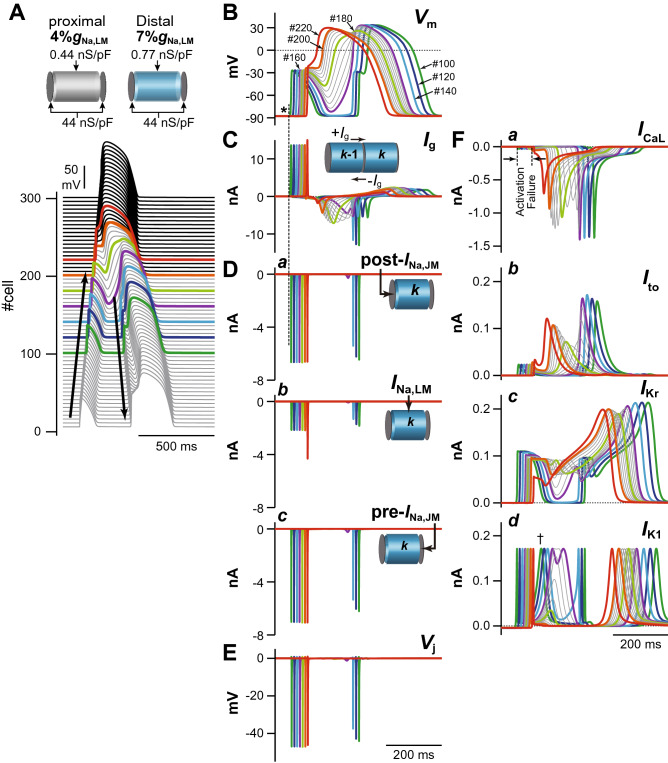
Reduced cardiac sodium (Na) channel current (I) resulting from the loss-of-function of Na channel is a major cause of lethal arrhythmias in Brugada syndrome (BrS). Inspired by previous experimental studies which showed that in heart diseases I was reduced along with expression changes in Na channel within myocytes, we hypothesized that the local decrease in I caused by the alteration in Na channel expression in myocytes leads to the occurrence of phase-2 reentry, the major triggering mechanism of lethal arrhythmias in BrS. We constructed in silico human ventricular myocardial strand and ring models, and examined whether the Na channel expression changes in each myocyte cause the phase-2 reentry in BrS. Reducing Na channel expression in the lateral membrane of each myocyte caused not only the notch-and-dome but also loss-of-dome type action potentials and slowed conduction, both of which are typically observed in BrS patients. Furthermore, the selective reduction in Na channels on the lateral membrane of each myocyte together with spatial tissue heterogeneity of Na channel expression caused the phase-2 reentry and phase-2 reentry-mediated reentrant arrhythmias. Our data suggest that the BrS phenotype is strongly influenced by expression abnormalities as well as genetic abnormalities of Na channels.
由于钠通道功能丧失导致的心脏钠离子 (Na) 通道电流 (I) 减少是 Brugada 综合征 (BrS) 致死性心律失常的主要原因。受先前实验研究的启发,这些研究表明在心脏病中,I 随着心肌细胞内 Na 通道的表达变化而减少,我们假设心肌细胞内 Na 通道表达的改变导致 I 的局部减少,从而导致 2 相折返的发生,这是 BrS 致死性心律失常的主要触发机制。我们构建了计算机模拟的人心室心肌条和环模型,并研究了每个心肌细胞中 Na 通道表达的变化是否会导致 BrS 中的 2 相折返。降低每个心肌细胞外侧膜中的 Na 通道表达不仅会导致尖峰和穹顶型动作电位,还会导致传导减慢,这些都是 BrS 患者中常见的现象。此外,每个心肌细胞外侧膜上 Na 通道的选择性减少以及 Na 通道表达的空间组织异质性会导致 2 相折返和 2 相折返介导的折返性心律失常。我们的数据表明,BrS 表型受 Na 通道表达异常以及遗传异常的强烈影响。