• 文献检索
  • 文档翻译
  • 深度研究
  • 学术资讯
  • Suppr Zotero 插件Zotero 插件
  • 邀请有礼
  • 套餐&价格
  • 历史记录
应用&插件
Suppr Zotero 插件Zotero 插件浏览器插件Mac 客户端Windows 客户端微信小程序
定价
高级版会员购买积分包购买API积分包
服务
文献检索文档翻译深度研究API 文档MCP 服务
关于我们
关于 Suppr公司介绍联系我们用户协议隐私条款
关注我们

Suppr 超能文献

核心技术专利:CN118964589B侵权必究
粤ICP备2023148730 号-1Suppr @ 2026

文献检索

告别复杂PubMed语法,用中文像聊天一样搜索,搜遍4000万医学文献。AI智能推荐,让科研检索更轻松。

立即免费搜索

文件翻译

保留排版,准确专业,支持PDF/Word/PPT等文件格式,支持 12+语言互译。

免费翻译文档

深度研究

AI帮你快速写综述,25分钟生成高质量综述,智能提取关键信息,辅助科研写作。

立即免费体验

关节造影时盂唇和髋臼表面显示不清是6至24个月发育性髋关节发育不良儿童闭合复位早期失败的一个预测指标。

Poor delineation of labrum and acetabular surface on arthrogram is a predictor of early failure of closed reduction in children aged six to 24 months with developmental dysplasia of the hip.

作者信息

Yuan Zhe, Li Yiqiang, Hong Kai, Wu Jianping, Canavese Federico, Xu Hongwen

机构信息

GuangZhou Women and Children's Medical Center, GuangZhou Medical University, GuangZhou, China.

University Hospital Estaing, Department of Pediatric Surgery, Clermont Ferrand, France.

出版信息

J Child Orthop. 2020 Oct 1;14(5):372-378. doi: 10.1302/1863-2548.14.200132.

DOI:10.1302/1863-2548.14.200132
PMID:33204344
原文链接:https://pmc.ncbi.nlm.nih.gov/articles/PMC7666794/
Abstract

PURPOSE

The objective of this study was to explore the predictors for failed reduction in children with developmental dysplasia of the hip (DDH) managed by arthrogram, closed reduction (CR) and spica cast immobilization.

METHODS

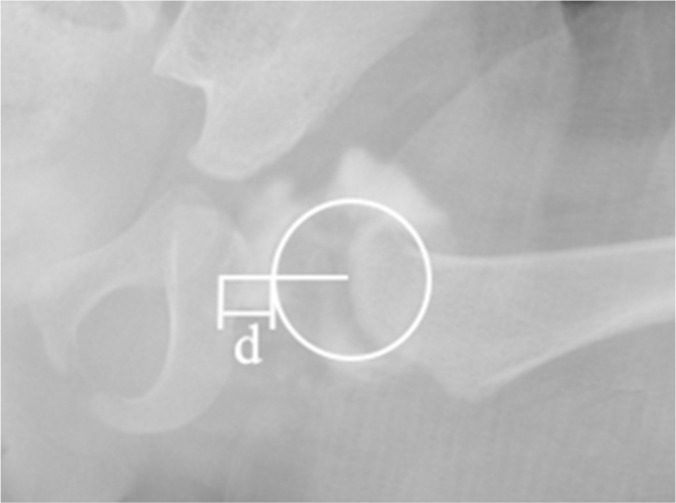
We retrospectively reviewed the clinical data of patients with DDH treated by CR and cast immobilization (2015-2020), including age, sex, affected side, presence/absence of an ossific nucleus, International Hip Dysplasia Institute classification, the delineation of labrum and acetabular surface on arthrogram, inverted labrum, acetabular index (AI), hip abduction angle and medial dye pool (MDP) distance. Predictors that potentially predicted failure of CR were evaluated by logistic regression analysis, simple t-test, Fisher's Exact Test and chi-square test.

RESULTS

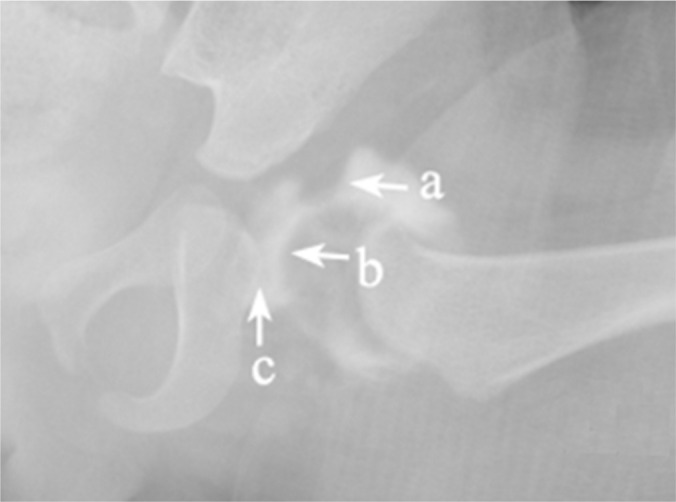
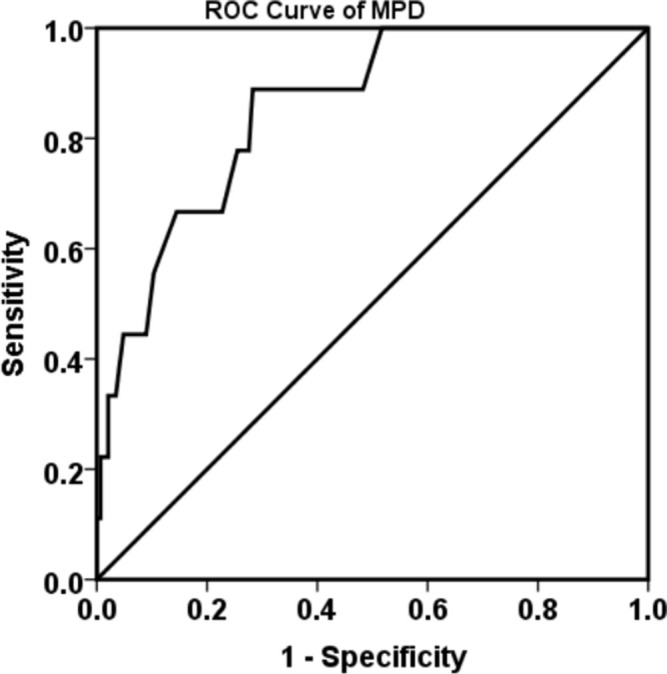
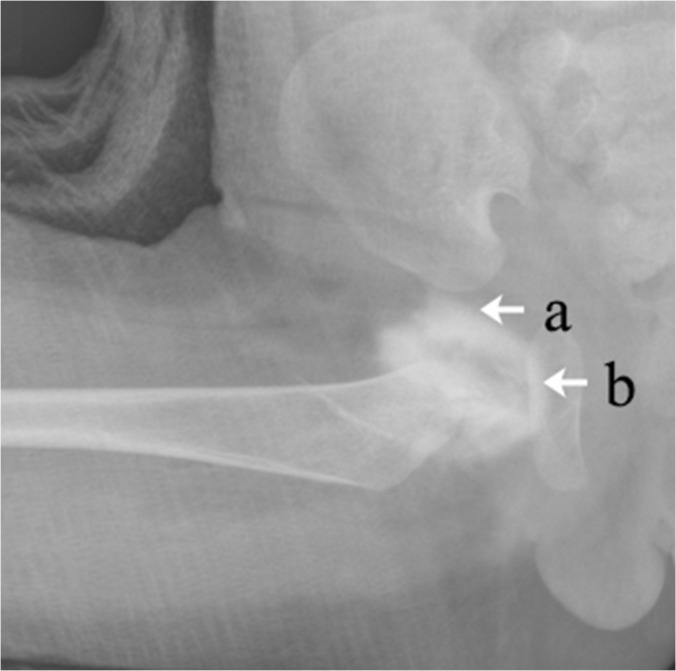
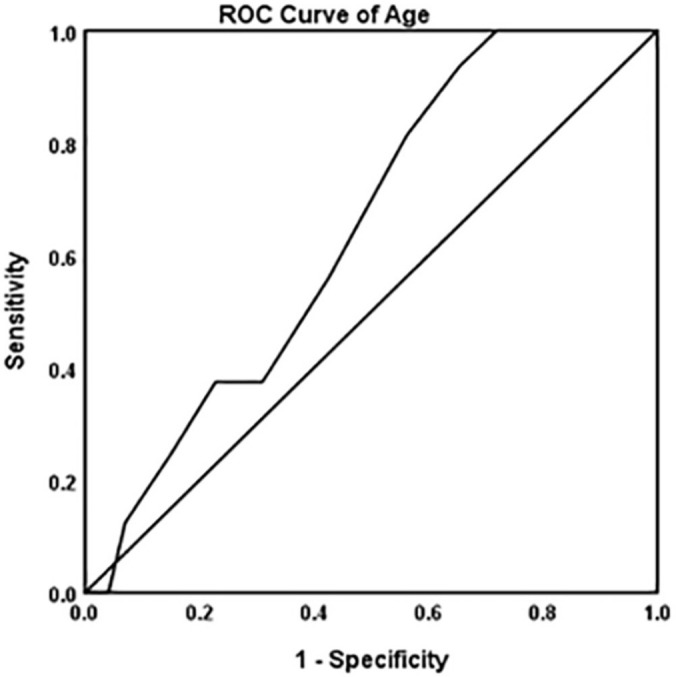
In total, 16 out of 187 hips failed to achieve initial CR (8.6%). Gender, age, preoperative AI and poor delineation of arthrogram were candidate predictors for failed CR in children aged six to 24 months with DDH; on the other hand, logistic regression analysis confirmed age and poor delineation of arthrogram significantly predicted failure of CR. Receive operating characteristic curve (ROC) showed MDP less than 6 mm and age higher than 14.5 months significantly increased the failure rate of CR in children aged six to 24 months with DDH.

CONCLUSION

Age and poor delineation of labrum and acetabular surface during arthrogram predicted failure of CR in children with DDH. In particular, age > 14.5 months and MDP distance ≥ 6 mm significantly increased the risk of CR failure.

LEVEL OF EVIDENCE

III.

摘要

目的

本研究的目的是探讨在通过关节造影、闭合复位(CR)和髋人字石膏固定治疗的发育性髋关节发育不良(DDH)患儿中,复位失败的预测因素。

方法

我们回顾性分析了2015年至2020年接受CR和石膏固定治疗的DDH患者的临床资料,包括年龄、性别、患侧、有无骨化核、国际髋关节发育不良协会分类、关节造影时盂唇和髋臼表面的描绘、盂唇倒置、髋臼指数(AI)、髋关节外展角度和内侧染料池(MDP)距离。通过逻辑回归分析、简单t检验、Fisher精确检验和卡方检验评估可能预测CR失败的预测因素。

结果

187例髋关节中共有16例(8.6%)未能实现初次CR。性别、年龄、术前AI和关节造影描绘不佳是6至24个月DDH患儿CR失败的候选预测因素;另一方面,逻辑回归分析证实年龄和关节造影描绘不佳显著预测CR失败。接受操作特征曲线(ROC)显示,MDP小于6 mm且年龄大于14.5个月显著增加了6至24个月DDH患儿CR失败率。

结论

关节造影时年龄以及盂唇和髋臼表面描绘不佳可预测DDH患儿CR失败。特别是,年龄>14.5个月且MDP距离≥6 mm显著增加了CR失败的风险。

证据水平

III级。

https://cdn.ncbi.nlm.nih.gov/pmc/blobs/42d3/7666794/6f68ed8f59d2/jco-14-372-g0006.jpg
https://cdn.ncbi.nlm.nih.gov/pmc/blobs/42d3/7666794/476d8735840e/jco-14-372-g0001.jpg
https://cdn.ncbi.nlm.nih.gov/pmc/blobs/42d3/7666794/5616a08313f8/jco-14-372-g0002.jpg
https://cdn.ncbi.nlm.nih.gov/pmc/blobs/42d3/7666794/18e2a7af3a4f/jco-14-372-g0003.jpg
https://cdn.ncbi.nlm.nih.gov/pmc/blobs/42d3/7666794/994a048af315/jco-14-372-g0004.jpg
https://cdn.ncbi.nlm.nih.gov/pmc/blobs/42d3/7666794/98ba3cc5713d/jco-14-372-g0005.jpg
https://cdn.ncbi.nlm.nih.gov/pmc/blobs/42d3/7666794/6f68ed8f59d2/jco-14-372-g0006.jpg
https://cdn.ncbi.nlm.nih.gov/pmc/blobs/42d3/7666794/476d8735840e/jco-14-372-g0001.jpg
https://cdn.ncbi.nlm.nih.gov/pmc/blobs/42d3/7666794/5616a08313f8/jco-14-372-g0002.jpg
https://cdn.ncbi.nlm.nih.gov/pmc/blobs/42d3/7666794/18e2a7af3a4f/jco-14-372-g0003.jpg
https://cdn.ncbi.nlm.nih.gov/pmc/blobs/42d3/7666794/994a048af315/jco-14-372-g0004.jpg
https://cdn.ncbi.nlm.nih.gov/pmc/blobs/42d3/7666794/98ba3cc5713d/jco-14-372-g0005.jpg
https://cdn.ncbi.nlm.nih.gov/pmc/blobs/42d3/7666794/6f68ed8f59d2/jco-14-372-g0006.jpg

相似文献

1
Poor delineation of labrum and acetabular surface on arthrogram is a predictor of early failure of closed reduction in children aged six to 24 months with developmental dysplasia of the hip.关节造影时盂唇和髋臼表面显示不清是6至24个月发育性髋关节发育不良儿童闭合复位早期失败的一个预测指标。
J Child Orthop. 2020 Oct 1;14(5):372-378. doi: 10.1302/1863-2548.14.200132.
2
Hip arthrogram parameters predict radiographic outcomes of patients with developmental dysplasia of the hip treated by closed reduction.髋关节造影参数可预测通过闭合复位治疗的发育性髋关节发育不良患者的影像学结果。
Front Pediatr. 2024 Jan 12;11:1292928. doi: 10.3389/fped.2023.1292928. eCollection 2023.
3
Intraoperative Arthrogram Predicts Residual Dysplasia after Successful Closed Reduction of DDH.术中关节造影可预测发育性髋关节发育不良成功闭合复位后的残余发育异常。
Orthop Surg. 2016 Aug;8(3):338-44. doi: 10.1111/os.12273.
4
Acetabular index is the best predictor of late residual acetabular dysplasia after closed reduction in developmental dysplasia of the hip.髋臼指数是发育性髋关节发育不良闭合复位后晚期残余髋臼发育不良的最佳预测指标。
Int Orthop. 2018 Mar;42(3):631-640. doi: 10.1007/s00264-017-3726-5. Epub 2017 Dec 29.
5
Dynamic versus static cast immobilization in children aged 6 to 24 months with developmental dysplasia of the hip treated by closed reduction.6至24个月发育性髋关节发育不良患儿闭合复位后采用动态与静态石膏固定的比较
Minerva Pediatr (Torino). 2024 Oct;76(5):619-626. doi: 10.23736/S2724-5276.21.06268-6. Epub 2021 Oct 21.
6
MRI assessment of femoral head docking following closed reduction of developmental dysplasia of the hip.MRI 评估发育性髋关节发育不良闭合复位后股骨头的对接情况。
Bone Joint J. 2023 Feb;105-B(2):140-147. doi: 10.1302/0301-620X.105B2.BJJ-2022-0547.R2.
7
Effect of abduction on avascular necrosis of the femoral epiphysis in patients with late-detected developmental dysplasia of the hip treated by closed reduction: a MRI study of 59 hips.外展对闭合复位治疗的晚发性髋关节发育不良患者股骨骨骺缺血性坏死的影响:59例髋关节的MRI研究
J Child Orthop. 2019 Oct 1;13(5):438-444. doi: 10.1302/1863-2548.13.190045.
8
Timing for closed reduction procedure for developmental dysplasia of the hip and its failure analysis.发育性髋关节发育不良闭合复位术的时机及其失败分析。
BMC Musculoskelet Disord. 2020 Sep 14;21(1):613. doi: 10.1186/s12891-020-03635-1.
9
Docking phenomenon and subsequent acetabular development after gradual reduction using overhead traction for developmental dysplasia of the hip over six months of age.6个月以上大龄发育性髋关节发育不良采用头环牵引逐步复位后的对接现象及髋臼发育情况
J Child Orthop. 2021 Dec 1;15(6):554-563. doi: 10.1302/1863-2548.15.210143.
10
Predictors of residual hip dysplasia in 12-18-month-old over 18-month-old DDH patients after closed reduction and the reliability of one residual hip dysplasia criterion: a retrospective cohort study.12至18个月大及18个月以上发育性髋关节发育不良(DDH)患者闭合复位后残余髋关节发育不良的预测因素及一项残余髋关节发育不良标准的可靠性:一项回顾性队列研究
Transl Pediatr. 2023 May 30;12(5):861-870. doi: 10.21037/tp-22-299. Epub 2023 Apr 27.

引用本文的文献

1
Rates and risk factors for failure of reduction in closed reduction in developmental dysplasia of the hip: a systematic review and meta-analysis.发育性髋关节发育不良闭合复位失败的发生率及危险因素:一项系统评价和荟萃分析
EFORT Open Rev. 2024 Sep 2;9(9):908-922. doi: 10.1530/EOR-24-0007.
2
Hip arthrogram parameters predict radiographic outcomes of patients with developmental dysplasia of the hip treated by closed reduction.髋关节造影参数可预测通过闭合复位治疗的发育性髋关节发育不良患者的影像学结果。
Front Pediatr. 2024 Jan 12;11:1292928. doi: 10.3389/fped.2023.1292928. eCollection 2023.
3
Magnetic resonance imaging follow-up can screen for soft tissue changes and evaluate the short-term prognosis of patients with developmental dysplasia of the hip after closed reduction.

本文引用的文献

1
Closed Reduction for Developmental Dysplasia of the Hip: Early-term Results From a Prospective, Multicenter Cohort.发育性髋关节发育不良的闭合复位:一项前瞻性多中心队列研究的早期结果
J Pediatr Orthop. 2019 Mar;39(3):111-118. doi: 10.1097/BPO.0000000000000895.
2
Traction does not decrease failure of reduction and femoral head avascular necrosis in patients aged 6-24 months with developmental dysplasia of the hip treated by closed reduction: a review of 385 patients and meta-analysis.对于6至24个月大的发育性髋关节发育不良患者,采用闭合复位治疗时,牵引并不能降低复位失败率和股骨头缺血性坏死发生率:385例患者的回顾性研究及荟萃分析
J Pediatr Orthop B. 2019 Sep;28(5):436-441. doi: 10.1097/BPB.0000000000000586.
3
磁共振成像随访可筛查软组织变化,并评估发育性髋关节发育不良患者闭合复位后的短期预后。
BMC Pediatr. 2021 Mar 8;21(1):115. doi: 10.1186/s12887-021-02587-2.
Post-operative radiograph assessment of children undergoing closed reduction and spica cast immobilization for developmental dysplasia of the hip: does experience matter?
对因发育性髋关节发育不良接受闭合复位及髋人字石膏固定术的儿童进行术后X线片评估:经验重要吗?
Int Orthop. 2018 Nov;42(11):2725-2731. doi: 10.1007/s00264-018-4038-0. Epub 2018 Jun 21.
4
Docking of the Femoral Head Following Closed Reduction for DDH: Does it Really Occur?发育性髋关节发育不良闭合复位后股骨头的对接:真的会发生吗?
J Pediatr Orthop. 2018 Sep;38(8):e440-e445. doi: 10.1097/BPO.0000000000001199.
5
Obstacles to reduction in infantile developmental dysplasia of the hip.婴儿发育性髋关节发育不良复位的障碍。
J Child Orthop. 2017 Oct 1;11(5):358-366. doi: 10.1302/1863-2548.11.170031.
6
Prediction of the requirement of open reduction for developmental dysplasia of the hip.发育性髋关节发育不良切开复位需求的预测
J Int Med Res. 2018 Jan;46(1):54-61. doi: 10.1177/0300060517717357. Epub 2017 Jul 12.
7
Closed reduction with or without adductor tenotomy for developmental dysplasia of the hip presenting at walking age.针对学步期出现的发育性髋关节发育不良,采用或不采用内收肌切断术进行闭合复位。
Curr Orthop Pract. 2017 Mar;28(2):195-199. doi: 10.1097/BCO.0000000000000478. Epub 2017 Mar 3.
8
Risk factors for avascular necrosis after closed reduction for developmental dysplasia of the hip.发育性髋关节发育不良闭合复位后股骨头缺血性坏死的危险因素。
J Child Orthop. 2016 Jun;10(3):185-92. doi: 10.1007/s11832-016-0743-7. Epub 2016 May 13.
9
Reliability of a New Radiographic Classification for Developmental Dysplasia of the Hip.一种用于发育性髋关节发育不良的新放射学分类方法的可靠性
J Pediatr Orthop. 2015 Jul-Aug;35(5):478-84. doi: 10.1097/BPO.0000000000000318.
10
Evidence-based management of developmental dysplasia of the hip.基于证据的发育性髋关节发育不良管理
Orthop Clin North Am. 2014 Jul;45(3):341-54. doi: 10.1016/j.ocl.2014.03.005.