Lario Luciana Daniela, Pillaca-Pullo Omar Santiago, Durães Sette Lara, Converti Attilio, Casati Paula, Spampinato Claudia, Pessoa Adalberto
Centro de Estudios Fotosintéticos y Bioquímicos (CEFOBI), Facultad de Ciencias Bioquímicas y Farmacéuticas, Universidad Nacional de Rosario, Suipacha 531, 2000, Rosario, Argentina.
Department of Biochemical and Pharmaceutical Technology, School of Pharmaceutical Sciences, University of Sao Paulo, Av. Prof. Lineu Prestes, 580, 05508-000, Sao Paulo, SP, Brazil.
Biotechnol Rep (Amst). 2020 Oct 22;28:e00546. doi: 10.1016/j.btre.2020.e00546. eCollection 2020 Dec.
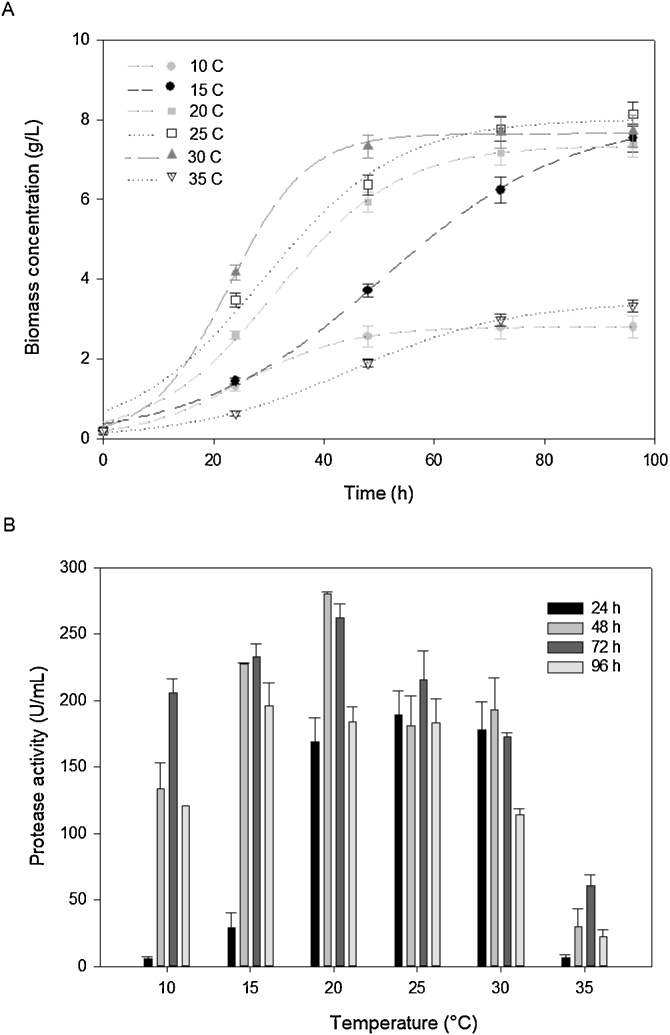
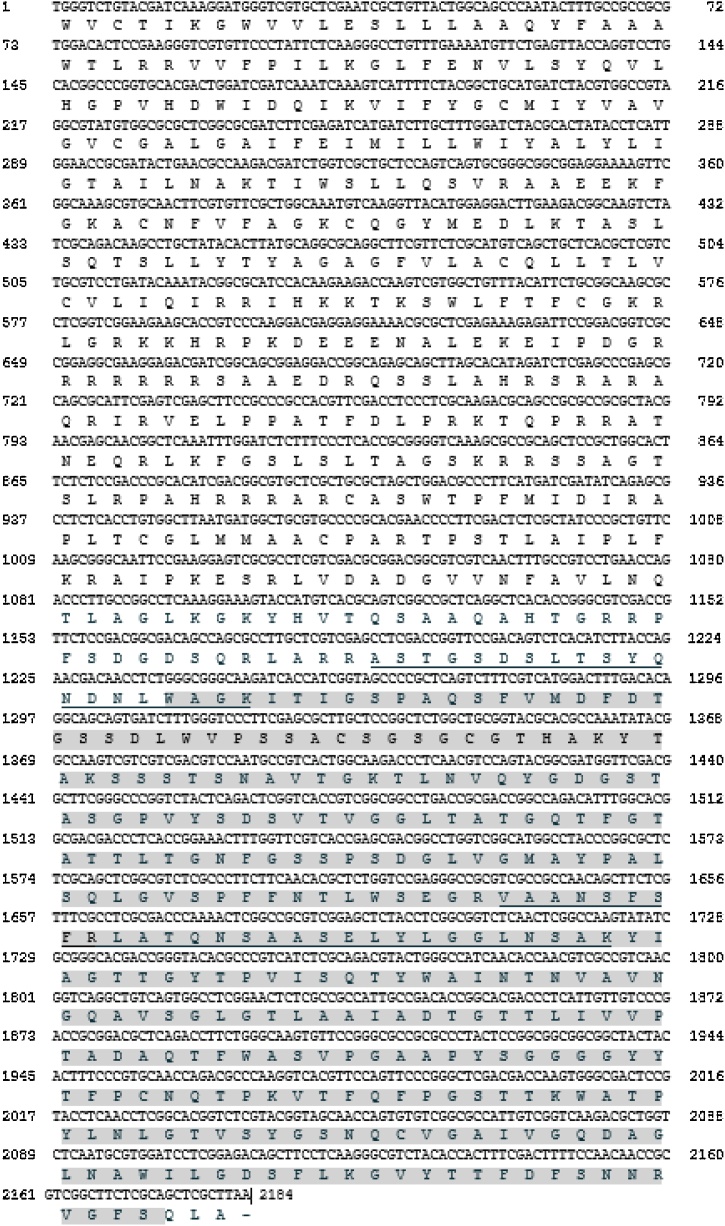
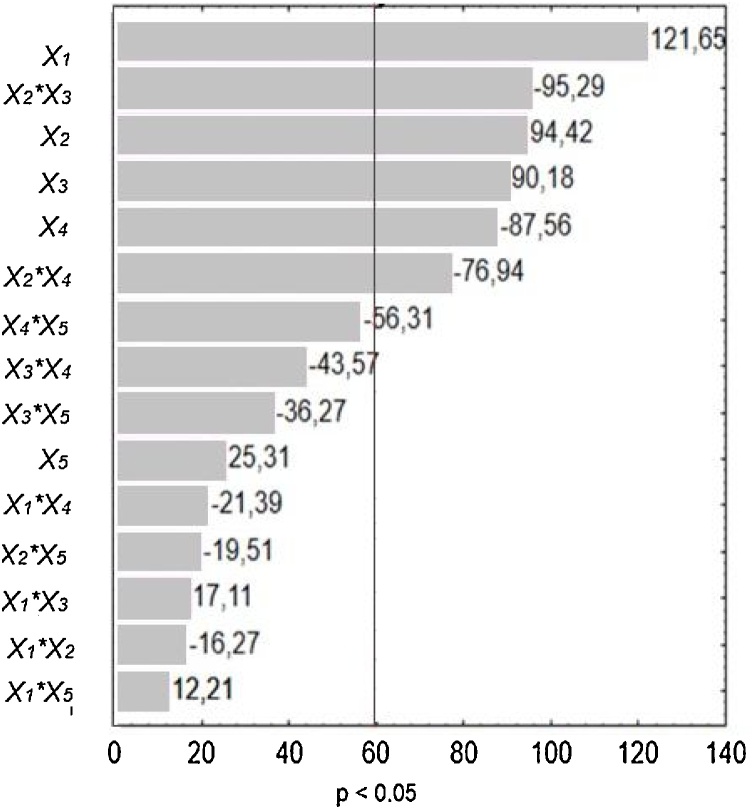
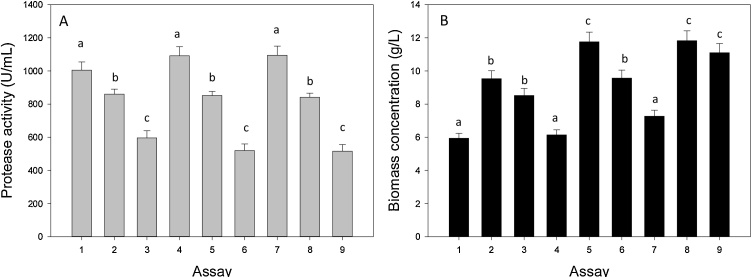
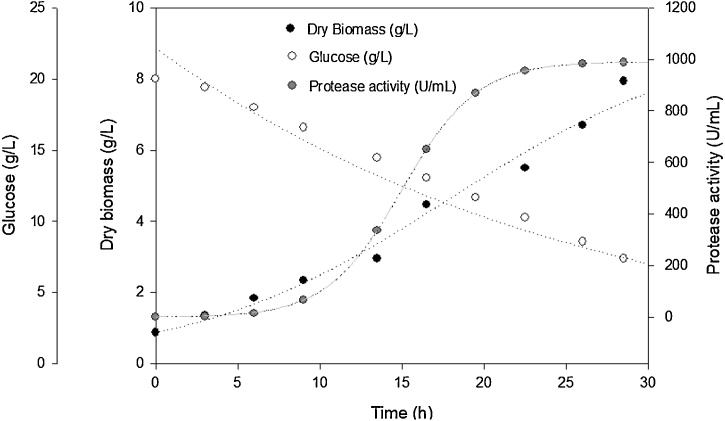
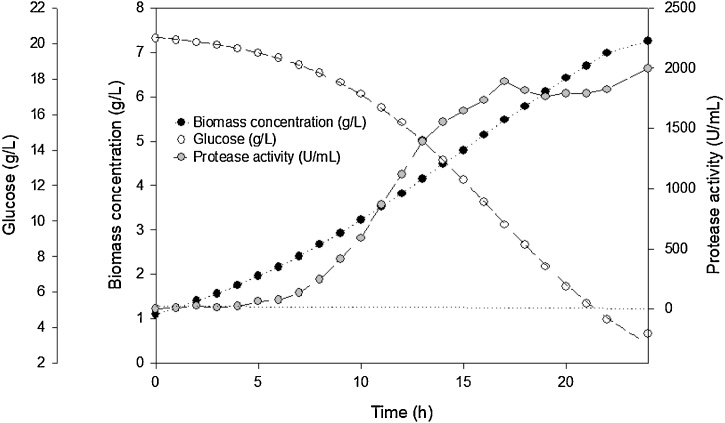
Enzymes from cold-adapted microorganisms are of high interest to industries due to their high activity at low and mild temperatures, which makes them suitable for their use in several processes that either require a supply of exogenous energy or involve the use of heat labile products. In this work, the protease production by the strain CBMAI 1528, previously isolated from the Antarctic continent, was optimized, and the purified enzyme analyzed. It was found that protease production was dependent on culture medium composition and growth temperature, being 20 °C and a culture medium containing both glucose and casein peptone (20 and 10 g/L, respectively) the optimal growing conditions in batch as well as in bioreactor. Moreover, mass spectrometry analysis revealed that the enzyme under study has a 100 % sequence identity with the deduced amino acid sequence of a putative aspartic protease from . JG-1b (protein ID: KWU42276.1). This result was confirmed by the decrease of 95 % proteolytic activity by pepstatin A, a specific inhibitor of aspartic proteases. We propose that the enzyme reported here could be Rodothorulapepsin, a protein characterized in 1972 that did not have an associated sequence to date and has been classified as an orphan enzyme.
来自冷适应微生物的酶因其在低温和温和温度下具有高活性而受到工业界的高度关注,这使得它们适用于一些要么需要外源能量供应要么涉及使用热不稳定产品的工艺过程。在这项工作中,对先前从南极大陆分离出的菌株CBMAI 1528的蛋白酶生产进行了优化,并对纯化后的酶进行了分析。结果发现,蛋白酶的生产取决于培养基组成和生长温度,在分批培养以及生物反应器中,20℃以及含有葡萄糖和酪蛋白胨(分别为20 g/L和10 g/L)的培养基是最佳生长条件。此外,质谱分析表明,所研究的酶与来自JG-1b的假定天冬氨酸蛋白酶的推导氨基酸序列具有100%的序列同一性(蛋白质ID:KWU42276.1)。天冬氨酸蛋白酶的特异性抑制剂胃蛋白酶抑制剂A使蛋白水解活性降低95%,这一结果证实了上述结论。我们认为这里报道的酶可能是红酵母胃蛋白酶,这是一种在1972年被鉴定但至今尚无相关序列且被归类为孤儿酶的蛋白质。