Hinckley Will E, Brusslan Judy A
Department of Biology New York University New York NY USA.
Department of Biological Sciences California State University Long Beach, Long Beach CA USA.
Plant Direct. 2020 Nov 8;4(11):e00279. doi: 10.1002/pld3.279. eCollection 2020 Nov.
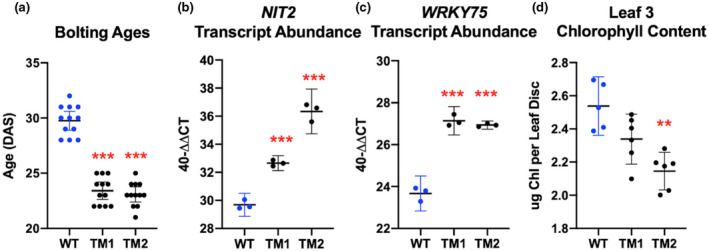
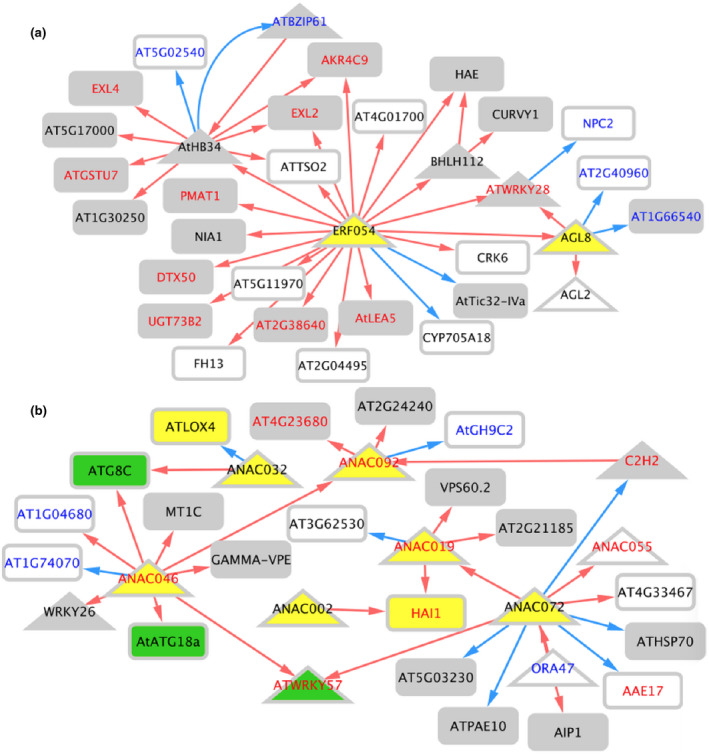
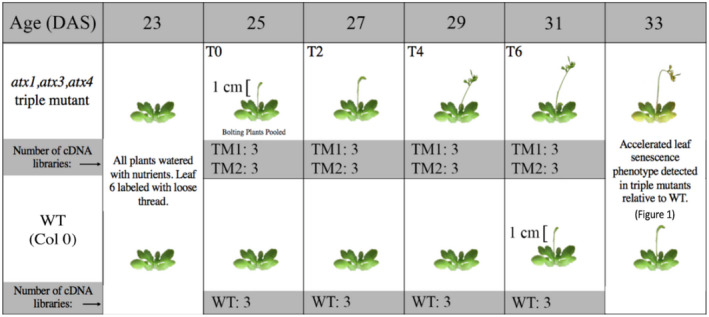
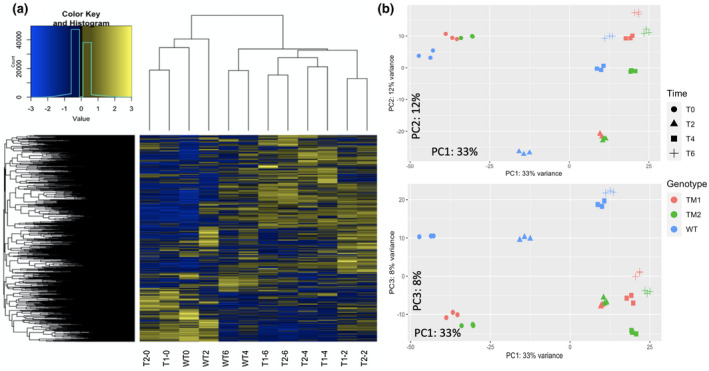
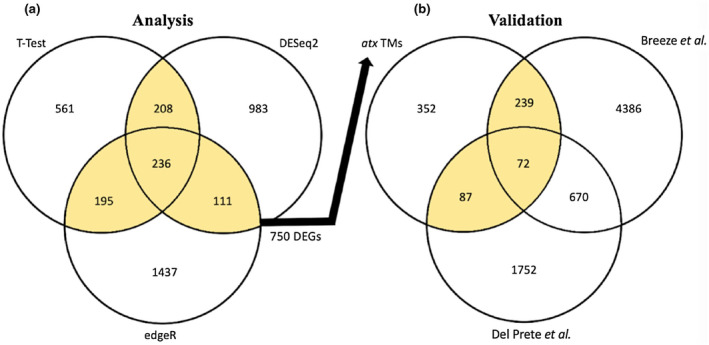
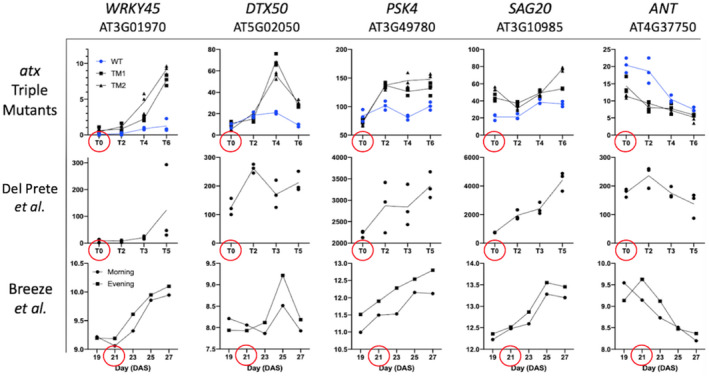
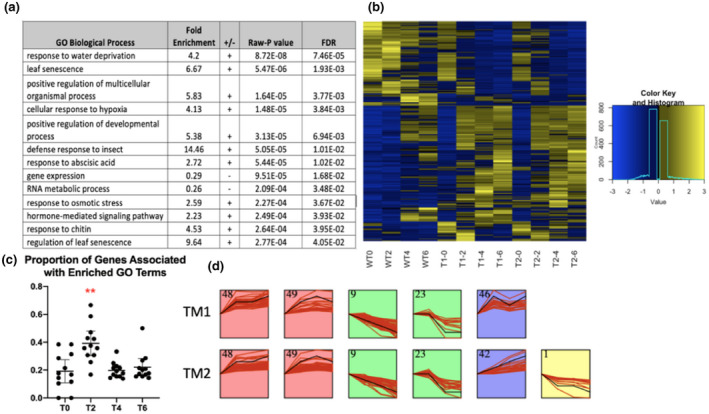
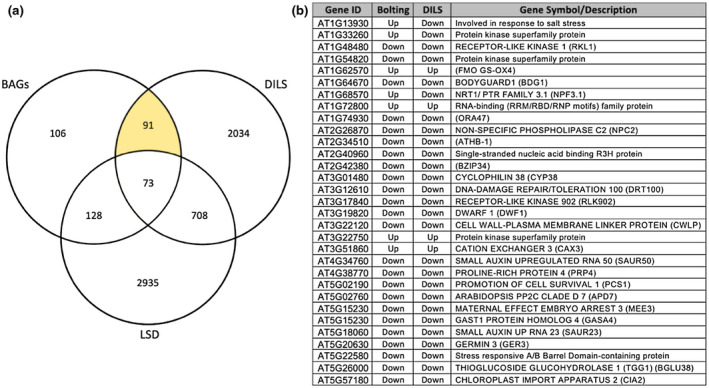
In plants, the vegetative to reproductive phase transition (termed bolting in Arabidopsis) generally precedes age-dependent leaf senescence (LS). Many studies describe a temporal link between bolting time and LS, as plants that bolt early, senesce early, and plants that bolt late, senesce late. The molecular mechanisms underlying this relationship are unknown and are potentially agriculturally important, as they may allow for the development of crops that can overcome early LS caused by stress-related early-phase transition. We hypothesized that leaf gene expression changes occurring in synchrony with bolting were regulating LS. enzymes are general methyltransferases that regulate the adult vegetative to reproductive phase transition. We generated an () triple T-DNA insertion mutant that displays both early bolting and early LS. This mutant was used in an RNA-seq time-series experiment to identify gene expression changes in rosette leaves that are likely associated with bolting. By comparing the early bolting mutant to vegetative WT plants of the same age, we were able to generate a list of differentially expressed genes (DEGs) that change expression with bolting as the plants age. We trimmed the list by intersection with publicly available WT datasets, which removed genes from our DEG list that were specific. The resulting 398 bolting-associated genes (BAGs) are differentially expressed in a mature rosette leaf at bolting. The BAG list contains many well-characterized LS regulators (), and GO analysis revealed enrichment for LS and LS-related processes. These bolting-associated LS regulators may contribute to the temporal coupling of bolting time to LS.
在植物中,营养生长向生殖生长的阶段转变(拟南芥中称为抽薹)通常先于年龄依赖性叶片衰老(LS)。许多研究描述了抽薹时间与叶片衰老之间的时间联系,即早抽薹的植物早衰,晚抽薹的植物晚衰。这种关系背后的分子机制尚不清楚,且可能在农业上具有重要意义,因为它们可能有助于培育能够克服由胁迫相关早期阶段转变引起的早期叶片衰老的作物。我们假设与抽薹同步发生的叶片基因表达变化在调节叶片衰老。酶是调节成年营养生长向生殖生长阶段转变的通用甲基转移酶。我们构建了一个()三T-DNA插入突变体,该突变体表现出早抽薹和早叶片衰老。这个突变体用于RNA测序时间序列实验,以鉴定莲座叶中可能与抽薹相关的基因表达变化。通过将早抽薹突变体与相同年龄的营养野生型植物进行比较,我们能够生成一份差异表达基因(DEGs)列表,这些基因随着植物年龄增长和抽薹而改变表达。我们通过与公开可用的野生型数据集交叉来修剪该列表,从而从我们的差异表达基因列表中去除特定的基因。最终得到的398个与抽薹相关的基因(BAGs)在抽薹时的成熟莲座叶中差异表达。BAG列表包含许多已充分表征的叶片衰老调节因子(),基因本体(GO)分析显示叶片衰老及与叶片衰老相关的过程显著富集。这些与抽薹相关的叶片衰老调节因子可能有助于抽薹时间与叶片衰老的时间耦合。