Sanni Omolara B, Chambers Thane, Li Jia Hang, Rowe Stewart, Woodman Andrew G, Ospina Maria B, Bourque Stephane L
Department of Obstetrics and Gynaecology, Faculty of Medicine & Dentistry, University of Alberta, Edmonton, Alberta, Canada.
John W. Scott Health Sciences Library, University of Alberta, Edmonton, Alberta, Canada.
EClinicalMedicine. 2020 Oct 8;27:100555. doi: 10.1016/j.eclinm.2020.100555. eCollection 2020 Oct.
Iron deficiency (ID) is the leading single-nutrient deficiency in the world. Anaemia is a common outcome of ID that affects half of pregnancies worldwide with serious consequences for child development. Whether haematologic indices and biomarkers of iron status in pregnant women correlate with those of their neonates is unclear. This systematic review evaluated studies comparing haematologic and iron status indices in pregnant women and their newborns/neonates.
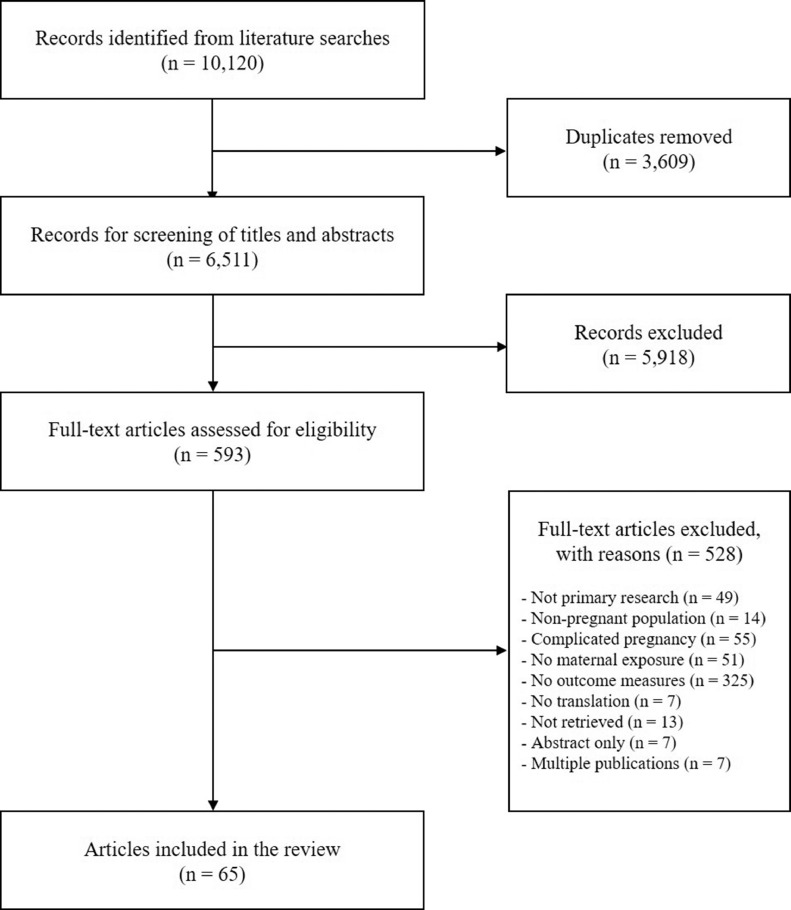
We searched MEDLINE, EMBASE, CINAHL, and Web of Science from database inception until March 2020 for primary studies comparing haematologic and iron status indices between women and their newborns up to 48 h after birth. We summarized the results descriptively and calculated pooled correlation coefficients in mothers and newborns/neonates using the Schmidt-Hunter method. The protocol was registered at PROSPERO International Prospective Register of Systematic Reviews (Registration number: CRD42018093094).
Sixty-five studies were included. Pooled correlation coefficients for biomarkers of iron status in mothers and newborns/neonates were 0.13 (ferritin), 0.42 (hepcidin), 0.30 (serum/plasma iron), 0.09 (transferrin), 0.20 (transferrin saturation), and 0.16 (total iron binding capacity). Pooled correlation coefficients for haematological indices in mothers and newborns/neonates were 0.15 (haemoglobin), 0.15 (haematocrit), 0.25 (mean cell/corpuscular haemoglobin), 0.22 (mean cell/corpuscular volume).
Maternal biomarkers of iron and haematologic status correlate poorly with those in newborns/neonates. These results underscore a need for alternative approaches to estimate foetal/neonatal iron status and haematological indices.
MBO and SLB hold Canada Research Chairs, and grants from the Women and Children's Health Research Institute and Canadian Institutes of Health Research.
缺铁是全球最主要的单一营养素缺乏症。贫血是缺铁的常见后果,影响着全球一半的孕期女性,对儿童发育造成严重后果。目前尚不清楚孕妇的血液学指标和铁状态生物标志物与其新生儿的指标是否相关。本系统评价评估了比较孕妇及其新生儿血液学和铁状态指标的研究。
我们检索了MEDLINE、EMBASE、CINAHL和Web of Science数据库,检索时间从建库至2020年3月,以查找比较女性及其出生后48小时内新生儿血液学和铁状态指标的原始研究。我们对结果进行了描述性总结,并使用施密特-亨特方法计算了母亲与新生儿/婴儿铁状态指标的合并相关系数。该方案已在国际系统评价前瞻性注册库PROSPERO注册(注册号:CRD42018093094)。
纳入65项研究。母亲与新生儿/婴儿铁状态生物标志物的合并相关系数分别为:铁蛋白0.13、铁调素0.42、血清/血浆铁0.30、转铁蛋白0.09、转铁蛋白饱和度0.20、总铁结合力0.16。母亲与新生儿/婴儿血液学指标的合并相关系数分别为:血红蛋白0.15、血细胞比容0.15、平均红细胞血红蛋白含量0.25、平均红细胞体积0.22。
母亲的铁和血液学状态生物标志物与新生儿/婴儿的相关度较低。这些结果强调需要采用其他方法来评估胎儿/新生儿的铁状态和血液学指标。
MBO和SLB担任加拿大研究主席,并获得了妇女和儿童健康研究所及加拿大卫生研究院的资助。