ITMO Univ., Russian Federation.
Tydex, Russian Federation.
J Biomed Opt. 2020 Nov;25(12). doi: 10.1117/1.JBO.25.12.123002.
A new concept of a biotissue phantom for terahertz (THz) biomedical applications is needed for reliable and long-term usage.
We aimed to develop a new type of biotissue phantom without water content and with controllable THz optical properties by applying graphite powders into a polyvinyl chloride plastisol (PVCP) matrix and to give a numerical description to the THz optical properties of the phantoms using the Bruggeman model (BM) of the effective medium theory (EMT).
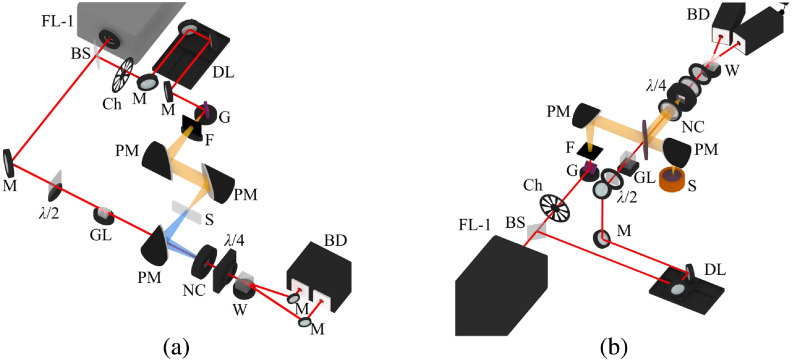
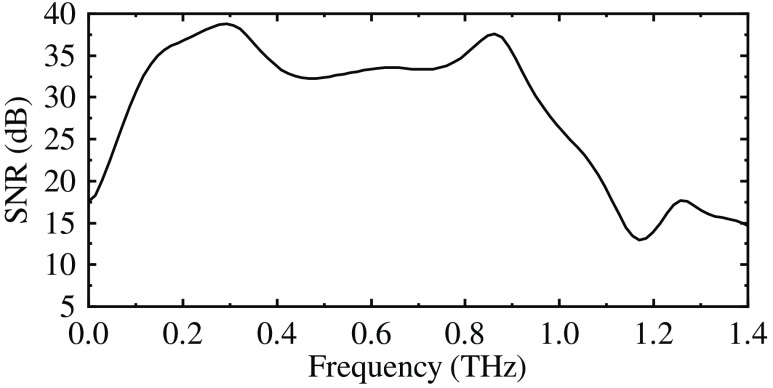
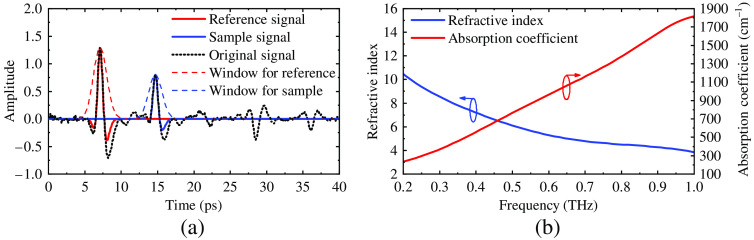
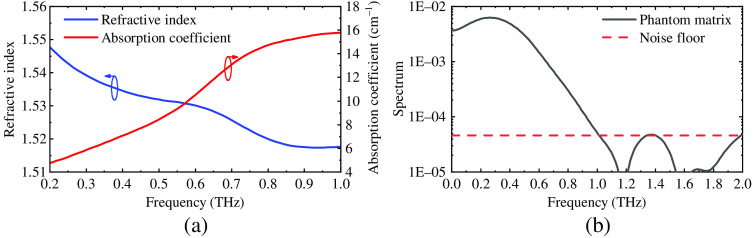
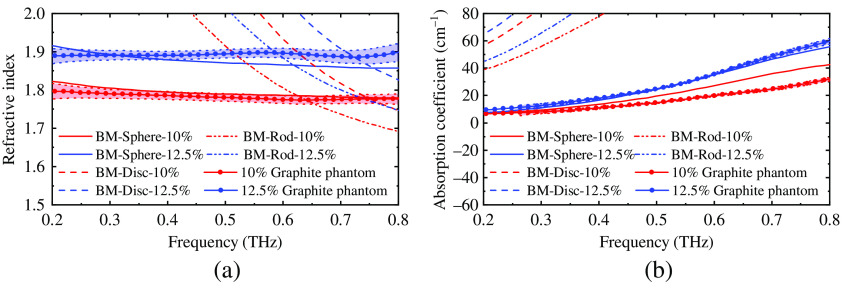
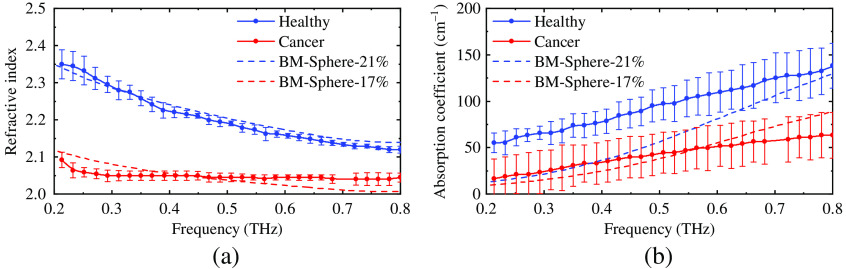
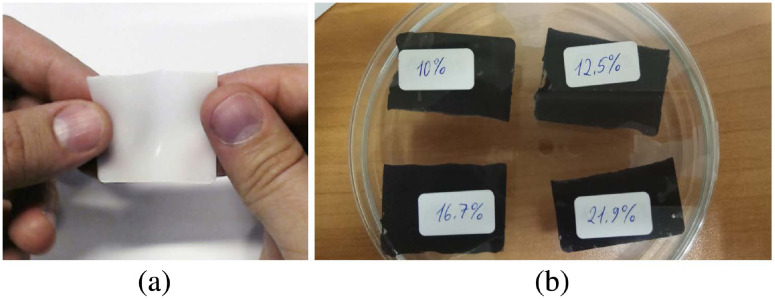
The THz optical properties of graphite and the PVCP matrix were measured using THz time-domain spectroscopy, which works in the frequency range from 0.1 to 1 THz. Two phantoms with 10% and 12.5% graphite were fabricated to evaluate the feasibility of describing phantoms using the EMT. The EMT then was used to determine the concentration of graphite required to mimic the THz optical properties of human cancerous and healthy oral tissue.
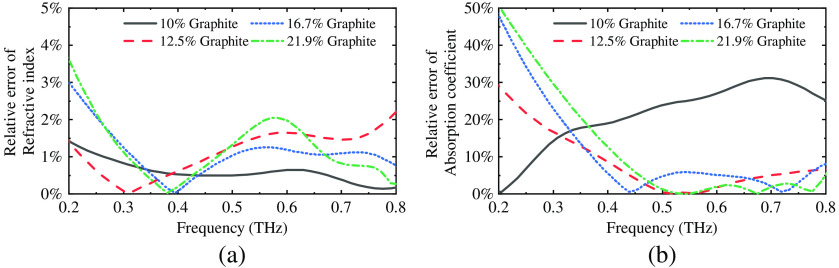
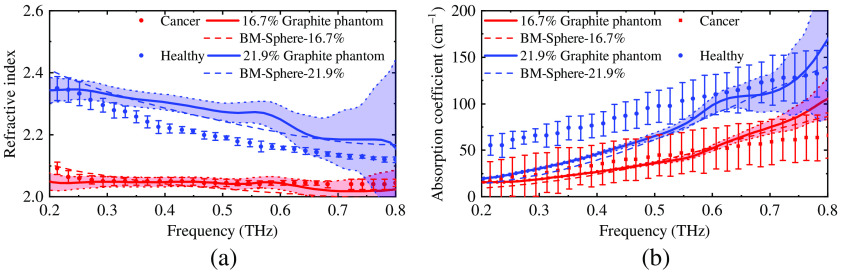
The phantom with 16.7% of graphite has the similar THz optical properties as human cancerous oral tissue in the frequency range of 0.2 to 0.7 THz. The THz optical properties of the phantom with 21.9% of graphite are close to those of human healthy oral tissue in the bandwidth from 0.6 to 0.8 THz. Both the refractive index and absorption coefficient of the samples increase with an increase of graphite concentration. The BM of the EMT was used as the numerical model to describe the THz optical properties of the phantoms. The relative error of the BM for the refractive index estimation and the absorption coefficient is up to 4% and 8%, respectively.
A water-free biotissue phantom that mimics the THz optical properties of human cancerous oral tissue was developed. With 21.9% of graphite, the phantom also mimics human healthy oral tissue in a narrow frequency range. The BM proved to be a suitable numerical model of the phantom.
需要一种新的用于太赫兹(THz)生物医学应用的生物组织仿体概念,以实现可靠和长期的使用。
我们旨在通过将石墨粉末应用于聚氯乙烯糊(PVCP)基质来开发一种新型的不含水分且具有可控太赫兹光学特性的生物组织仿体,并使用有效介质理论(EMT)的 Bruggeman 模型(BM)对仿体的太赫兹光学特性进行数值描述。
使用太赫兹时域光谱法测量石墨和 PVCP 基质的太赫兹光学特性,该方法的频率范围为 0.1 到 1 THz。制作了两个含有 10%和 12.5%石墨的仿体,以评估 EMT 描述仿体的可行性。然后使用 EMT 确定模拟人体癌变和健康口腔组织太赫兹光学特性所需的石墨浓度。
含有 16.7%石墨的仿体在 0.2 到 0.7 THz 的频率范围内具有与人体癌变口腔组织相似的太赫兹光学特性。含有 21.9%石墨的仿体在 0.6 到 0.8 THz 的带宽内的太赫兹光学特性接近人体健康口腔组织。随着石墨浓度的增加,样品的折射率和吸收系数均增加。使用 EMT 的 BM 作为数值模型来描述仿体的太赫兹光学特性。BM 对折射率估计和吸收系数的相对误差分别高达 4%和 8%。
开发了一种模仿人体癌变口腔组织太赫兹光学特性的无水生物组织仿体。含有 21.9%的石墨,该仿体在较窄的频率范围内也模仿人体健康口腔组织。BM 被证明是仿体的合适数值模型。