Theory of Neural Dynamics Group, Max Planck Institute for Brain Research, Frankfurt am Main, Germany.
Department of Synaptic Plasticity, Max Planck Institute for Brain Research, Frankfurt am Main, Germany.
Cell Rep. 2020 Nov 17;33(7):108391. doi: 10.1016/j.celrep.2020.108391.
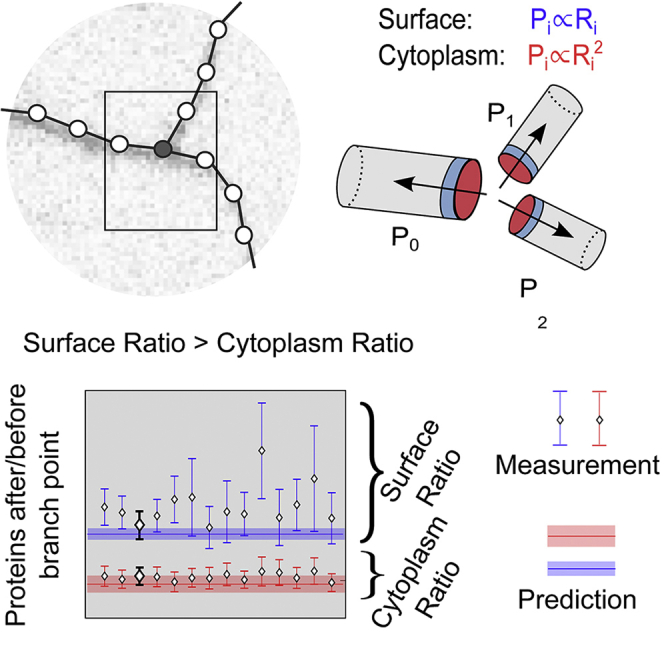
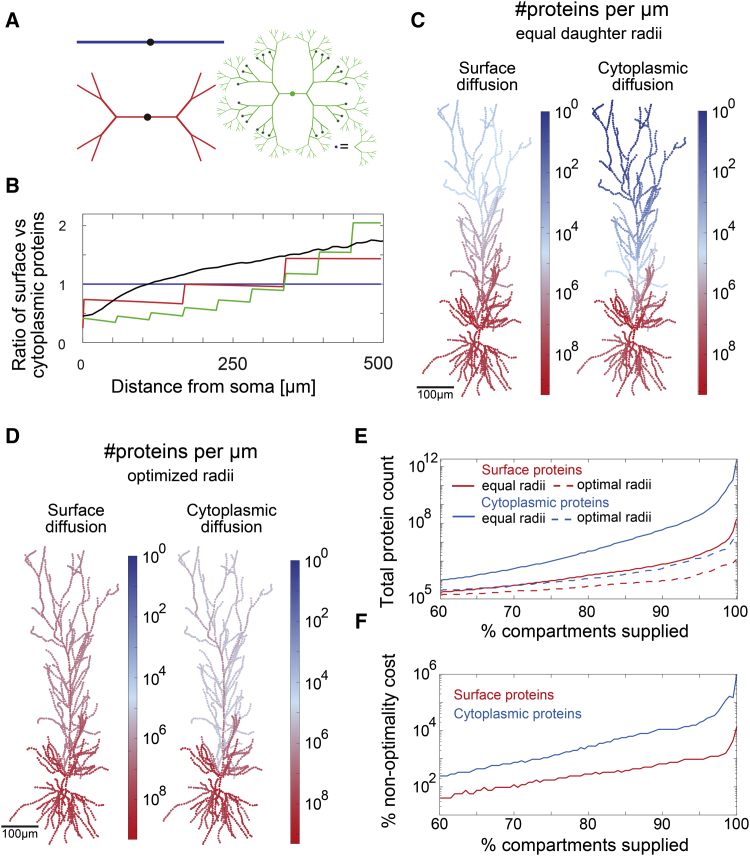
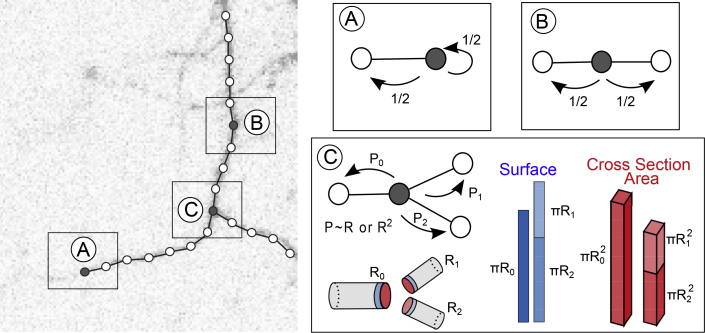
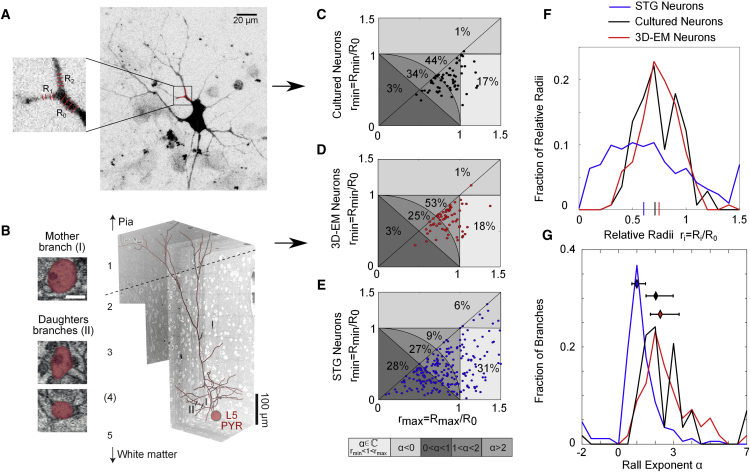
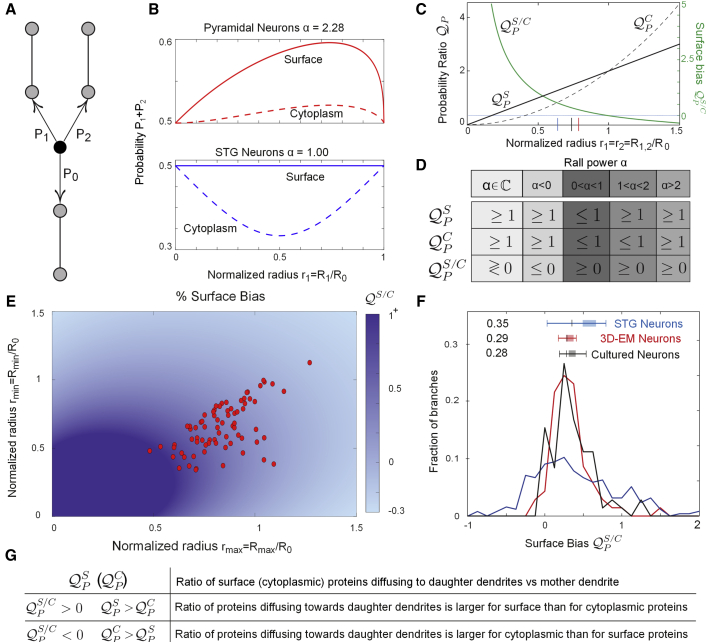
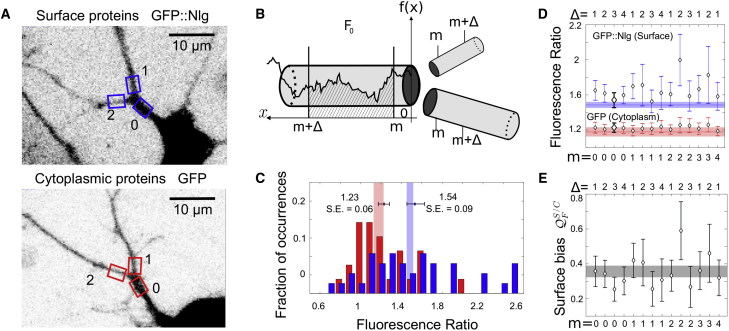
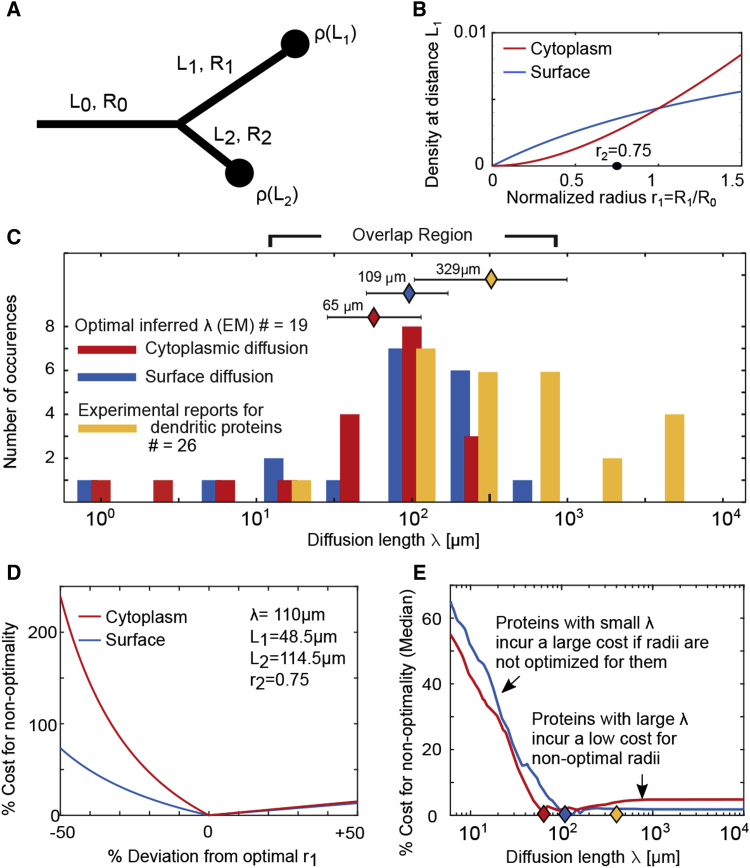
Across their dendritic trees, neurons distribute thousands of protein species that are necessary for maintaining synaptic function and plasticity and that need to be produced continuously and trafficked to their final destination. As each dendritic branchpoint splits the protein flow, increasing branchpoints decreases the total protein number downstream. Consequently, a neuron needs to produce more proteins to maintain a minimal protein number at distal synapses. Combining in vitro experiments and a theoretical framework, we show that proteins that diffuse within the cell plasma membrane are, on average, 35% more effective at reaching downstream locations than proteins that diffuse in the cytoplasm. This advantage emerges from a bias for forward motion at branchpoints when proteins diffuse within the plasma membrane. Using 3D electron microscopy (EM) data, we show that pyramidal branching statistics and the diffusion lengths of common proteins fall into a region that minimizes the overall protein need.
在树突上,神经元分布着数千种对维持突触功能和可塑性必不可少的蛋白质,这些蛋白质需要不断产生并运送到最终目的地。由于每个树突分支点都会分流蛋白质流,因此分支点越多,下游的总蛋白质数量就越少。因此,神经元需要产生更多的蛋白质,以维持远端突触的最小蛋白质数量。通过结合体外实验和理论框架,我们表明,在细胞质膜内扩散的蛋白质比在细胞质中扩散的蛋白质平均更有效地到达下游位置,其效率要高 35%。这种优势源于蛋白质在细胞质膜内扩散时分支点处向前运动的偏向性。使用 3D 电子显微镜 (EM) 数据,我们表明,锥体分支统计数据和常见蛋白质的扩散长度落入了一个使总体蛋白质需求最小化的区域。