Kim Hyunsuh, Seiler Patrick, Jones Jeremy C, Ridout Granger, Camp Kristi P, Fabrizio Thomas P, Jeevan Trushar, Miller Lance A, Throm Robert E, Ferrara Francesca, Fredrickson Richard L, Lowe James F, Wang Leyi, Odemuyiwa Solomon O, Wan Xiu-Feng, Webby Richard J
Department of Infectious Diseases, St. Jude Children's Research Hospital, Memphis, TN 38105, USA.
Hartwell Center for Bioinformatics & Biotechnology, St. Jude Children's Research Hospital, Memphis, TN 38105, USA.
Vaccines (Basel). 2020 Nov 16;8(4):684. doi: 10.3390/vaccines8040684.
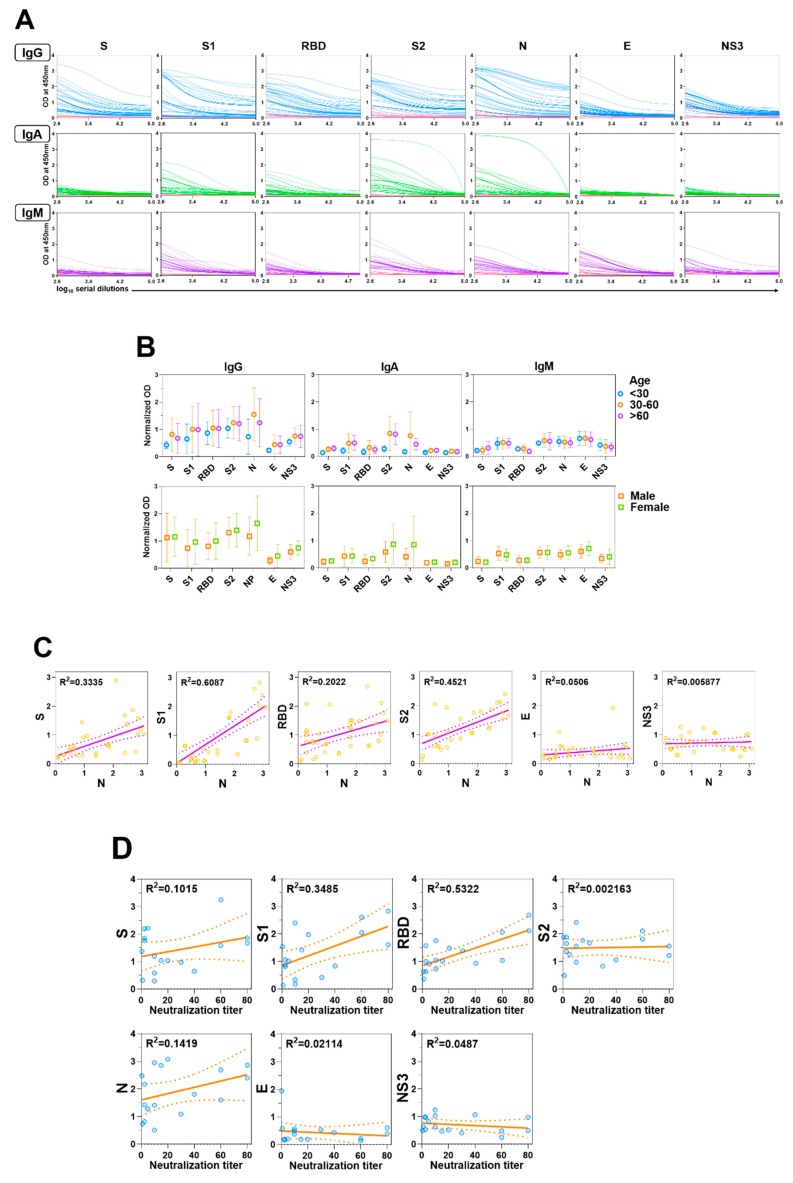
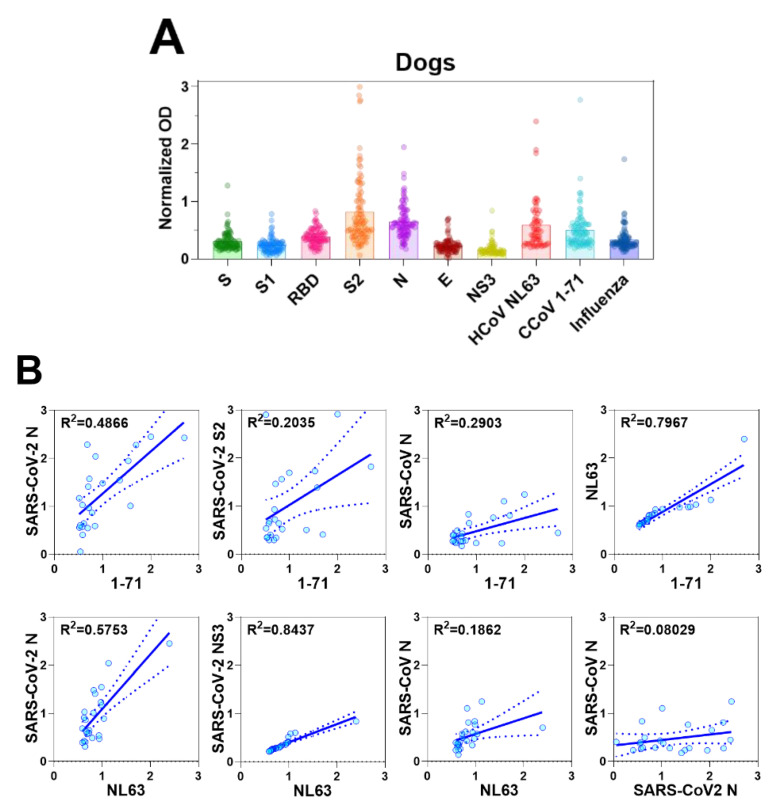
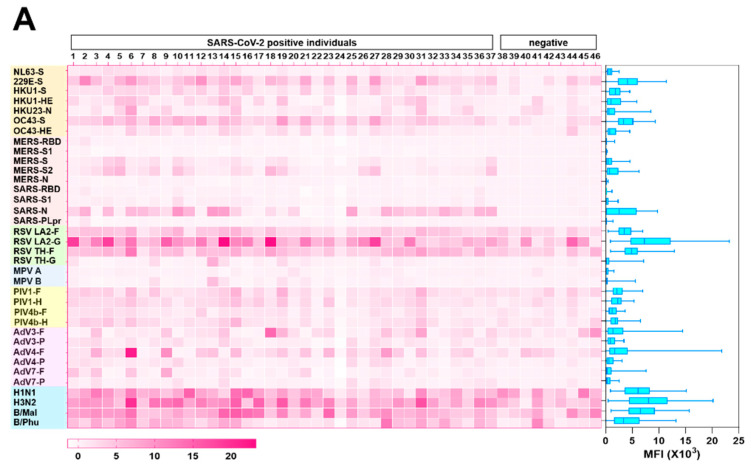
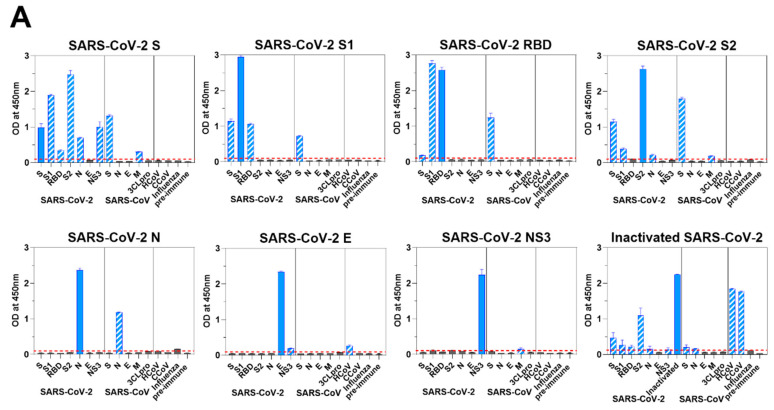
To optimize the public health response to coronavirus disease 2019 (COVID-19), we must first understand the antibody response to individual proteins on the severe acute respiratory syndrome-related coronavirus 2 (SARS-CoV-2) and the antibody's cross reactivity to other coronaviruses. Using a panel of 37 convalescent COVID-19 human serum samples, we showed that the magnitude and specificity of responses varied across individuals, independent of their reactivity to seasonal human coronaviruses (HCoVs). These data suggest that COVID-19 vaccines will elicit primary humoral immune responses in naïve individuals and variable responses in those previously exposed to SARS-CoV-2. Unlike the limited cross-coronavirus reactivities in humans, serum samples from 96 dogs and 10 cats showed SARS-CoV-2 protein-specific responses focused on non-S1 proteins. The correlation of this response with those to other coronaviruses suggests that the antibodies are cross-reactive and generated to endemic viruses within these hosts, which must be considered in seroepidemiologic studies. We conclude that substantial variation in antibody generation against coronavirus proteins will influence interpretations of serologic data in the clinical and veterinary settings.
为优化对2019冠状病毒病(COVID-19)的公共卫生应对措施,我们必须首先了解针对严重急性呼吸综合征相关冠状病毒2(SARS-CoV-2)上单个蛋白质的抗体反应以及该抗体与其他冠状病毒的交叉反应性。我们使用一组37份COVID-19康复期人类血清样本,发现不同个体的反应强度和特异性各不相同,且与他们对季节性人类冠状病毒(HCoV)的反应性无关。这些数据表明,COVID-19疫苗将在未接触过病毒的个体中引发初次体液免疫反应,而在先前接触过SARS-CoV-2的个体中引发的反应则各不相同。与人类中有限的冠状病毒交叉反应不同,来自96只狗和10只猫的血清样本显示,SARS-CoV-2蛋白质特异性反应集中在非S1蛋白上。这种反应与对其他冠状病毒反应的相关性表明,这些抗体具有交叉反应性,是由这些宿主中的地方性病毒产生的,在血清流行病学研究中必须考虑这一点。我们得出结论,针对冠状病毒蛋白质产生的抗体存在显著差异,这将影响临床和兽医环境中血清学数据的解读。