INRAE, INSERM, Univ Rennes, CHU Rennes, Nutrition Metabolisms Cancer, UMR1341, 35590, NuMeCan, Rennes, St Gilles, France.
CHU Rennes, Service de Chirurgie Hépatobiliaire Et Digestive, Rennes, France.
Sci Rep. 2020 Nov 18;10(1):20130. doi: 10.1038/s41598-020-76910-9.
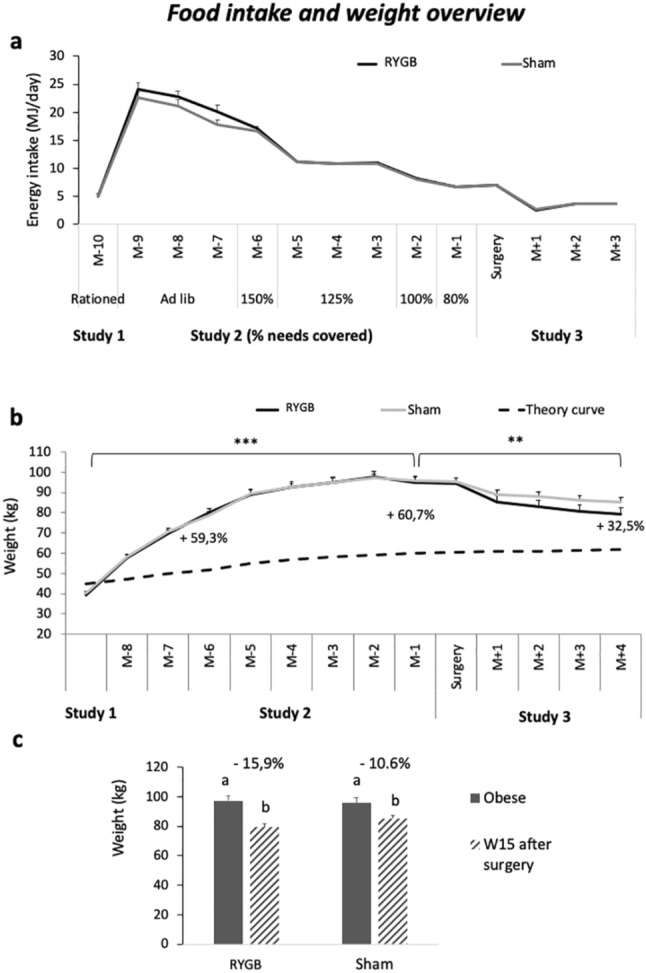
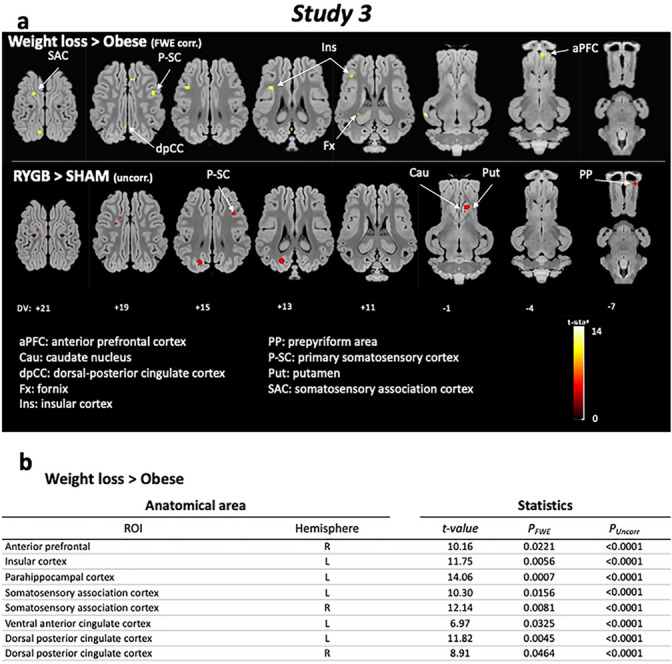
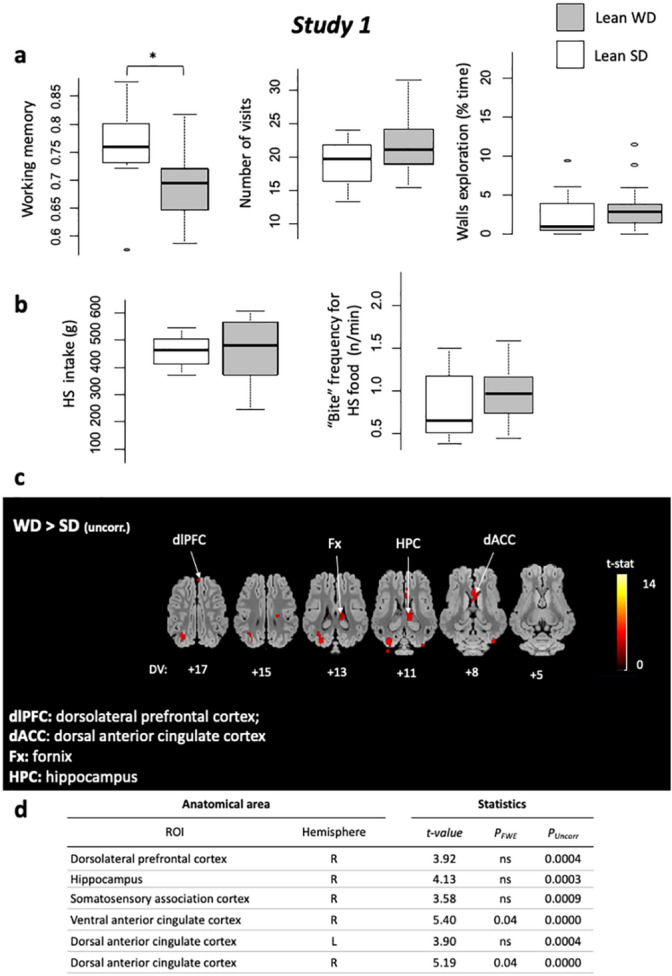
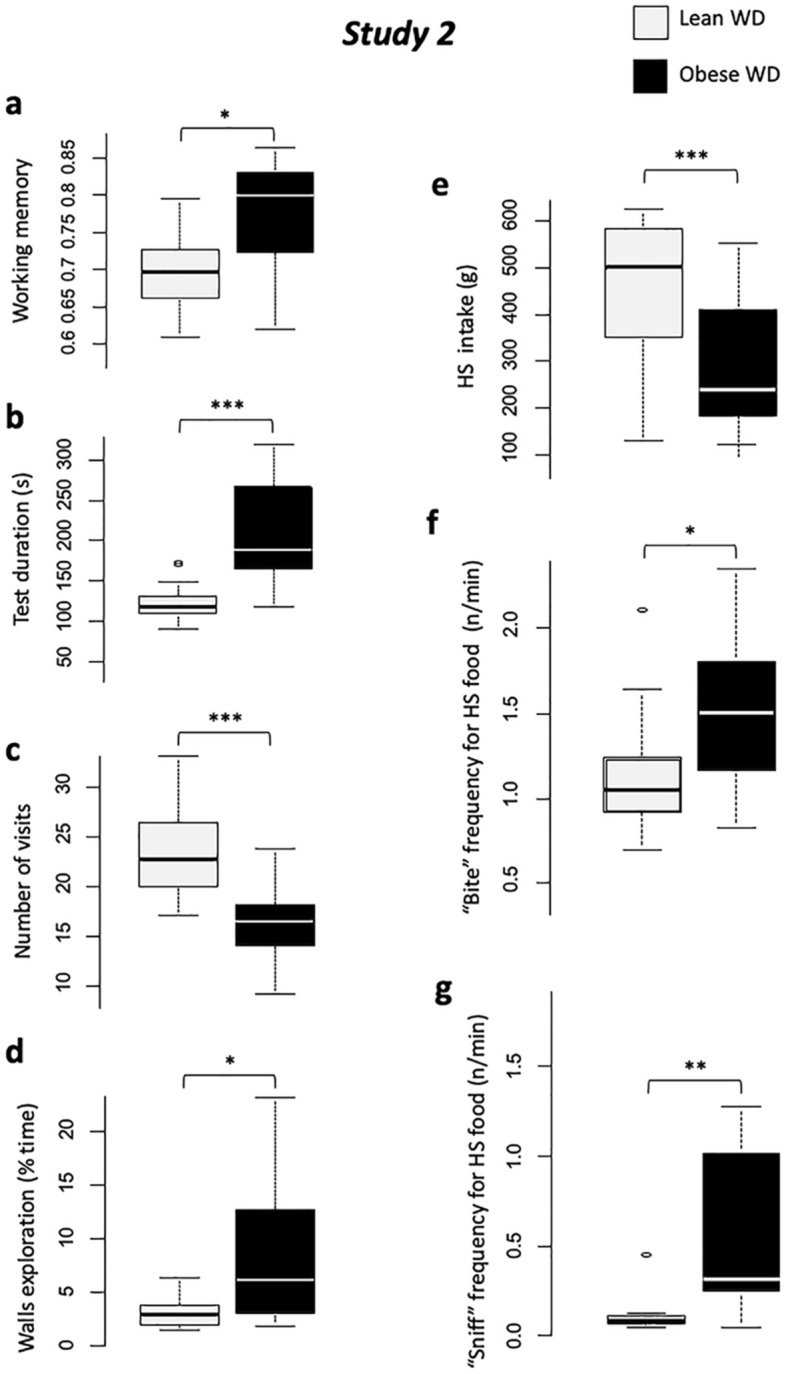
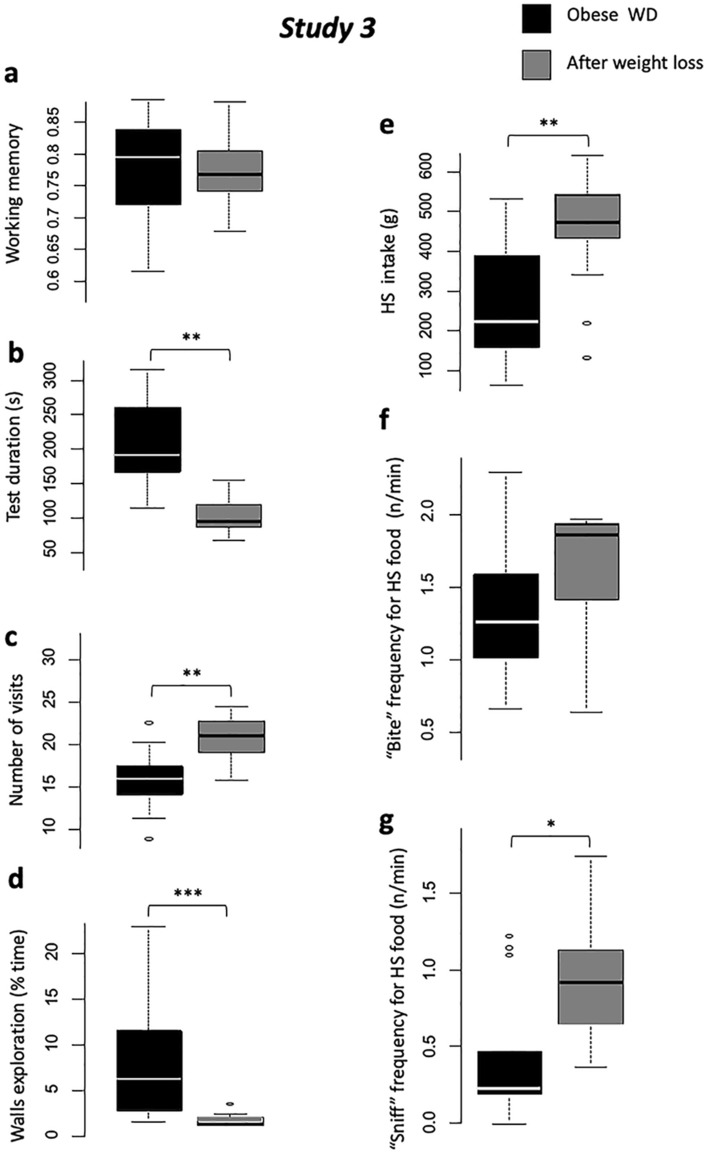
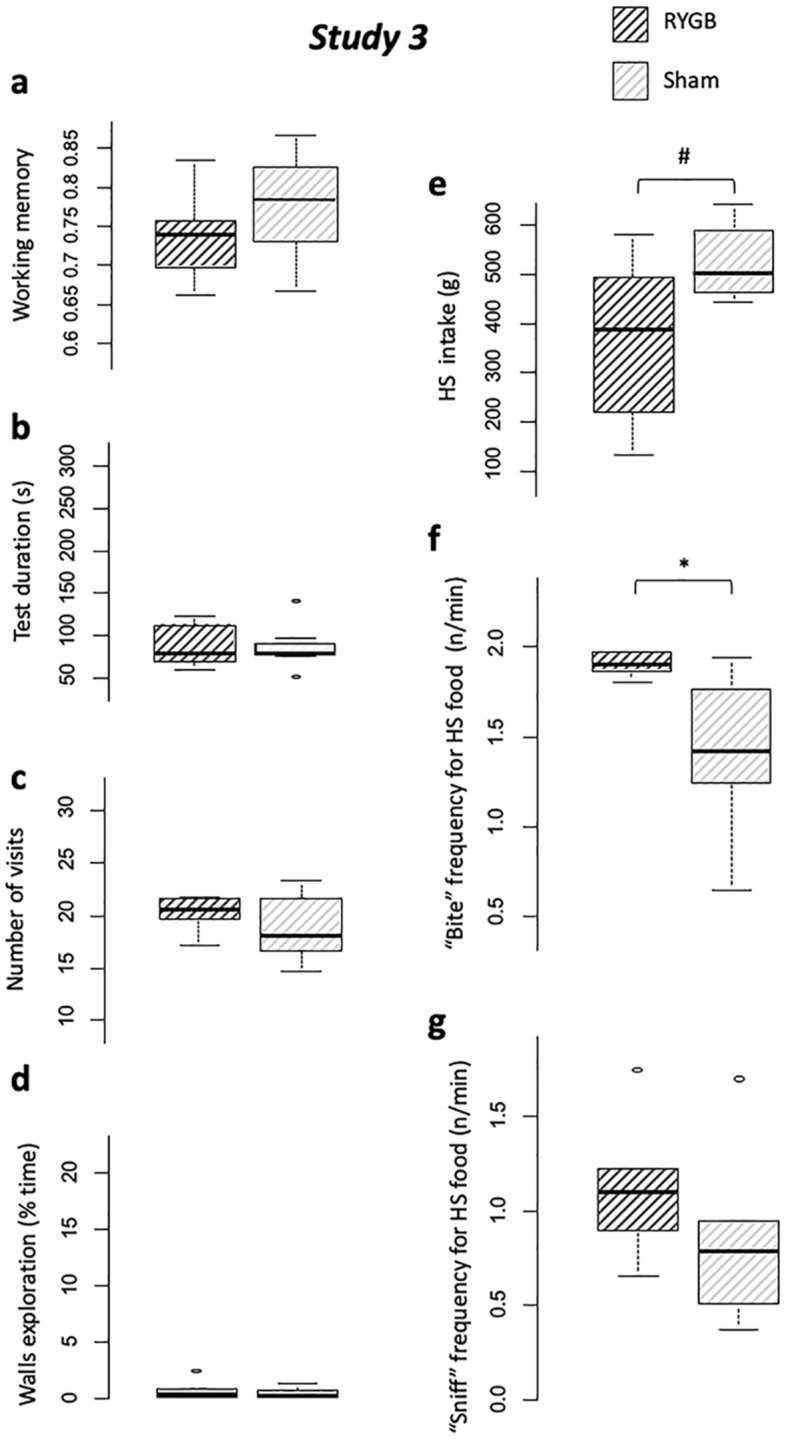
Palatable sweet/fatty foods overconsumption is a major risk factor for obesity and eating disorders, also having an impact on neuro-behavioural hedonic and cognitive components comparable to what is described for substance abuse. We hypothesized that Yucatan minipigs would show hedonic, cognitive, and affective neuro-behavioral shifts when subjected to western diet (WD) exposure without weight gain, after the onset of obesity, and finally after weight loss induced by caloric restriction with (RYGB) or without (Sham) gastric bypass. Eating behavior, cognitive and affective abilities were assessed with a spatial discrimination task (holeboard test) and two-choice feed tests. Brain responses to oral sucrose were mapped using 18F-FDG positron emission tomography. WD exposure impaired working memory and led to an "addiction-type" neuronal pattern involving hippocampal and cortical brain areas. Obesity induced anxiety-like behavior, loss of motivation, and snacking-type eating behavior. Weight loss interventions normalized the motivational and affective states but not eating behavior patterns. Brain glucose metabolism increased in gustatory (insula) and executive control (aPFC) areas after weight loss, but RYGB showed higher responses in inhibition-related areas (dorsal striatum). These results showed that diet quality, weight loss, and the type of weight loss intervention differently impacted brain responses to sucrose in the Yucatan minipig model.
美味的甜食/高脂肪食物摄入过多是肥胖和饮食失调的主要危险因素,对神经行为愉悦和认知成分也有影响,与物质滥用所描述的情况相当。我们假设,在肥胖发生之前、在通过热量限制(RYGB 或无(Sham)胃旁路手术后)导致体重减轻之后,当 Yucatan 小型猪接触西式饮食(WD)而不增加体重时,它们会表现出愉悦、认知和情感神经行为转变。通过空间辨别任务(洞板测试)和双选择饲料测试评估饮食行为、认知和情感能力。使用 18F-FDG 正电子发射断层扫描映射口腔蔗糖的大脑反应。WD 暴露会损害工作记忆,并导致涉及海马体和皮质脑区的“成瘾型”神经元模式。肥胖会引起焦虑样行为、动机丧失和小吃型饮食行为。减重干预使动机和情感状态正常化,但不能使饮食行为模式正常化。体重减轻后,大脑葡萄糖代谢在味觉(岛叶)和执行控制(aPFC)区域增加,但 RYGB 在与抑制相关的区域(背侧纹状体)显示出更高的反应。这些结果表明,饮食质量、体重减轻和减重干预的类型对 Yucatan 小型猪模型中蔗糖的大脑反应有不同的影响。