Department of Family Medicine, College of Medicine, Prince Sattam bin Abdulaziz University, Al-Kharj11942,Al-Kharj, Saudi Arabia.
Dr. Sulaiman Alhabib Medical Group, Sewidi branch, Riyadh, Saudi Arabia.
Pan Afr Med J. 2020 Sep 14;37:51. doi: 10.11604/pamj.2020.37.51.24098. eCollection 2020.
medication without prescription is a growing public health concern or phenomenon worldwide. This cross-sectional study was designed to study the trends of self-medication among Saudi population.
a prospective, cross-sectional study including 2004 participants was carried out from different family clinics across the Kingdom of Saudi Arabia (KSA). The clinicians used a self-designed questionnaire to collect the data, using stringent inclusion criteria and exclusion criteria. The questionnaire recorded participants' demographics and included several closed-ended and open-ended questions with options to choose from. The results were gathered, inserted into an excel spreadsheet and analyzed using SPSS version 23. The analyzed information was presented as frequencies and percentages.
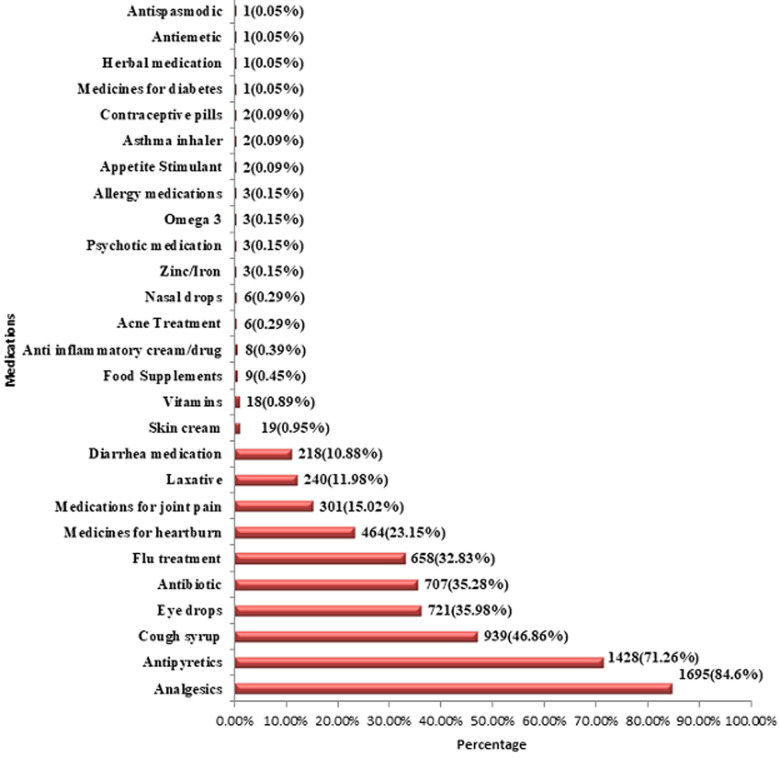
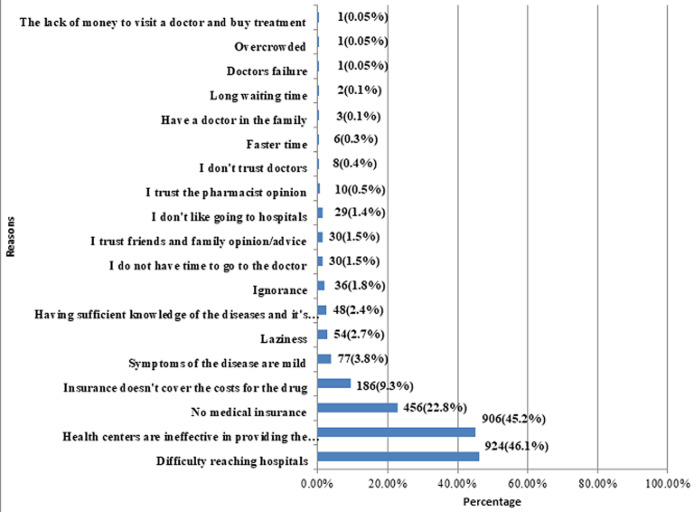
our research showed that 924 respondents (46.1%) found it difficult to reach a hospital. Another 45.2% considered the inefficiency of health centers in providing necessary care as the main reason for self-medication. Other causes of self-medication included a lack of medical insurance, insurance not covering the costs for the drugs, and symptoms of the disease being mild enough for not going to the hospital. Analgesics were the most commonly self-administered drugs (84.58%), followed by antipyretics (71.26%), cough syrups (46.86%), eye drops (35.98%), antibiotics (35.28%), flu medication (32.83%), heartburn medication (23.15%), medicines for joint pain (15.02%), and so on.
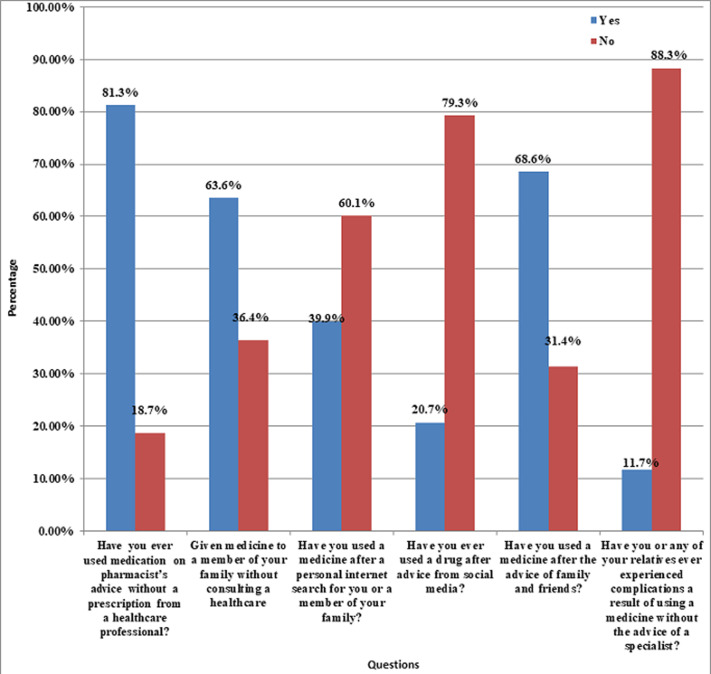
the majority of Saudi Arabians engage in self-medication and rely on advice from friends and family most of the time, instead of consulting a health professional.
在全球范围内,无需处方即可购买药物已成为一个日益严重的公共卫生问题或现象。本横断面研究旨在研究沙特人口的自我用药趋势。
这项前瞻性、横断面研究包括来自沙特阿拉伯王国(KSA)不同家庭诊所的 2004 名参与者。临床医生使用自行设计的问卷收集数据,采用严格的纳入和排除标准。问卷记录了参与者的人口统计学数据,并包括几个封闭式和开放式问题,提供了多种选择。结果被收集、插入电子表格并使用 SPSS 版本 23 进行分析。分析的信息以频率和百分比呈现。
我们的研究表明,924 名受访者(46.1%)发现难以到达医院。另有 45.2%的人认为医疗中心提供必要护理的效率低下是自我用药的主要原因。自我用药的其他原因包括缺乏医疗保险、保险不涵盖药物费用以及疾病症状足够轻微,无需去医院。止痛药是最常自行服用的药物(84.58%),其次是退烧药(71.26%)、咳嗽糖浆(46.86%)、眼药水(35.98%)、抗生素(35.28%)、流感药物(32.83%)、胃灼热药物(23.15%)、关节疼痛药物(15.02%)等。
大多数沙特阿拉伯人从事自我用药,大多数时候依赖朋友和家人的建议,而不是咨询医疗专业人员。