Wang Jianfeng, Guo Meng, Zhou Xiaofeng, Ding Zhenshan, Chen Xing, Jiao Yangtian, Ying Wenwei, Wu Shuang, Zhang Xiaoyun, Geng Na
Department of Urology, China-Japan Friendship Hospital, Beijing, China.
Xijing Hospital of Digestive Diseases, Air Force Medical University (Fourth Military Medical University), Xi'an, China.
Transl Androl Urol. 2020 Oct;9(5):2200-2210. doi: 10.21037/tau-20-1291.
Bladder urothelial carcinoma (BLCA) is still one of the most malignant diseases and has a dismal outcome. Angiogenesis has confirmed its critical role in the development of malignant neoplasms. In this study, we uncovered the prognostic implications of the angiogenesis-related gene panel in urothelial tumors.
The RNA-seq data and clinical records of 402 patients with BLCA were collected from the TCGA database. The panel, including 145 genes involved in angiogenesis, was retrieved from the Uniprot database and the published work. The patients with similar expressed profiles were clustered, and the differences in gene expression were compared. The correlation of gene expression and BLCA outcomes or clinical features were analyzed.
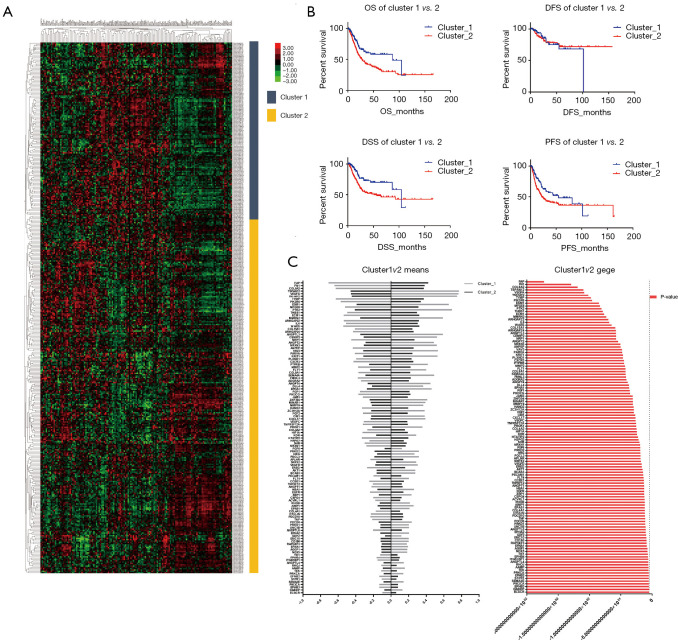
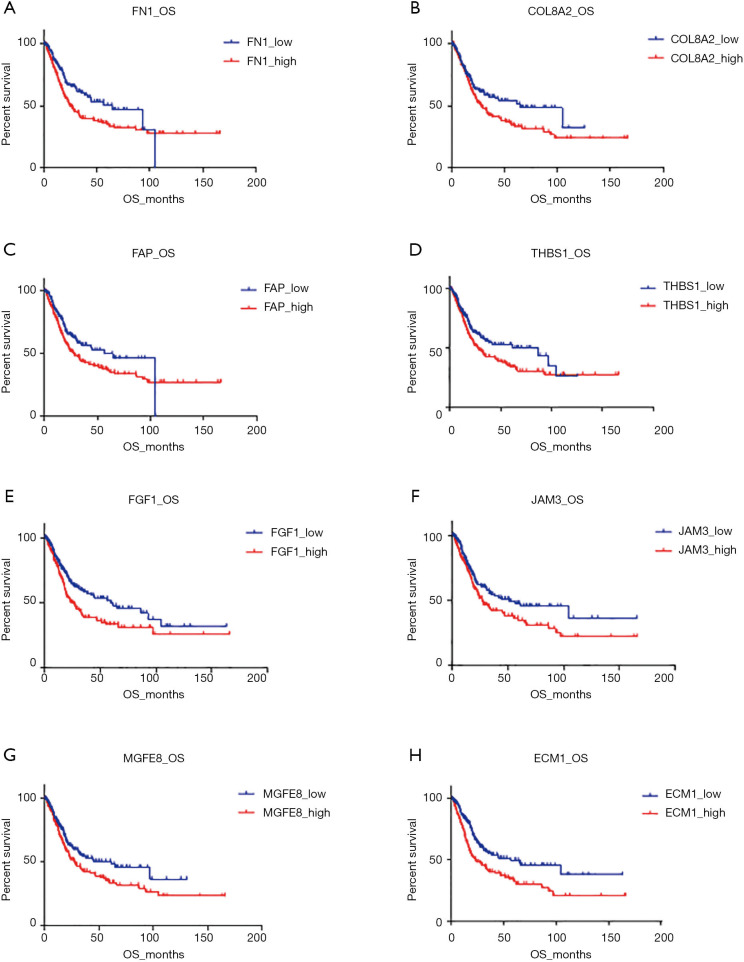
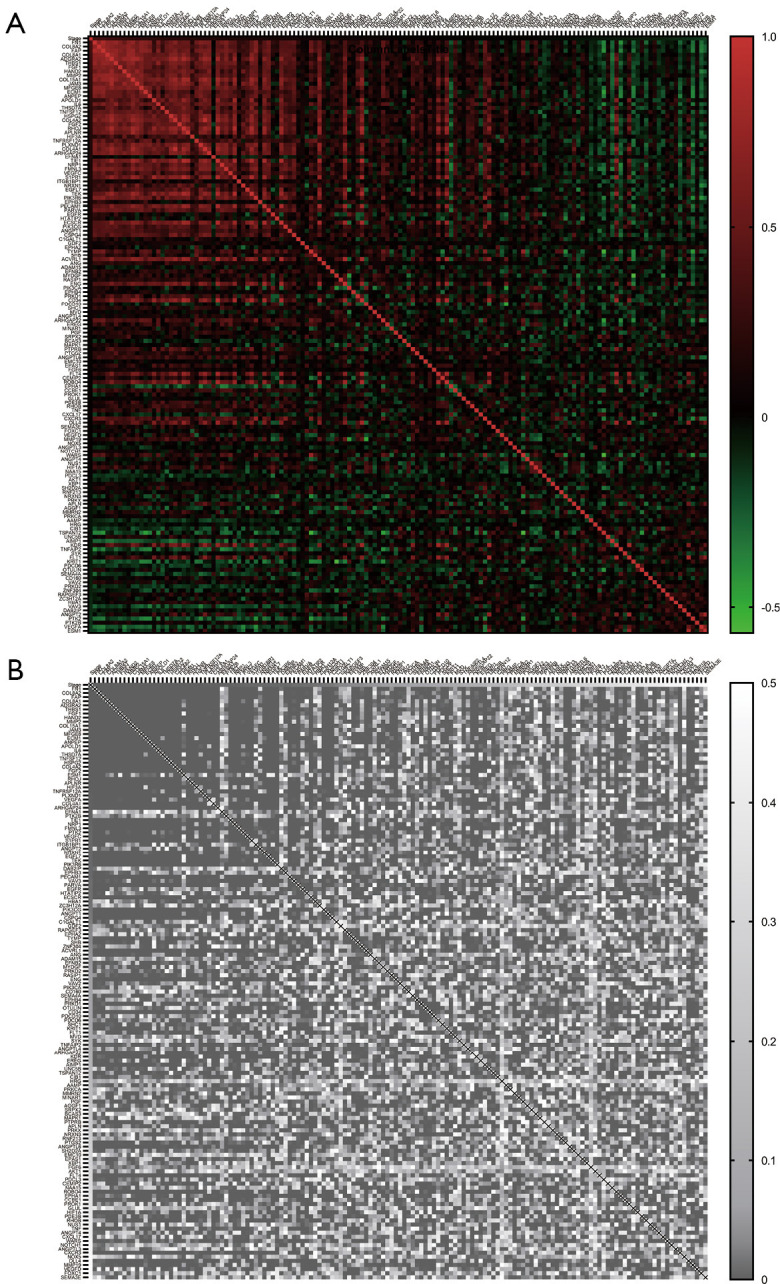
There were two clusters of BLCA patients identified on the expressed basis of angiogenesis-related genes. A significant difference was detected in the tumor stages between the two clusters (P<0.001) and a striking advantaged prognosis shown in cluster_1 (86.83 27.06 months, P=0.001). According to statistics, 115 genes showed a discrepancy in expression between the two clusters, and 16 genes positively correlated to tumor stage progression. Separately analyzed the correlation of those stage-related genes and overall survivals (OS) revealed that high expression of 8 genes, including ECM1 (HR =1.72, P<0.001), FN1 (HR =1.564, P=0.004), FGF1 (HR =1.519, P=0.005), FAP (HR =1.449, P=0.020), JAM3 (HR =1.396, P=0.026), THBS1 (HR =1.402, P=0.028), MFGE8 (HR =1.394, P=0.028) and COL8A2 (HR =1.388, P=0.035), were showed worse prognosis of BLCA, respectively.
This study showed an integrated profile of angiogenesis-related genes and identified the different BLCA subgroups with favorable prognosis and poor prognosis depended on the expression pattern of angiogenesis-related genes. Furthermore, this work revealed the single gene expressions of ECM1, FN1, FGF1, FAP, JAM3, THBS1, MFGE8 and COL8A2 involved in angiogenesis associated the prognosis remarkably.
膀胱尿路上皮癌(BLCA)仍是最具恶性的疾病之一,预后较差。血管生成已证实其在恶性肿瘤发展中的关键作用。在本研究中,我们揭示了血管生成相关基因panel在尿路上皮肿瘤中的预后意义。
从TCGA数据库收集402例BLCA患者的RNA测序数据和临床记录。该panel包括145个参与血管生成的基因,从Uniprot数据库和已发表的研究中获取。对表达谱相似的患者进行聚类,并比较基因表达差异。分析基因表达与BLCA预后或临床特征的相关性。
基于血管生成相关基因的表达,鉴定出两组BLCA患者。两组之间的肿瘤分期存在显著差异(P<0.001),cluster_1显示出显著的预后优势(86.83±27.06个月,P=0.001)。据统计,115个基因在两组之间的表达存在差异,16个基因与肿瘤分期进展呈正相关。分别分析这些与分期相关基因与总生存期(OS)的相关性,发现包括ECM1(HR =1.72,P<0.001)、FN1(HR =1.564,P=0.004)、FGF1(HR =1.519,P=0.005)、FAP(HR =1.449,P=0.020)、JAM3(HR =1.396,P=0.026)、THBS1(HR =1.402,P=0.028)、MFGE8(HR =1.394,P=0.028)和COL8A2(HR =1.388,P=0.035)在内的8个基因高表达分别显示BLCA预后较差。
本研究展示了血管生成相关基因的综合概况,并根据血管生成相关基因的表达模式鉴定出预后良好和预后不良的不同BLCA亚组。此外,这项工作揭示了参与血管生成的ECM1、FN1、FGF1、FAP、JAM3、THBS1、MFGE8和COL8A2的单基因表达与预后显著相关。