Dave Dhaval M, Decker Sandra L, Kaestner Robert, Simon Kosali Ilayperuma
NATIONAL BUREAU OF ECONOMIC RESEARCH, 1050 Massachusetts Avenue, Cambridge, MA 02138.
Am J Health Econ. 2015 Spring;1(2):165-193. doi: 10.1162/ajhe_a_00011.
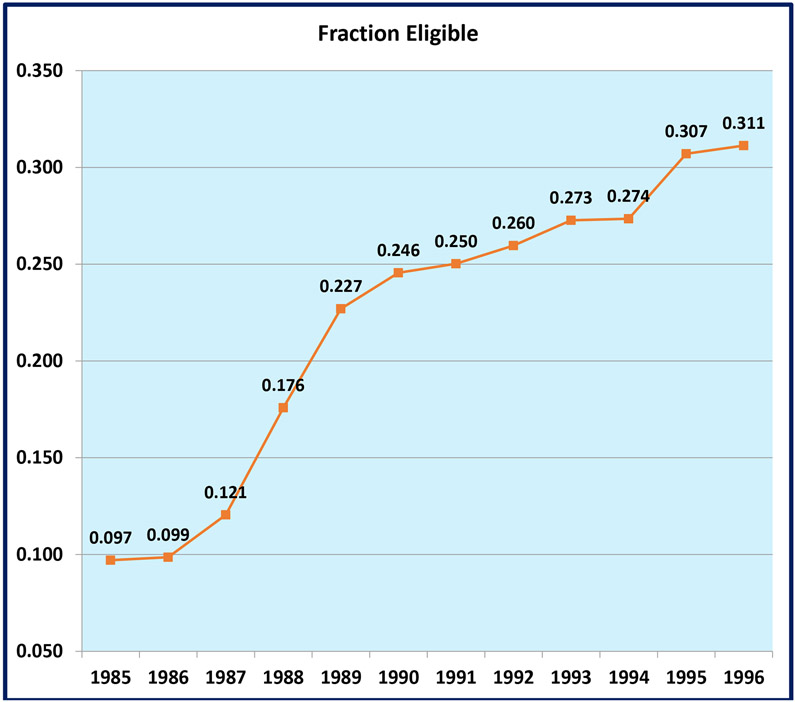
A substantial body of research has found that expansions in Medicaid eligibility increased enrollment in Medicaid, reduced the rate of uninsured, and reduced the rate of private health insurance coverage (i.e., crowd out). Notably, there has been little research that has examined the mechanism by which crowd-out occurs. This study examines the effects of expansions in Medicaid eligibility for pregnant women in the late 1980s and the early 1990s on labor supply, which is one of the possible mechanisms underlying crowd out. Estimates suggest that the 20 percentage point increase in Medicaid eligibility during the sample period was associated with a 6% to 7% decrease in the probability that a woman who gave birth in the past year was employed. Among unmarried women with less than a high school education, the change in Medicaid eligibility reduced employment by approximately 13% to 16%.
大量研究发现,医疗补助资格范围的扩大增加了医疗补助的参保人数,降低了未参保率,并降低了私人医疗保险覆盖率(即挤出效应)。值得注意的是,很少有研究探讨挤出效应发生的机制。本研究考察了20世纪80年代末和90年代初孕妇医疗补助资格范围的扩大对劳动力供给的影响,劳动力供给是挤出效应背后可能的机制之一。估计表明,在样本期内医疗补助资格提高20个百分点与过去一年分娩的女性就业概率下降6%至7%相关。在未受过高中教育的未婚女性中,医疗补助资格的变化使就业率降低了约13%至16%。