MMWR Morb Mortal Wkly Rep. 2020 Nov 20;69(46):1748-1752. doi: 10.15585/mmwr.mm6946a5.
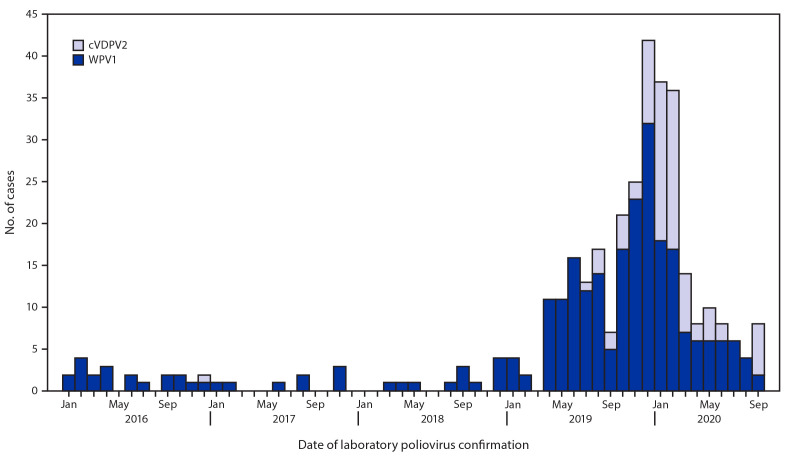
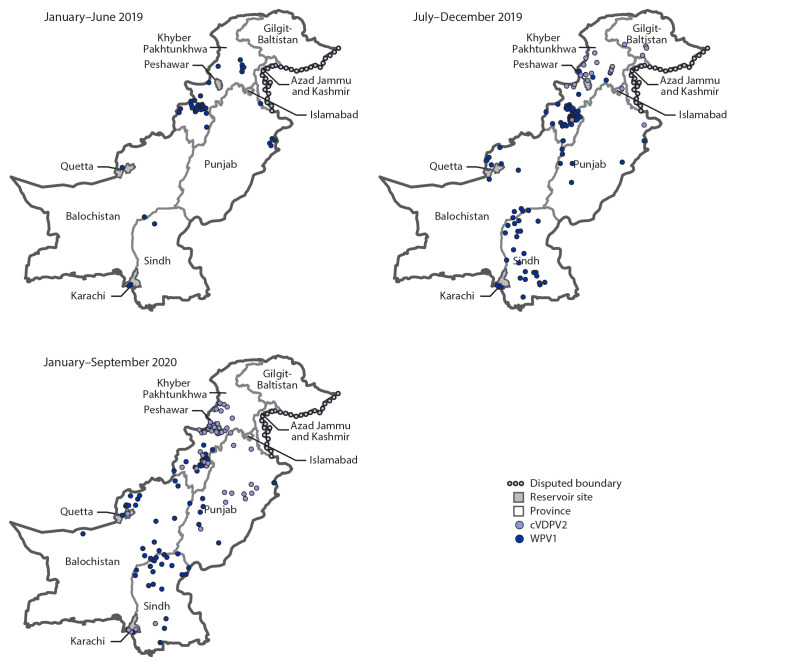
Pakistan and Afghanistan are the only countries where wild poliovirus type 1 (WPV1) is endemic (1,2). In 2019, Pakistan reported 147 WPV1 cases, approximately 12 times the number reported in 2018. As of September 15, 72 cases had been reported in 2020. Since 2019, WPV1 transmission has also spread from Pakistan's core poliovirus reservoirs (Karachi, Peshawar, and Quetta block) to southern districts of Khyber Pakhtunkhwa (KP), Punjab, and Sindh provinces. Further, an outbreak of circulating vaccine-derived poliovirus type 2 (cVDPV2), first detected in July 2019, has caused 22 paralytic cases in 2019 and 59 as of September 15, 2020, throughout the country. The coronavirus disease 2019 (COVID-19) pandemic has substantially reduced delivery of polio vaccines through essential immunization (formerly routine immunization) and prevented implementation of polio supplementary immunization activities (SIAs)* during March-July 2020. This report describes Pakistan's progress in polio eradication during January 2019-September 2020 and updates previous reports (1,3,4). The Pakistan polio program has reinitiated SIAs and will need large, intensive, high-quality campaigns with strategic use of available oral poliovirus vaccines (OPVs) to control the surge and widespread transmission of WPV1 and cVDPV2.
巴基斯坦和阿富汗是唯一存在野生脊髓灰质炎 1 型病毒(WPV1)流行的国家(1,2)。2019 年,巴基斯坦报告了 147 例 WPV1 病例,大约是 2018 年报告病例数的 12 倍。截至 2020 年 9 月 15 日,已报告 72 例病例。自 2019 年以来,WPV1 的传播已从巴基斯坦脊髓灰质炎病毒核心储存区(卡拉奇、白沙瓦和奎达区)蔓延至开伯尔-普赫图赫瓦省、旁遮普省和信德省的南部地区。此外,2019 年 7 月首次发现的循环疫苗衍生脊髓灰质炎 2 型病毒(cVDPV2)疫情,导致 2019 年出现 22 例麻痹病例,截至 2020 年 9 月 15 日,全国范围内共出现 59 例。2019 年冠状病毒病 2019(COVID-19)大流行极大地减少了脊髓灰质炎疫苗的常规接种(以前的常规免疫),并阻止了 2020 年 3 月至 7 月期间开展脊髓灰质炎补充免疫活动(SIAs)*。本报告描述了 2019 年 1 月至 2020 年 9 月期间巴基斯坦在脊髓灰质炎消除方面的进展情况,并更新了以前的报告(1,3,4)。巴基斯坦脊髓灰质炎项目已重新启动 SIAs,需要开展大规模、密集、高质量的运动,并战略性地利用现有的口服脊髓灰质炎疫苗(OPV),以控制 WPV1 和 cVDPV2 的激增和广泛传播。