Kolo Agatha O, Collins Nicola E, Brayton Kelly A, Chaisi Mamohale, Blumberg Lucille, Frean John, Gall Cory A, M Wentzel Jeanette, Wills-Berriman Samantha, Boni Liesl De, Weyer Jacqueline, Rossouw Jennifer, Oosthuizen Marinda C
Vectors and Vector-Borne Diseases Research Programme, Department of Veterinary Tropical Diseases, University of Pretoria, Pretoria 0110, South Africa.
Department of Veterinary Microbiology and Pathology, Washington State University, Pullman, WA 99164, USA.
Microorganisms. 2020 Nov 18;8(11):1812. doi: 10.3390/microorganisms8111812.
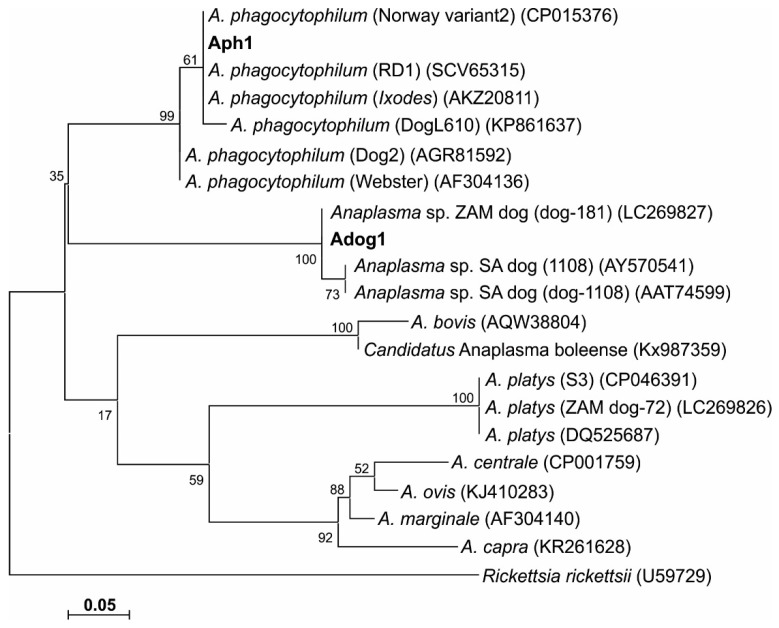
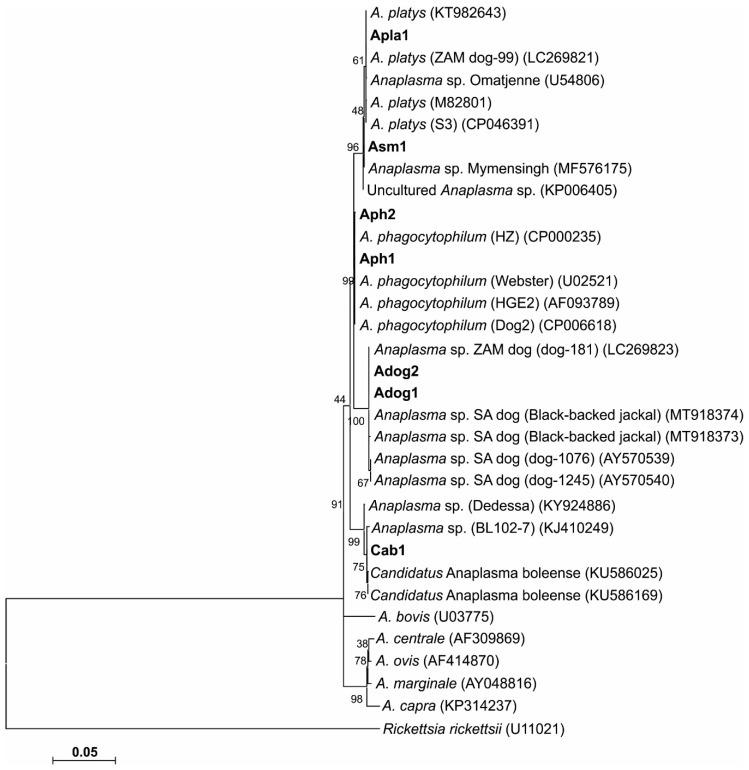
DNA samples from 74 patients with non-malarial acute febrile illness (AFI), 282 rodents, 100 cattle, 56 dogs and 160 ticks were screened for the presence of DNA using a quantitative PCR (qPCR) assay targeting the gene. The test detected both and sp. SA/ZAM dog DNA. Microbiome sequencing confirmed the presence of low levels of DNA in the blood of rodents, dogs and cattle, while high levels of and sp. SA/ZAM dog were detected in dogs. Directed sequencing of the 16S rRNA and genes in selected samples revealed the presence of DNA in humans, dogs and rodents and highlighted its importance as a possible contributing cause of AFI in South Africa. A number of recently described species and were also detected in the study. Phylogenetic analyses grouped sp. SA/ZAM dog into a distinct clade, with sufficient divergence from other species to warrant classification as a separate species. Until appropriate type-material can be deposited and the species is formally described, we will refer to this novel organism as sp. SA dog.
使用针对该基因的定量聚合酶链反应(qPCR)检测法,对74例非疟疾急性发热性疾病(AFI)患者、282只啮齿动物、100头牛、56只狗和160只蜱的DNA样本进行DNA检测。该检测法检测到了SA/ZAM犬种DNA和其他相关DNA。微生物组测序证实,啮齿动物、狗和牛的血液中存在低水平的相关DNA,而在狗中检测到了高水平的SA/ZAM犬种DNA和其他相关DNA。对选定样本中的16S rRNA和相关基因进行直接测序,结果显示在人类、狗和啮齿动物中存在相关DNA,并强调了其作为南非AFI可能促成原因的重要性。在该研究中还检测到了一些最近描述的相关物种。系统发育分析将SA/ZAM犬种归为一个独特的进化枝,与其他相关物种有足够的差异,足以将其分类为一个单独的物种。在合适的模式标本可以保存并对该物种进行正式描述之前,我们将把这种新生物体称为SA犬种。