Department of Orthopaedics, Emory University School of Medicine, Atlanta, GA, 30322, USA.
Department of Cell Biology, Emory University School of Medicine, Atlanta, GA, 30322, USA.
Sci Rep. 2020 Nov 20;10(1):20297. doi: 10.1038/s41598-020-77380-9.
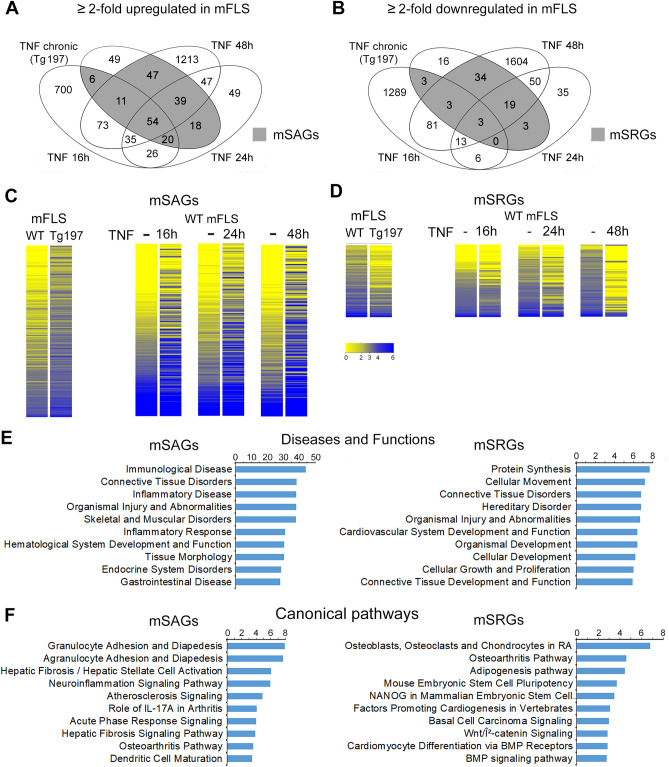
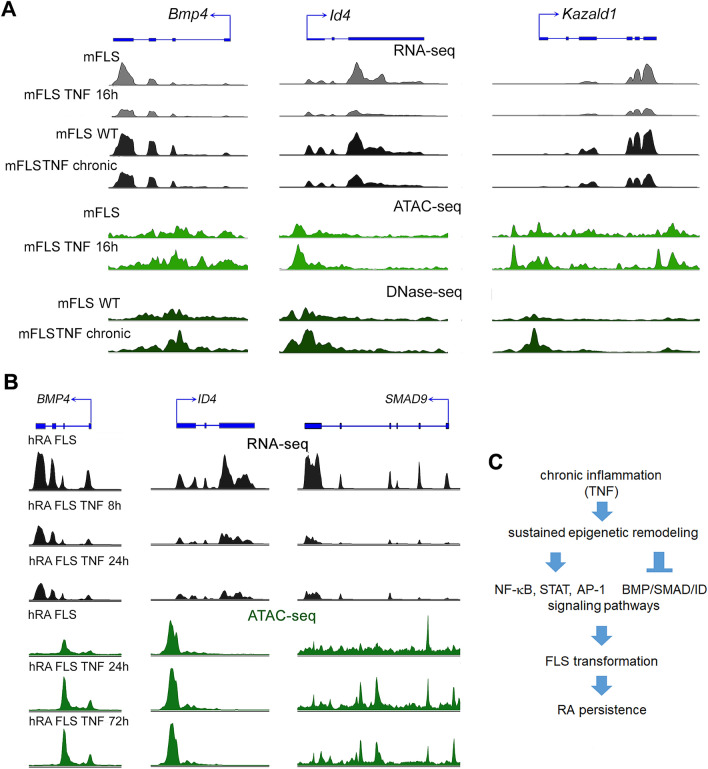
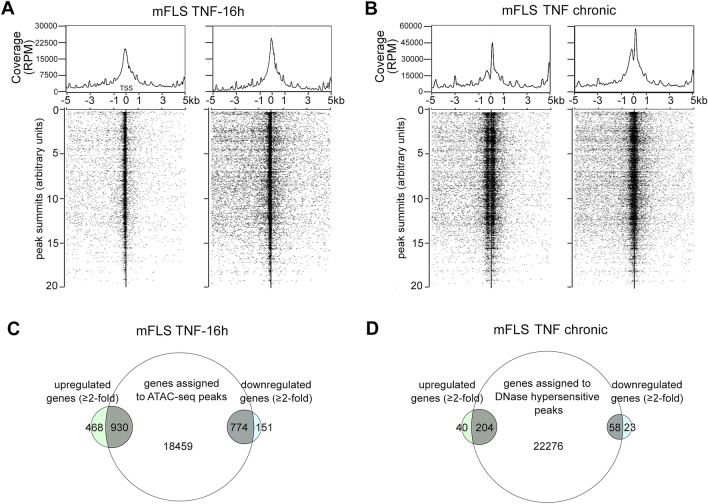
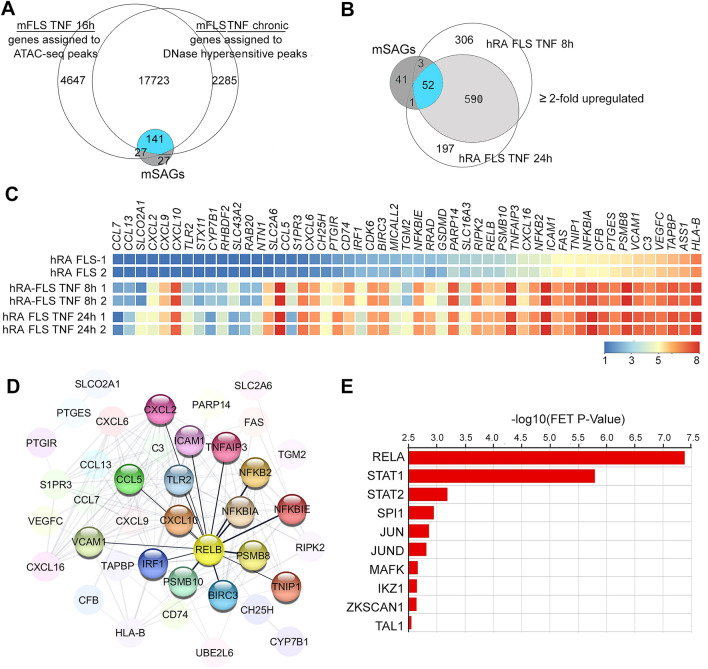
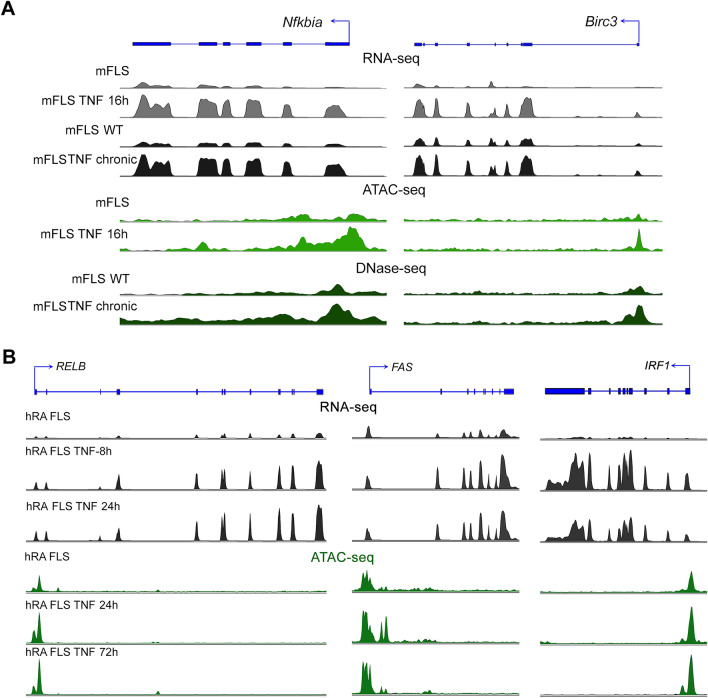
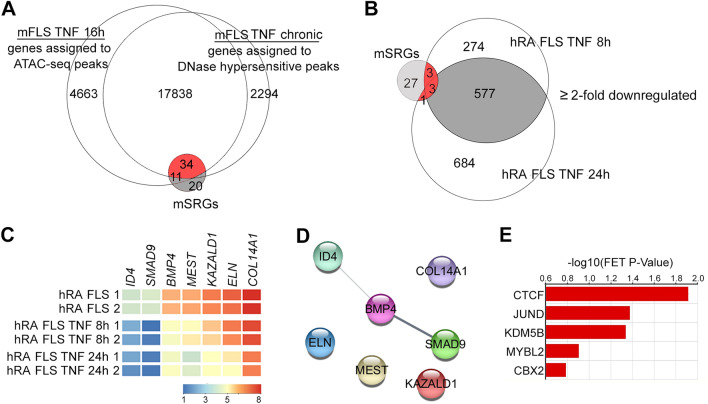
Fibroblast-like synoviocytes (FLS) play a critical role in the pathogenesis of rheumatoid arthritis (RA). Chronic inflammation induces transcriptomic and epigenetic modifications that imparts a persistent catabolic phenotype to the FLS, despite their dissociation from the inflammatory environment. We analyzed high throughput gene expression and chromatin accessibility data from human and mouse FLS from our and other studies available on public repositories, with the goal of identifying the persistently reprogrammed signaling pathways driven by chronic inflammation. We found that the gene expression changes induced by short-term tumor necrosis factor-alpha (TNF) treatment were largely sustained in the FLS exposed to chronic inflammation. These changes that included both activation and repression of gene expression, were accompanied by the remodeling of chromatin accessibility. The sustained activated genes (SAGs) included established pro-inflammatory signaling components known to act at multiple levels of NF-kappaB, STAT and AP-1 signaling cascades. Interestingly, the sustained repressed genes (SRGs) included critical mediators and targets of the BMP signaling pathway. We thus identified sustained repression of BMP signaling as a unique constituent of the long-term inflammatory memory induced by chronic inflammation. We postulate that simultaneous targeting of these activated and repressed signaling pathways may be necessary to combat RA persistence.
成纤维样滑膜细胞(FLS)在类风湿关节炎(RA)的发病机制中起着关键作用。慢性炎症会引起转录组和表观遗传修饰,使 FLS 产生持久的分解代谢表型,尽管它们已经脱离了炎症环境。我们分析了来自我们和其他公共存储库的研究中人类和小鼠 FLS 的高通量基因表达和染色质可及性数据,目的是确定由慢性炎症驱动的持续重编程信号通路。我们发现,在暴露于慢性炎症的 FLS 中,短期肿瘤坏死因子-α(TNF)处理诱导的基因表达变化在很大程度上得以维持。这些变化包括基因表达的激活和抑制,伴随着染色质可及性的重塑。持续激活的基因(SAGs)包括已知在 NF-κB、STAT 和 AP-1 信号级联的多个水平发挥作用的既定促炎信号成分。有趣的是,持续抑制的基因(SRGs)包括 BMP 信号通路的关键介质和靶点。因此,我们确定 BMP 信号的持续抑制是慢性炎症诱导的长期炎症记忆的一个独特组成部分。我们假设同时靶向这些激活和抑制的信号通路可能是对抗 RA 持续性所必需的。