Neuroimmunology Clinic, National Institute of Neurological Disorders and Stroke, National Institutes of Health, Bethesda, MD, USA.
Translational Neuroradiology Section, National Institute of Neurological Disorders and Stroke, National Institutes of Health, Bethesda, MD, USA.
Nat Rev Neurol. 2021 Jan;17(1):37-51. doi: 10.1038/s41582-020-00427-y. Epub 2020 Nov 20.
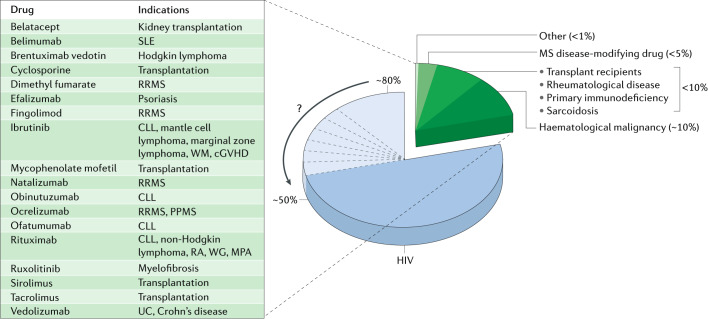
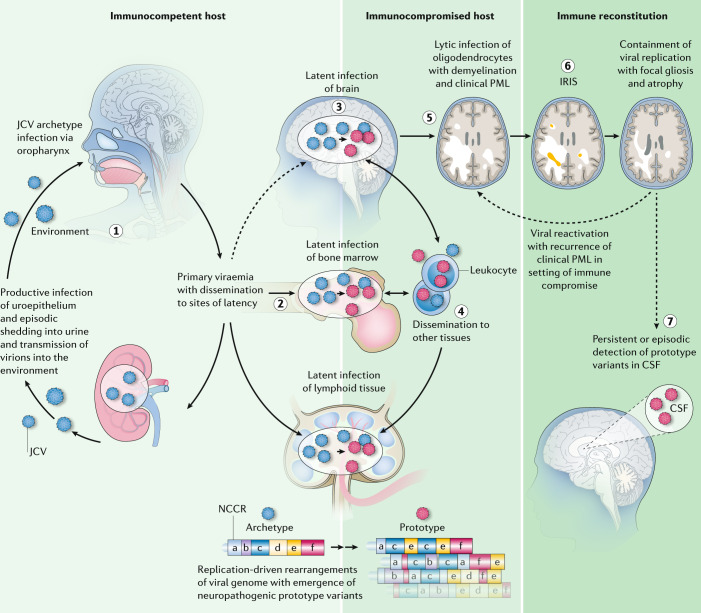
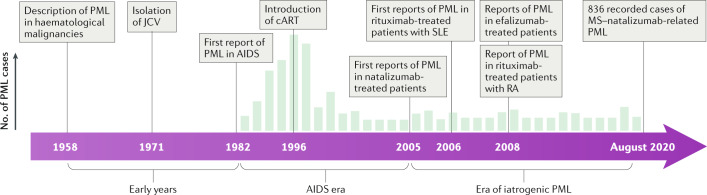
Progressive multifocal leukoencephalopathy (PML) is a devastating CNS infection caused by JC virus (JCV), a polyomavirus that commonly establishes persistent, asymptomatic infection in the general population. Emerging evidence that PML can be ameliorated with novel immunotherapeutic approaches calls for reassessment of PML pathophysiology and clinical course. PML results from JCV reactivation in the setting of impaired cellular immunity, and no antiviral therapies are available, so survival depends on reversal of the underlying immunosuppression. Antiretroviral therapies greatly reduce the risk of HIV-related PML, but many modern treatments for cancers, organ transplantation and chronic inflammatory disease cause immunosuppression that can be difficult to reverse. These treatments - most notably natalizumab for multiple sclerosis - have led to a surge of iatrogenic PML. The spectrum of presentations of JCV-related disease has evolved over time and may challenge current diagnostic criteria. Immunotherapeutic interventions, such as use of checkpoint inhibitors and adoptive T cell transfer, have shown promise but caution is needed in the management of immune reconstitution inflammatory syndrome, an exuberant immune response that can contribute to morbidity and death. Many people who survive PML are left with neurological sequelae and some with persistent, low-level viral replication in the CNS. As the number of people who survive PML increases, this lack of viral clearance could create challenges in the subsequent management of some underlying diseases.
进行性多灶性白质脑病(PML)是一种由 JC 病毒(JCV)引起的毁灭性中枢神经系统感染,JC 病毒是一种多瘤病毒,通常在普通人群中引起持续的无症状感染。新出现的证据表明,新型免疫治疗方法可以改善 PML,这需要重新评估 PML 的病理生理学和临床过程。PML 是由 JCV 在细胞免疫受损的情况下重新激活引起的,目前尚无抗病毒治疗方法,因此生存取决于潜在免疫抑制的逆转。抗逆转录病毒疗法大大降低了 HIV 相关 PML 的风险,但许多用于癌症、器官移植和慢性炎症性疾病的现代治疗方法会引起免疫抑制,这种免疫抑制可能难以逆转。这些治疗方法——最著名的是多发性硬化症的那他珠单抗——导致医源性 PML 激增。随着时间的推移,JCV 相关疾病的表现谱发生了演变,可能挑战当前的诊断标准。免疫治疗干预,如使用检查点抑制剂和过继性 T 细胞转移,已显示出希望,但在管理免疫重建炎症综合征时需要谨慎,免疫重建炎症综合征是一种过度的免疫反应,可导致发病率和死亡率。许多幸存 PML 的人都留下了神经后遗症,一些人在中枢神经系统中存在持续的低水平病毒复制。随着幸存 PML 人数的增加,中枢神经系统中持续存在低水平病毒复制可能会对某些潜在疾病的后续管理带来挑战。