iBB-Institute for Bioengineering and Biosciences, Instituto Superior Técnico, Universidade de Lisboa, Avenida Rovisco Pais, 1049-001, Lisboa, Portugal.
CEDOC, Chronic Diseases Research Centre, NOVA Medical School Faculdade de Ciências Médicas, Universidade NOVA de Lisboa, Campo dos Mártires da Pátria, 130, 1169-056, Lisboa, Portugal.
Br J Cancer. 2021 Mar;124(5):862-879. doi: 10.1038/s41416-020-01156-1. Epub 2020 Nov 23.
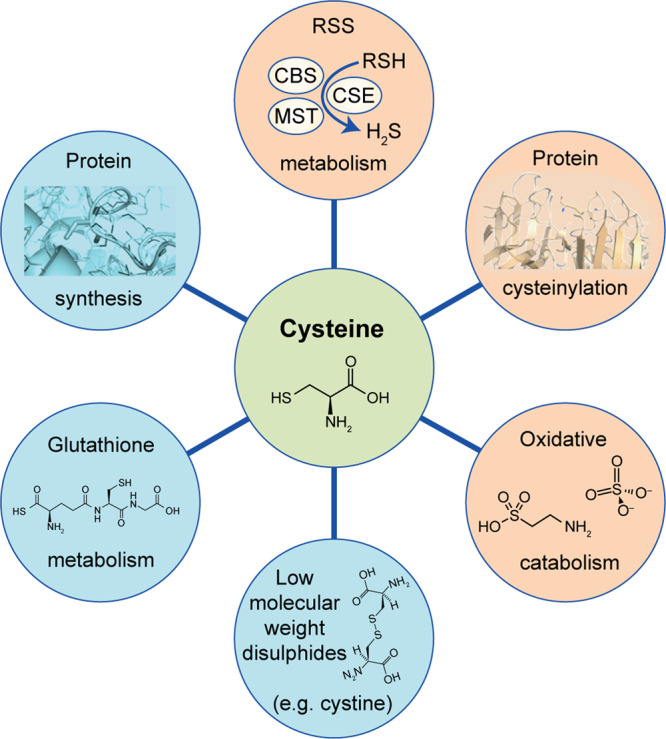
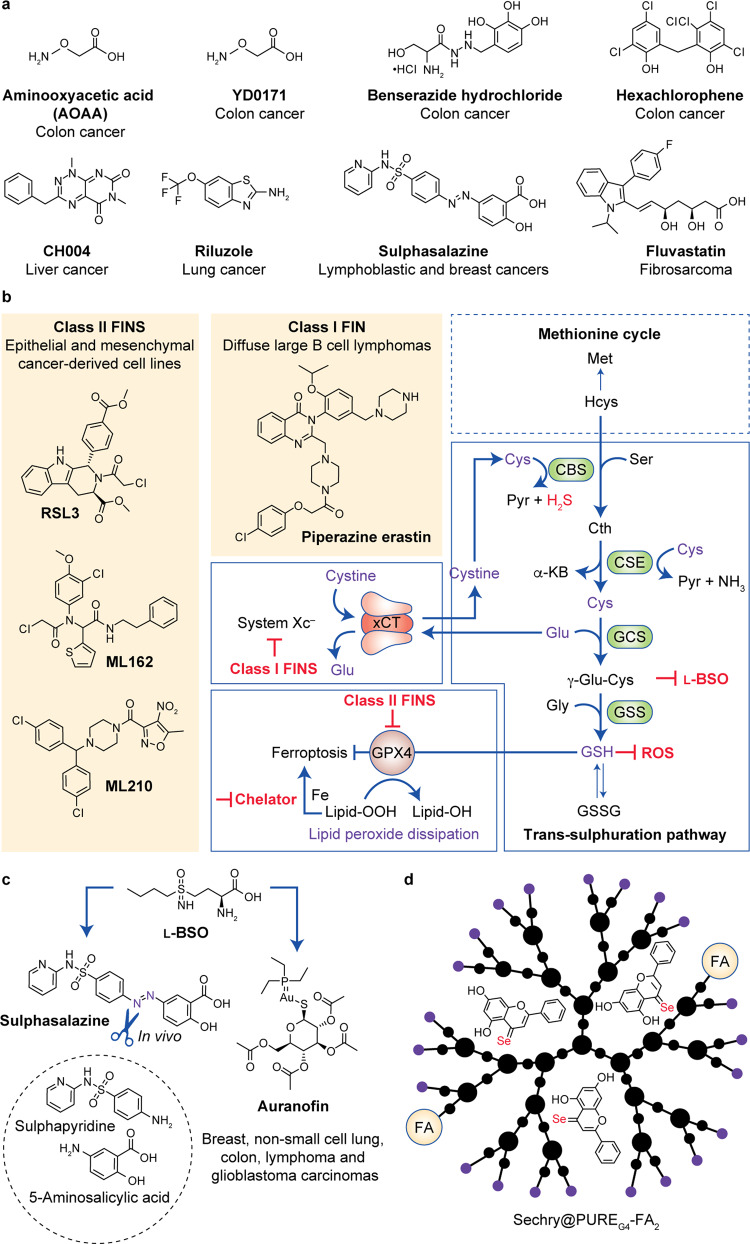
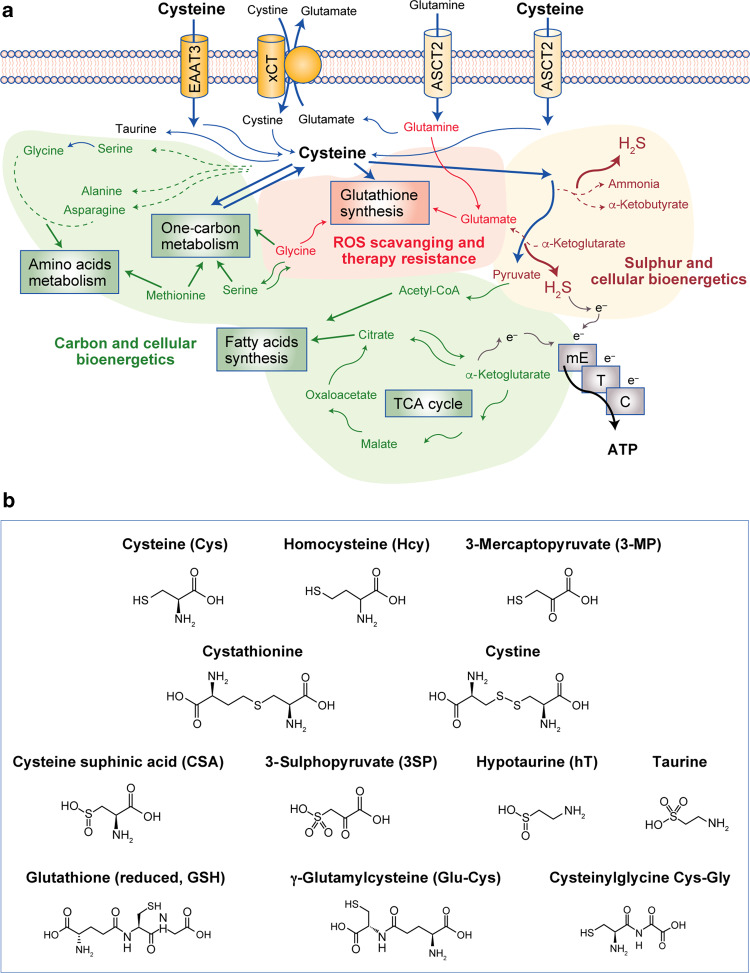
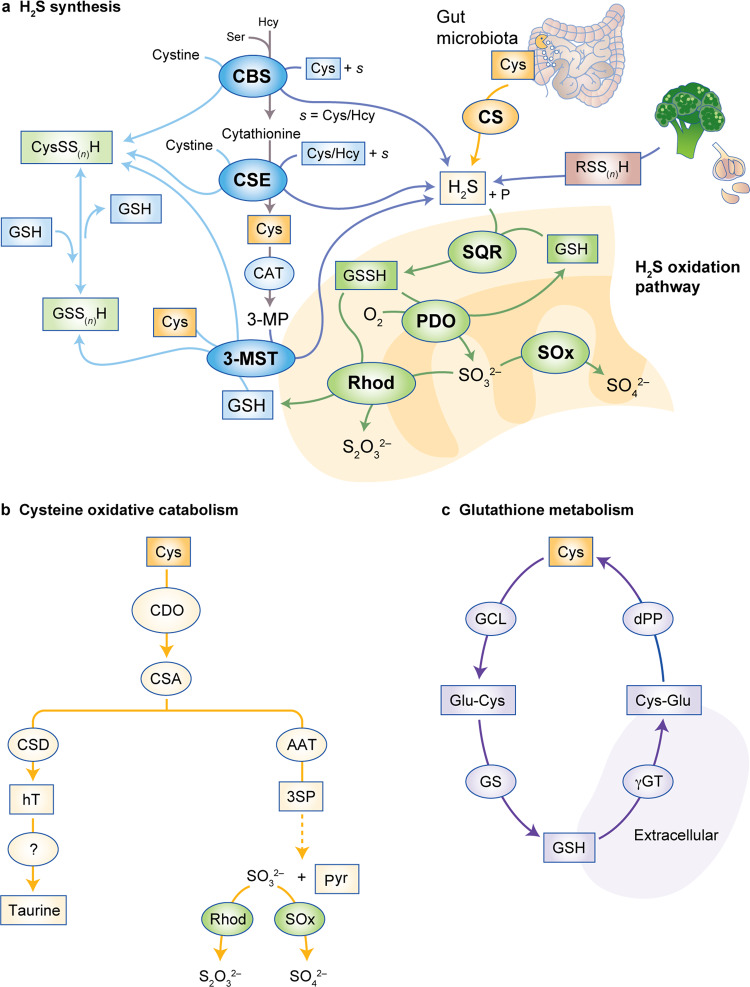
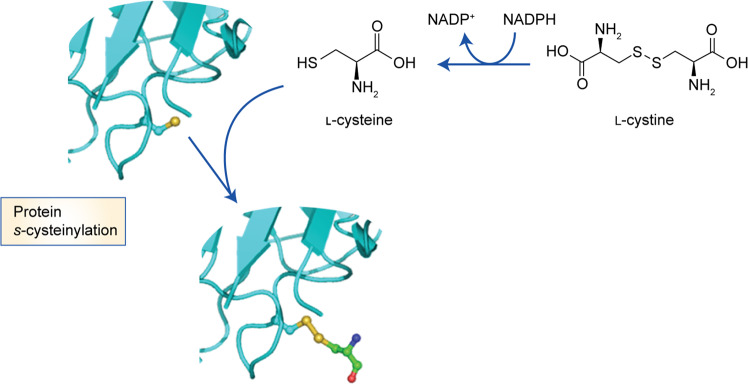
To enable survival in adverse conditions, cancer cells undergo global metabolic adaptations. The amino acid cysteine actively contributes to cancer metabolic remodelling on three different levels: first, in its free form, in redox control, as a component of the antioxidant glutathione or its involvement in protein s-cysteinylation, a reversible post-translational modification; second, as a substrate for the production of hydrogen sulphide (HS), which feeds the mitochondrial electron transfer chain and mediates per-sulphidation of ATPase and glycolytic enzymes, thereby stimulating cellular bioenergetics; and, finally, as a carbon source for epigenetic regulation, biomass production and energy production. This review will provide a systematic portrayal of the role of cysteine in cancer biology as a source of carbon and sulphur atoms, the pivotal role of cysteine in different metabolic pathways and the importance of HS as an energetic substrate and signalling molecule. The different pools of cysteine in the cell and within the body, and their putative use as prognostic cancer markers will be also addressed. Finally, we will discuss the pharmacological means and potential of targeting cysteine metabolism for the treatment of cancer.
为了在不利条件下生存,癌细胞经历了全局代谢适应。氨基酸半胱氨酸在三个不同层面上积极促进癌症代谢重塑:首先,在其游离形式中,在氧化还原控制中,作为抗氧化谷胱甘肽的组成部分,或参与蛋白质 S-半胱氨酸化,这是一种可逆的翻译后修饰;其次,作为产生硫化氢 (HS) 的底物,HS 为线粒体电子传递链提供燃料,并介导 ATP 酶和糖酵解酶的过硫化,从而刺激细胞生物能;最后,作为表观遗传调控、生物量产生和能量产生的碳源。本文将系统地描述半胱氨酸在癌症生物学中的作用,包括其作为碳和硫原子的来源、半胱氨酸在不同代谢途径中的关键作用以及 HS 作为能量底物和信号分子的重要性。本文还将讨论细胞内和体内半胱氨酸的不同池及其作为预后癌症标志物的潜在用途。最后,我们将讨论针对半胱氨酸代谢的药理学方法和治疗癌症的潜力。