Centre for Cancer Prevention, Wolfson Institute of Preventive Medicine, Queen Mary University of London, Charterhouse Square, London, EC1M 6BQ, UK.
Faculty of Life Sciences and Medicine, Cancer Prevention Group, School of Cancer and Pharmaceutical Sciences, King's College London, Guy's Campus, Great Maze Pond, London, SE1 9RT, UK.
Br J Cancer. 2021 Feb;124(4):736-743. doi: 10.1038/s41416-020-01163-2. Epub 2020 Nov 23.
Over the past 30 years since the implementation of the National Health Service Breast Screening Programme, improvements in diagnostic techniques and treatments have led to the need for an up-to-date evaluation of its benefit on risk of death from breast cancer. An initial pilot case-control study in London indicated that attending mammography screening led to a mortality reduction of 39%.
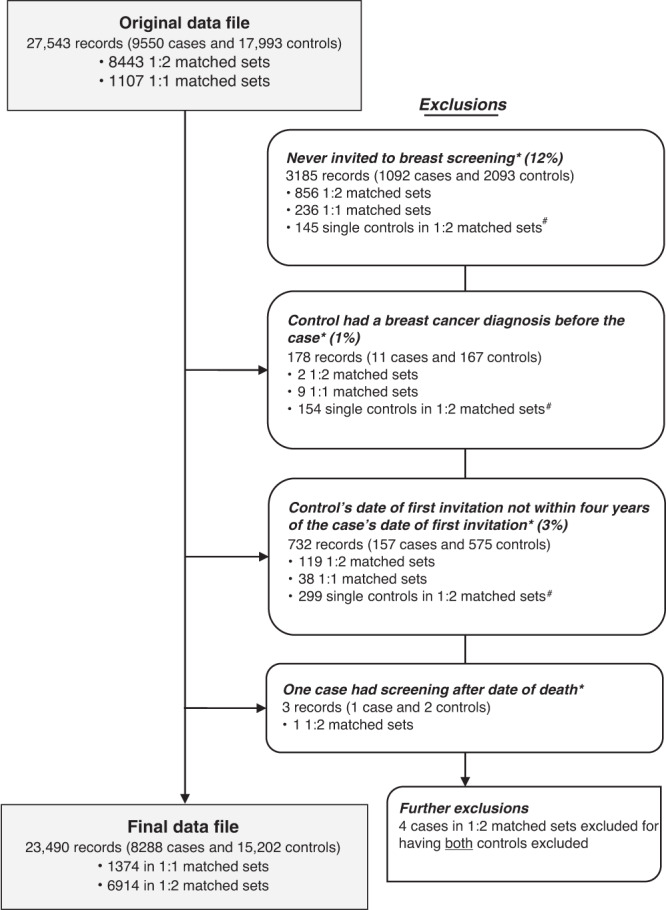
Based on the same study protocol, an England-wide study was set up. Women aged 47-89 years who died of primary breast cancer in 2010 or 2011 were selected as cases (8288 cases). When possible, two controls were selected per case (15,202 controls) and were matched by date of birth and screening area.
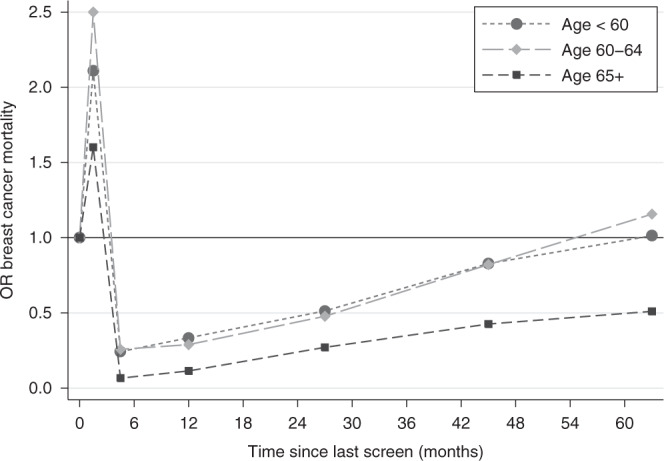
Conditional logistic regressions showed a 38% reduction in breast cancer mortality after correcting for self-selection bias (OR 0.62, 95% CI 0.56-0.69) for women being screened at least once. Secondary analyses by age group, and time between last screen and breast cancer diagnosis were also performed.
According to this England-wide case-control study, mammography screening still plays an important role in lowering the risk of dying from breast cancer. Women aged 65 or over see a stronger and longer lasting benefit of screening compared to younger women.
自实施国家卫生服务乳房筛查计划以来的 30 多年里,诊断技术和治疗方法的改进使得有必要对其降低乳腺癌死亡率的效果进行最新评估。伦敦的一项初步试点病例对照研究表明,参加乳房 X 光筛查可使死亡率降低 39%。
基于相同的研究方案,在英格兰开展了一项研究。选择 2010 年或 2011 年死于原发性乳腺癌的 47-89 岁女性作为病例(8288 例)。在可能的情况下,每个病例选择两名对照(15202 名对照),并按出生日期和筛查区域进行匹配。
在纠正了自我选择偏倚后(OR 0.62,95%CI 0.56-0.69),对于至少接受过一次筛查的女性,乳腺癌死亡率降低了 38%。还按年龄组和最后一次筛查与乳腺癌诊断之间的时间进行了二次分析。
根据这项英格兰范围的病例对照研究,乳房 X 光筛查仍然在降低死于乳腺癌的风险方面发挥着重要作用。与年轻女性相比,65 岁或以上的女性从筛查中获得的获益更强、更持久。