Deng Quanqing, Wu Jia, Chen Jianwen, Shen Wankuan
College of Agriculture, South China Agricultural University, Guangzhou, China.
Scientific Observing and Experimental Station of Crop Cultivation in South China, Ministry of Agriculture, Guangzhou, China.
Front Plant Sci. 2020 Nov 5;11:568130. doi: 10.3389/fpls.2020.568130. eCollection 2020.
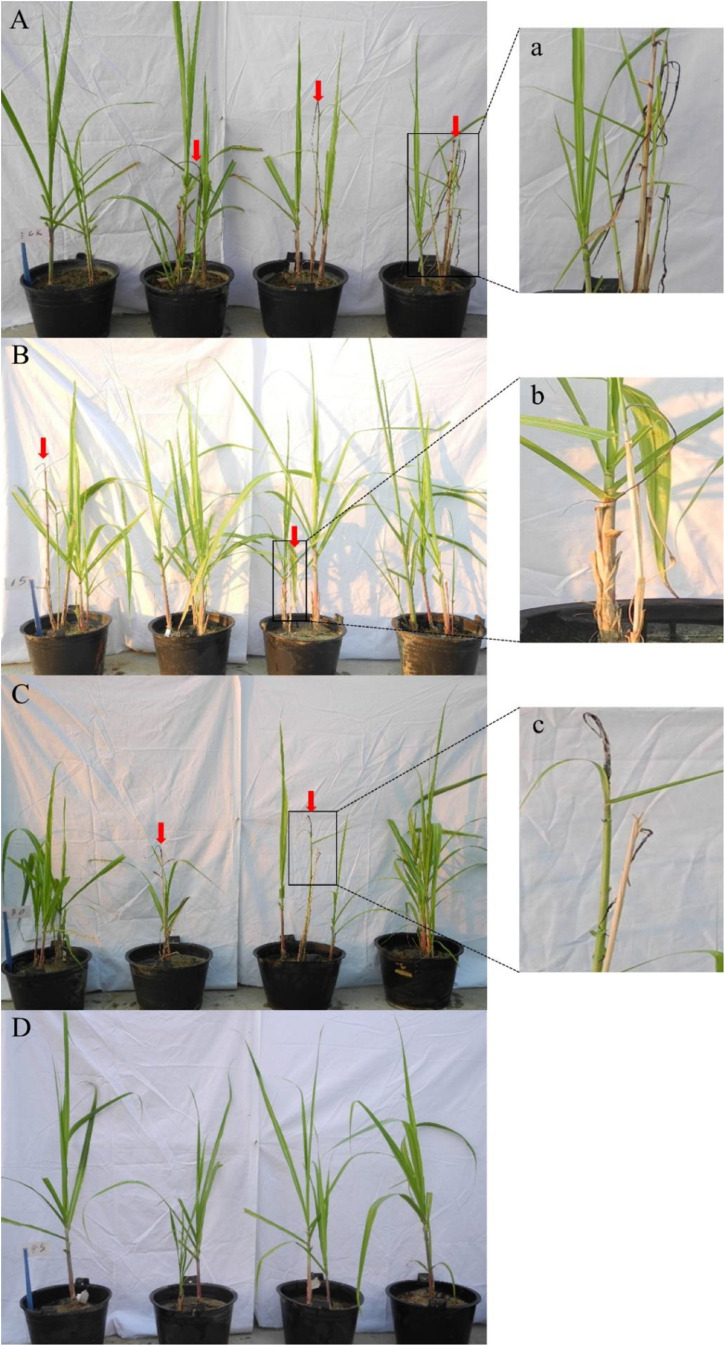
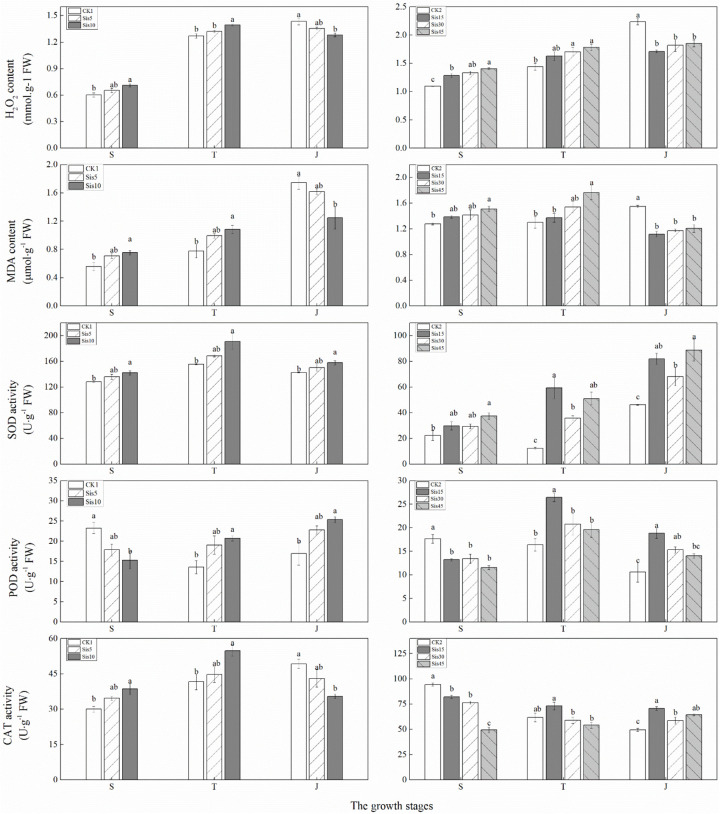
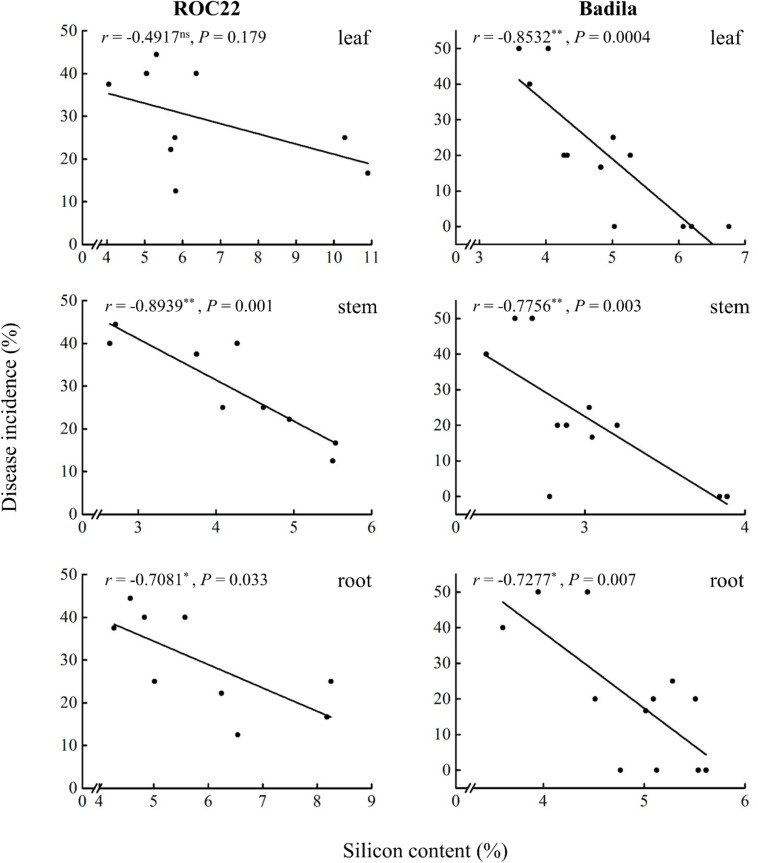
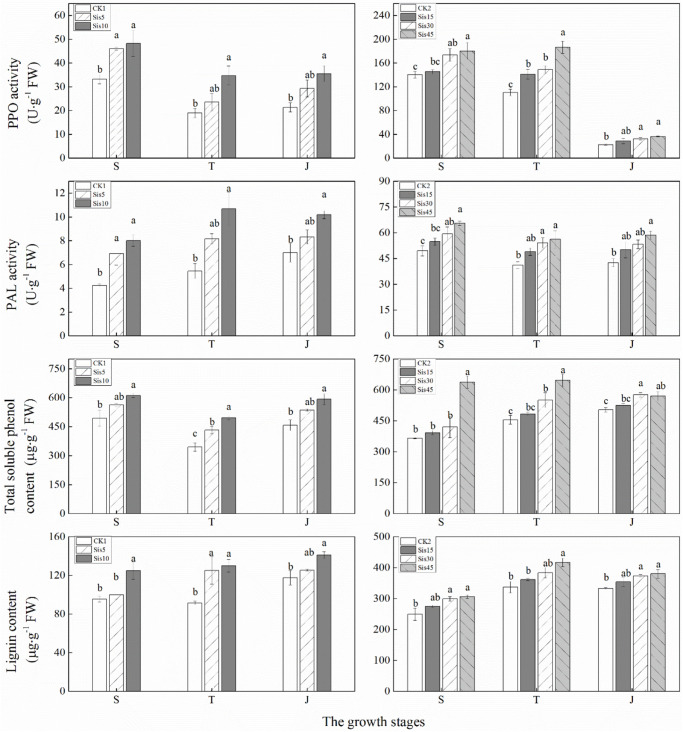
Sugarcane smut caused by is a severe, global sugarcane disease with severe economic losses and is difficult to prevent. To explore more effective control techniques for smut, the effects and physiological mechanism of silicon (Si) on smut resistance in two smut-susceptible cultivars, ROC22 and Badila, were investigated. The results show that Si application significantly enhances smut resistance in ROC22 and Badila, and the incidence of sugarcane smut decreased by 11.57-22.58% (ROC22) and 27.75-46.67% (Badila). The incidence of smut is negatively correlated with the amount of Si applied and the Si content in sugarcane leaves, stems, and roots (highly significantly negatively correlated with stem Si content). Under stress, the activities of pathogenesis-related enzymes, chitinase and β-1,3-glucanase, secondary metabolism-related enzymes such as polyphenoloxidase (PPO) and phenylalanine-ammonia-lyase (PAL), and the contents of secondary metabolites, total soluble phenol, and lignin in sugarcane leaves treated with Si were significantly higher than those without Si (CK). The results also demonstrated that the content of malondialdehyde (MDA) and hydrogen peroxide (HO), the superoxide dismutase (SOD) activity of sugarcane leaves treated with Si increased in the seedling and tillering stages, and the peroxidase (POD) activity decreased in the seedling stage, which caused the accumulation of reactive oxygen species (ROS) that in turn triggered defense responses. Moreover, MDA and HO levels decreased, and the activities of SOD and POD increased at the jointing stage, which was beneficial to the removal of excessive ROS. Collectively, these results suggest that Si modulates pathogenesis-related protein activity, secondary metabolism, and active oxygen metabolism of sugarcane that positively regulate resistance to smut. This study is the first to reveal the physiological mechanism of Si in improving smut resistance in sugarcane, and the results provide a theoretical basis for the development of Si fertilizers to control sugarcane smut.
由[病原菌名称未给出]引起的甘蔗黑穗病是一种严重的全球性甘蔗病害,造成严重经济损失且难以防治。为探索更有效的黑穗病防治技术,研究了硅(Si)对两个感黑穗病品种ROC22和Badila抗黑穗病的影响及其生理机制。结果表明,施用硅显著增强了ROC22和Badila的抗黑穗病能力,甘蔗黑穗病发病率降低了11.57 - 22.58%(ROC22)和27.75 - 46.67%(Badila)。黑穗病发病率与施硅量以及甘蔗叶片、茎和根中的硅含量呈负相关(与茎硅含量高度显著负相关)。在[胁迫名称未给出]胁迫下,施用硅处理的甘蔗叶片中病程相关酶几丁质酶和β - 1,3 - 葡聚糖酶、多酚氧化酶(PPO)和苯丙氨酸解氨酶(PAL)等次生代谢相关酶的活性以及次生代谢产物总可溶性酚和木质素的含量均显著高于未施硅处理(CK)。结果还表明,施硅处理的甘蔗叶片在幼苗期和分蘖期丙二醛(MDA)和过氧化氢(HO)含量增加,超氧化物歧化酶(SOD)活性升高,幼苗期过氧化物酶(POD)活性降低,导致活性氧(ROS)积累,进而引发防御反应。此外,在拔节期MDA和HO水平降低,SOD和POD活性升高,有利于清除过量的ROS。总体而言,这些结果表明硅调节甘蔗的病程相关蛋白活性、次生代谢和活性氧代谢,从而正向调节对黑穗病的抗性。本研究首次揭示了硅提高甘蔗抗黑穗病的生理机制,研究结果为开发用于防治甘蔗黑穗病的硅肥提供了理论依据。