Anderson Richard A, Amant Frédéric, Braat Didi, D'Angelo Arianna, Chuva de Sousa Lopes Susana M, Demeestere Isabelle, Dwek Sandra, Frith Lucy, Lambertini Matteo, Maslin Caroline, Moura-Ramos Mariana, Nogueira Daniela, Rodriguez-Wallberg Kenny, Vermeulen Nathalie
MRC Centre for Reproductive Health, University of Edinburgh, Edinburgh, UK.
Department of Gynaecological Oncology, Academic Medical Centres Amsterdam, Amsterdam, The Netherlands.
Hum Reprod Open. 2020 Nov 14;2020(4):hoaa052. doi: 10.1093/hropen/hoaa052. eCollection 2020.
What is the recommended management for women and transgender men with regards to fertility preservation (FP), based on the best available evidence in the literature?
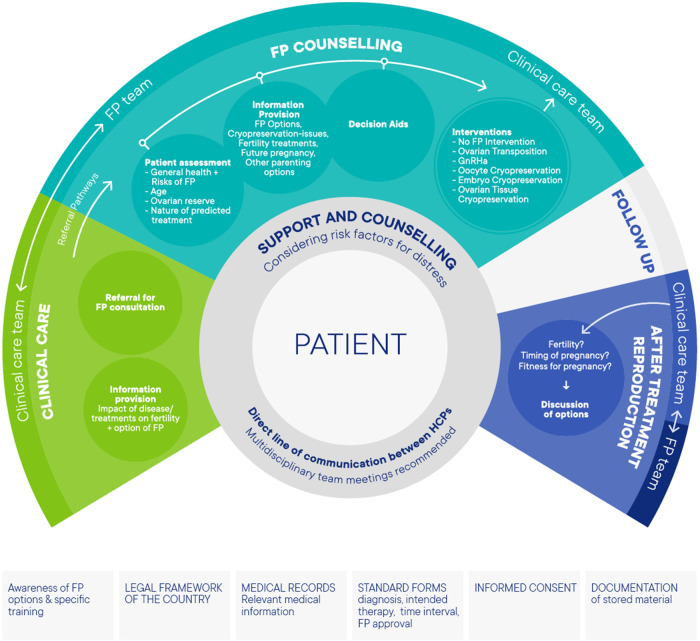
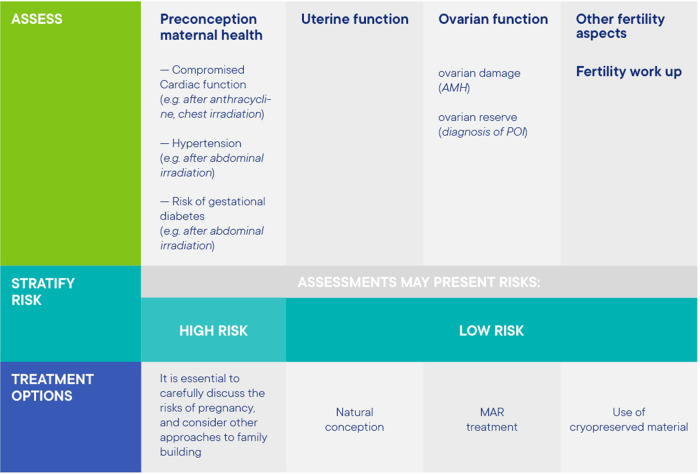
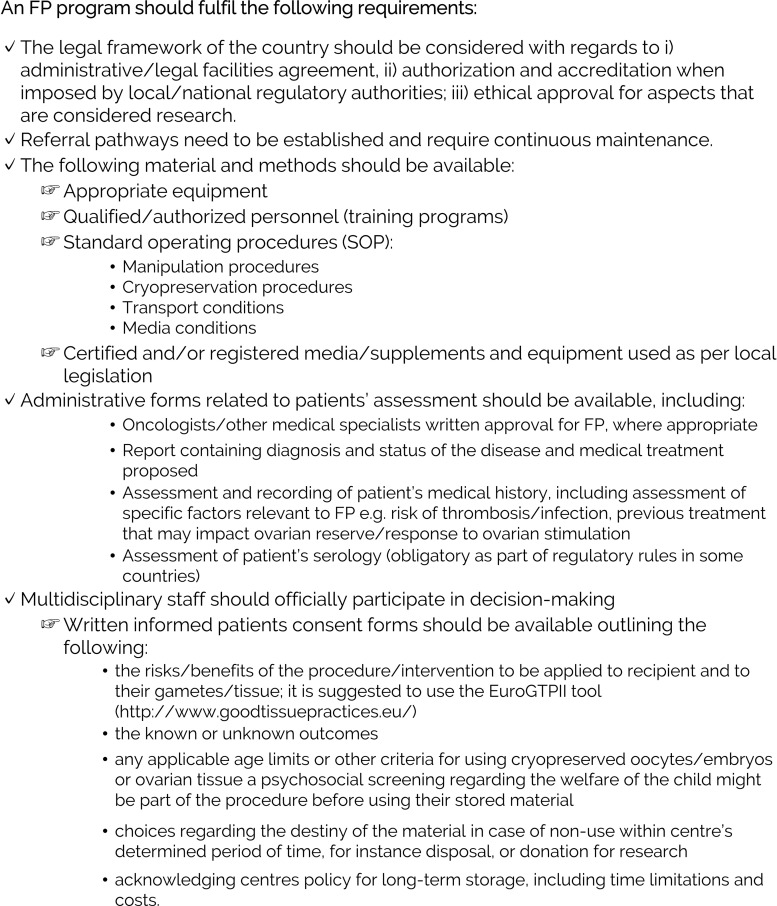
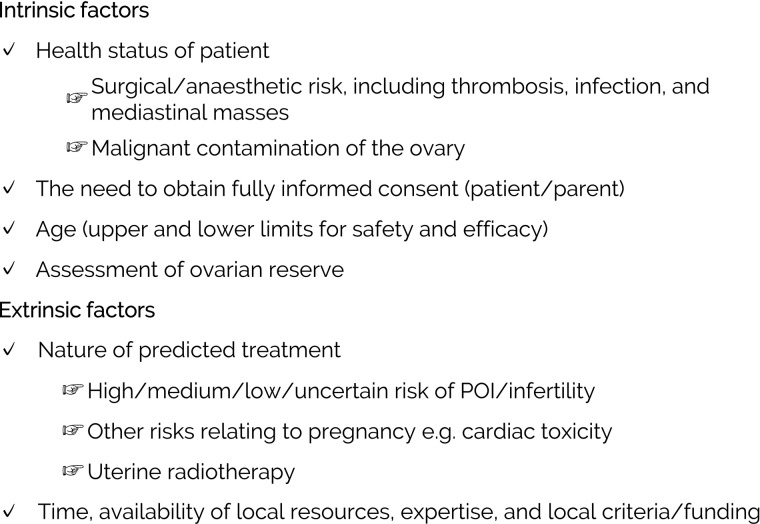
The ESHRE Guideline on Female Fertility Preservation makes 78 recommendations on organization of care, information provision and support, pre-FP assessment, FP interventions and after treatment care. Ongoing developments in FP are also discussed.
The field of FP has grown hugely in the last two decades, driven by the increasing recognition of the importance of potential loss of fertility as a significant effect of the treatment of cancer and other serious diseases, and the development of the enabling technologies of oocyte vitrification and ovarian tissue cryopreservation (OTC) for subsequent autografting. This has led to the widespread, though uneven, provision of FP for young women.
The guideline was developed according to the structured methodology for development of ESHRE guidelines. After formulation of key questions by a group of experts, literature searches and assessments were performed. Papers published up to 1 November 2019 and written in English were included in the review.
PARTICIPANTS/MATERIALS SETTING METHODS: Based on the collected evidence, recommendations were formulated and discussed until consensus was reached within the guideline group. A stakeholder review was organized after finalization of the draft. The final version was approved by the guideline group and the ESHRE Executive Committee.
This guideline aims to help providers meet a growing demand for FP options by diverse groups of patients, including those diagnosed with cancer undergoing gonadotoxic treatments, with benign diseases undergoing gonadotoxic treatments or those with a genetic condition predisposing to premature ovarian insufficiency, transgender men (assigned female at birth), and women requesting oocyte cryopreservation for age-related fertility loss.The guideline makes 78 recommendations on information provision and support, pre-FP assessment, FP interventions and after treatment care, including 50 evidence-based recommendations-of which 31 were formulated as strong recommendations and 19 as weak-25 good practice points and 3 research only recommendations. Of the evidence-based recommendations, 1 was supported by high-quality evidence, 3 by moderate-quality evidence, 17 by low-quality evidence and 29 by very low-quality evidence. To support future research in the field of female FP, a list of research recommendations is provided.
Most interventions included are not well studied in FP patients. As some interventions, e.g. oocyte and embryo cryopreservation, are well established for treatment of infertility, technical aspects, feasibility and outcomes can be extrapolated. For other interventions, such as OTC and IVM, more evidence is required, specifically pregnancy outcomes after applying these techniques for FP patients. Such future studies may require the current recommendations to be revised.
The guideline provides clinicians with clear advice on best practice in female FP, based on the best evidence currently available. In addition, a list of research recommendations is provided to stimulate further studies in FP.
STUDY FUNDING/COMPETING INTERESTS: The guideline was developed and funded by ESHRE, covering expenses associated with the guideline meetings, with the literature searches and with the dissemination of the guideline. The guideline group members did not receive payment. R.A.A. reports personal fees and non-financial support from Roche Diagnostics, personal fees from Ferring Pharmaceuticals, IBSA and Merck Serono, outside the submitted work; D.B. reports grants from Merck Serono and Goodlife, outside the submitted work; I.D. reports consulting fees from Roche and speaker's fees from Novartis; M.L. reports personal fees from Roche, Novartis, Pfizer, Lilly, Takeda, and Theramex, outside the submitted work. The other authors have no conflicts of interest to declare.
. . www.eshre.eu/guidelines. ESHRE Pages content is not externally peer reviewed. The manuscript has been approved by the Executive Committee of ESHRE.
根据文献中现有的最佳证据,对于有生育力保存(FP)需求的女性和跨性别男性,推荐的管理措施是什么?
欧洲人类生殖与胚胎学会(ESHRE)关于女性生育力保存的指南就护理组织、信息提供与支持、FP前评估、FP干预措施以及治疗后护理提出了78条建议。同时也讨论了FP领域的持续发展情况。
在过去二十年中,FP领域取得了巨大发展,这是由于人们越来越认识到潜在的生育力丧失作为癌症和其他严重疾病治疗的重大影响的重要性,以及卵母细胞玻璃化和卵巢组织冷冻保存(OTC)以便后续自体移植等技术的发展。这导致为年轻女性广泛提供了FP服务,尽管存在不均衡的情况。
研究设计、规模、持续时间:该指南是根据ESHRE指南制定的结构化方法制定的。在一组专家提出关键问题后,进行了文献检索和评估。纳入综述的文献为截至2019年11月1日发表且为英文撰写的论文。
参与者/材料、环境、方法:基于收集到的证据,制定并讨论了各项建议,直至在指南小组内达成共识。在草案最终确定后组织了利益相关者审查。最终版本由指南小组和ESHRE执行委员会批准。
本指南旨在帮助医疗服务提供者满足不同患者群体对FP选项日益增长的需求,包括那些被诊断患有癌症且正在接受性腺毒性治疗的患者、患有良性疾病且正在接受性腺毒性治疗的患者、或有遗传易感性导致卵巢早衰的患者、跨性别男性(出生时被指定为女性),以及因年龄相关生育力丧失而要求冷冻保存卵母细胞的女性。该指南就信息提供与支持、FP前评估、FP干预措施以及治疗后护理提出了78条建议,其中包括50条基于证据的建议,其中31条被制定为强烈建议,19条为弱建议,25条良好实践要点和3条仅用于研究的建议。在基于证据的建议中,1条得到高质量证据支持,3条得到中等质量证据支持,17条得到低质量证据支持,29条得到极低质量证据支持。为支持女性FP领域的未来研究,提供了一份研究建议清单。
局限性、谨慎的原因:大多数纳入的干预措施在FP患者中研究不足。由于一些干预措施,如卵母细胞和胚胎冷冻保存,在治疗不孕症方面已得到充分确立,其技术方面、可行性和结果可以外推。对于其他干预措施,如OTC和未成熟卵母细胞体外成熟(IVM),则需要更多证据,特别是将这些技术应用于FP患者后的妊娠结局。此类未来研究可能需要修订当前建议。
该指南基于目前可得的最佳证据,为临床医生提供了关于女性FP最佳实践的明确建议。此外,还提供了一份研究建议清单,以促进FP领域的进一步研究。
研究资金/利益冲突:该指南由ESHRE制定和资助,涵盖与指南会议、文献检索以及指南传播相关的费用。指南小组成员未获得报酬。R.A.A.报告在提交的工作之外从罗氏诊断公司获得个人费用和非财务支持,从辉凌制药、IBSA和默克雪兰诺获得个人费用;D.B.报告在提交的工作之外从默克雪兰诺和Goodlife获得资助;I.D.报告从罗氏获得咨询费,从诺华获得演讲费;M.L.报告在提交的工作之外从罗氏、诺华、辉瑞、礼来、武田和希美克获得个人费用。其他作者声明无利益冲突。
......www.eshre.eu/guidelines。ESHRE网页内容未经过外部同行评审。该手稿已得到ESHRE执行委员会的批准。