Kladkempetch Doolyawat, Tangtrongsup Sahatchai, Tiwananthagorn Saruda
Master's Degree Program in Veterinary Science, Faculty of Veterinary Medicine, Chiang Mai University, Chiang Mai 50100, Thailand.
Department of Companion Animal and Wildlife Clinic, Faculty of Veterinary Medicine, Chiang Mai University, Chiang Mai 50100, Thailand.
Animals (Basel). 2020 Nov 19;10(11):2154. doi: 10.3390/ani10112154.
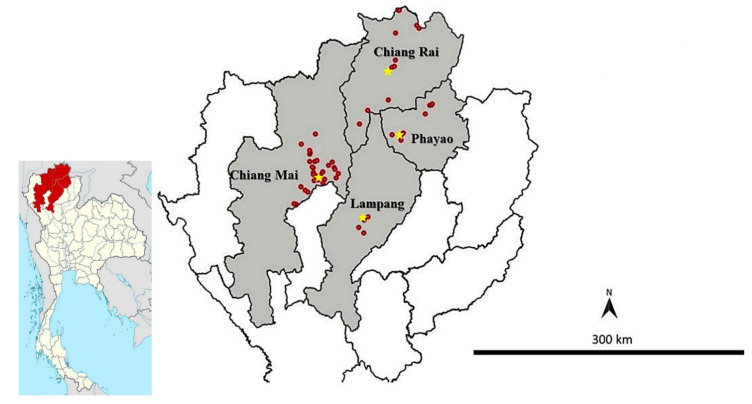
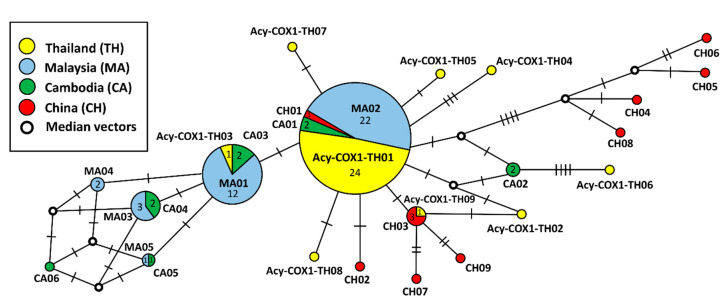
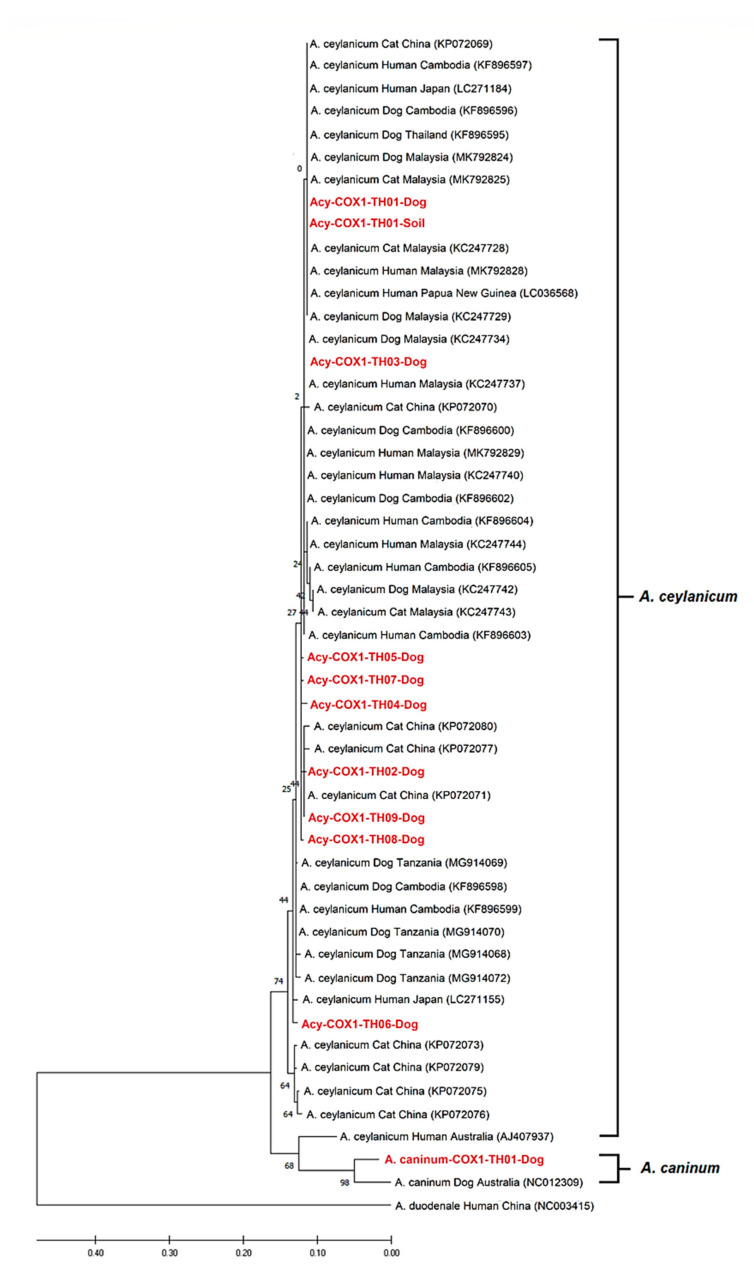
is a zoonotic helminth that is commonly found in domestic dogs and cats throughout Asia but is largely neglected in many countries. This study aimed to confirm the species of hookworm in dogs and soil environments and investigate the evolutionary analyses of among Thai and Asian populations. In a total of 299 dog fecal samples and 212 soil samples from 53 temples, the prevalence rates of hookworm infection by microscopic examination were 26.4% (79/299) and 10.4% (22/212) in dog and soil samples, respectively. A PCR-RFLP targeting the ITS region was then utilized to identify the hookworm species. In dogs, was the main hookworm species, and the rates of and infections were 96.6% and 3.5%, respectively. The genetic characterization and diversity indices of the gene among Thai and Asian populations were evaluated. Nine haplotypes were identified from Thai , in which the haplotype diversity and the nucleotide diversity were 0.4436 and 0.0036, respectively. The highest nucleotide diversity of Chinese populations suggested that it could be the ancestor of the populations. Pairwise fixation indices indicated that Thai was closely related to the Malaysian population, suggesting a gene flow between these populations. The temples with hookworm-positive dogs were associated with the presence of hookworm-contaminated soil, as these levels showed an approximately four-fold increase compared with those in temples with hookworm-negative dogs (OR = 4.38, 95% CI: 1.55-12.37). Interestingly, the genotypes of in the contaminating soil and infecting dogs were identical. Therefore, increased awareness and concern from the wider public communities with regard to the responsibility of temples and municipal offices to provide proper deworming programs to community dogs should be strongly endorsed to reduce the risk of the transmission of this zoonotic disease. In addition, parasitic examination and treatment should be strongly implemented before dogs are imported and exported worldwide.
是一种人畜共患的蠕虫,在亚洲各地的家犬和家猫中普遍存在,但在许多国家基本被忽视。本研究旨在确认犬类和土壤环境中钩虫的种类,并调查泰国和亚洲种群之间的进化分析。在总共299份犬类粪便样本和来自53座寺庙的212份土壤样本中,通过显微镜检查,犬类样本和土壤样本中钩虫感染的患病率分别为26.4%(79/299)和10.4%(22/212)。然后利用针对ITS区域的PCR-RFLP来鉴定钩虫种类。在犬类中, 是主要的钩虫种类, 感染率和 感染率分别为96.6%和3.5%。评估了泰国和亚洲种群中 基因的遗传特征和多样性指数。从泰国 中鉴定出9种单倍型,其中单倍型多样性和核苷酸多样性分别为0.4436和0.0036。中国 种群的核苷酸多样性最高,表明它可能是这些种群的祖先。成对固定指数表明泰国 与马来西亚种群密切相关,表明这些种群之间存在基因流动。有钩虫阳性犬的寺庙与存在钩虫污染的土壤有关,因为与有钩虫阴性犬的寺庙相比,这些水平显示出大约四倍的增加(OR = 4.38,95% CI:1.55 - 12.37)。有趣的是,污染土壤和感染犬类中的 基因型是相同的。因此,应大力倡导广大公众提高意识并关注寺庙和市政办公室有责任为社区犬提供适当的驱虫计划,以降低这种人畜共患疾病传播的风险。此外,在全球范围内进出口犬类之前,应大力实施寄生虫检查和治疗。