Institute of Food Science and Technology, Chinese Academy of Agricultural Sciences, Beijing, 100193, People's Republic of China.
College of Food Science, Northeast Agricultural University, Harbin, 150030, People's Republic of China.
Microb Cell Fact. 2020 Nov 23;19(1):213. doi: 10.1186/s12934-020-01466-2.
Colorectal cancer (CRC) is a major clinical challenge, and the gut microbiome plays important roles in the occurrence and metastasis of CRC. Lactobacillus and their metabolites are thought to be able to suppress the growth of CRC cells. However, the antimetastatic mechanism of Lactobacillus or their metabolites toward CRC cells is not clear. Therefore, the aim of this study was to assess the inhibitory mechanism of cell-free supernatants (CFSs) of L. rhamnosus GG, L. casei M3, and L. plantarum YYC-3 on metastasis of CRC cells.
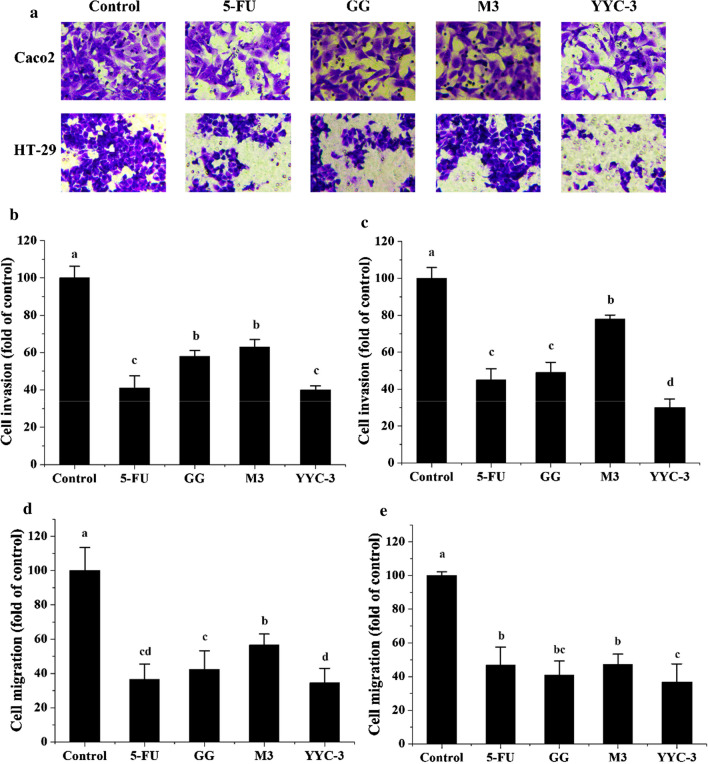
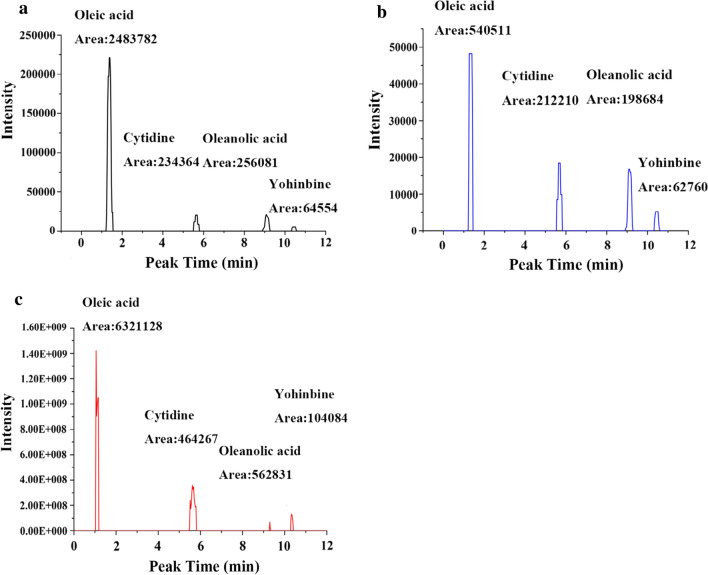
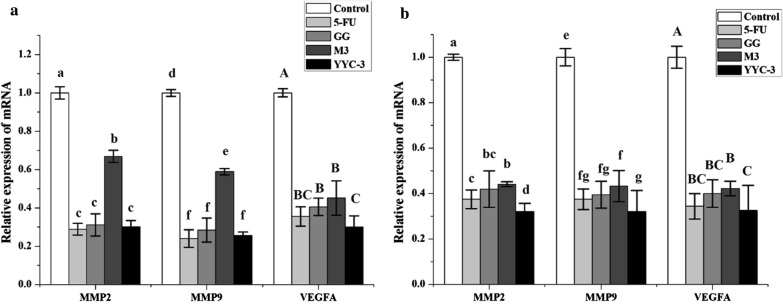
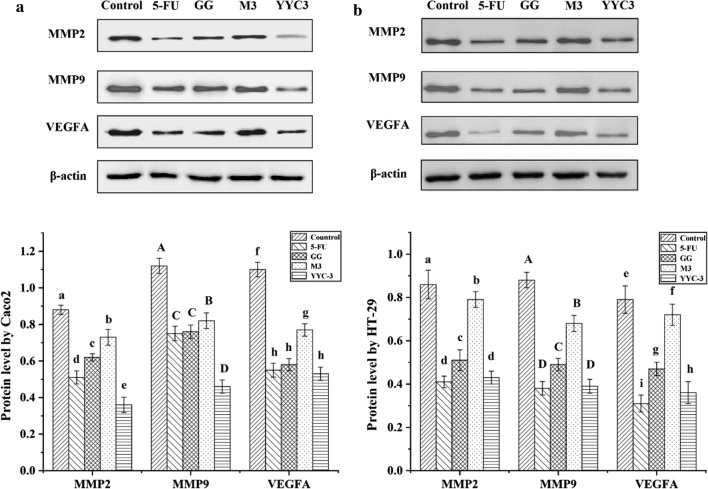
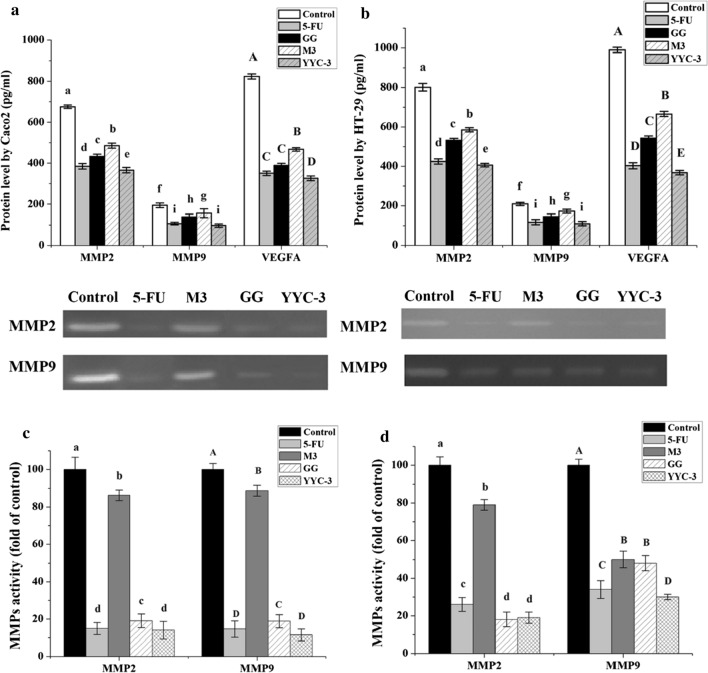
YYC-3 CFS showed the highest inhibitory effect on CRC cell growth, invasion and migration, and inhibited MMP2, MMP9, and VEGFA gene and protein expression, and protein secretion. Furthermore, it suppressed the activities of MMPs by gelatin zymography. Moreover, the effective compounds in these CFSs were analyzed by Q Exactive Focus liquid chromatography-mass spectrometry.
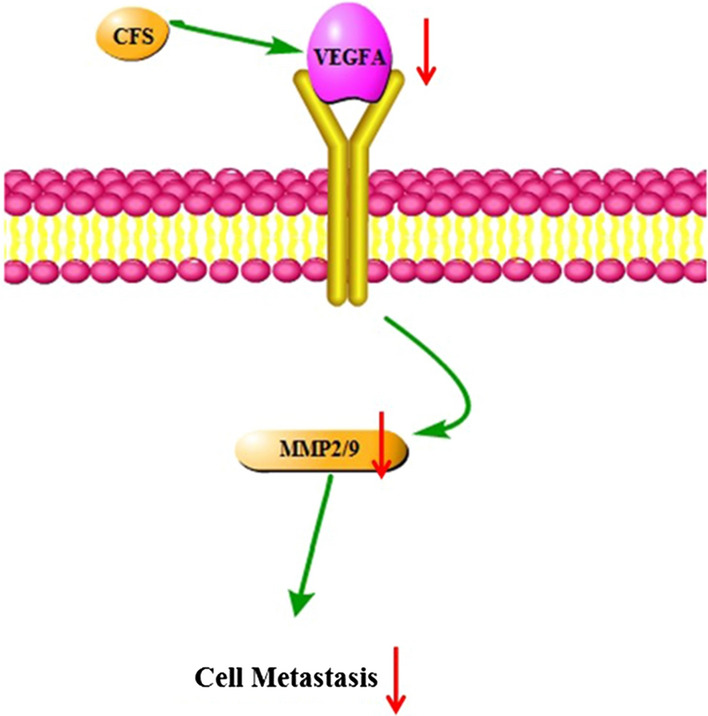
Our results showed that metabolite secretions of YYC-3 may inhibited cell metastasis by downregulating the VEGF/MMPs signaling pathway. These data suggest that treatment of CRC cells with metabolites from L. plantarum YYC-3 may reduce colon cancer metastasis.
结直肠癌(CRC)是一个主要的临床挑战,肠道微生物群在 CRC 的发生和转移中起着重要作用。人们认为乳酸菌及其代谢产物能够抑制 CRC 细胞的生长。然而,乳酸菌或其代谢产物对 CRC 细胞的抗转移机制尚不清楚。因此,本研究旨在评估鼠李糖乳杆菌 GG、干酪乳杆菌 M3 和植物乳杆菌 YYC-3 的无细胞上清液(CFS)对 CRC 细胞转移的抑制机制。
YYC-3 CFS 对 CRC 细胞生长、侵袭和迁移具有最高的抑制作用,并抑制 MMP2、MMP9 和 VEGFA 基因和蛋白表达以及蛋白分泌。此外,它通过明胶酶谱法抑制 MMPs 的活性。此外,通过 Q Exactive Focus 液相色谱-质谱法分析了这些 CFS 中的有效化合物。
我们的结果表明,YYC-3 的代谢产物分泌可能通过下调 VEGF/MMPs 信号通路抑制细胞转移。这些数据表明,用植物乳杆菌 YYC-3 的代谢产物处理 CRC 细胞可能会降低结肠癌的转移。